Why Animal Retinol Differs From Plant Vitamin A
8 min read
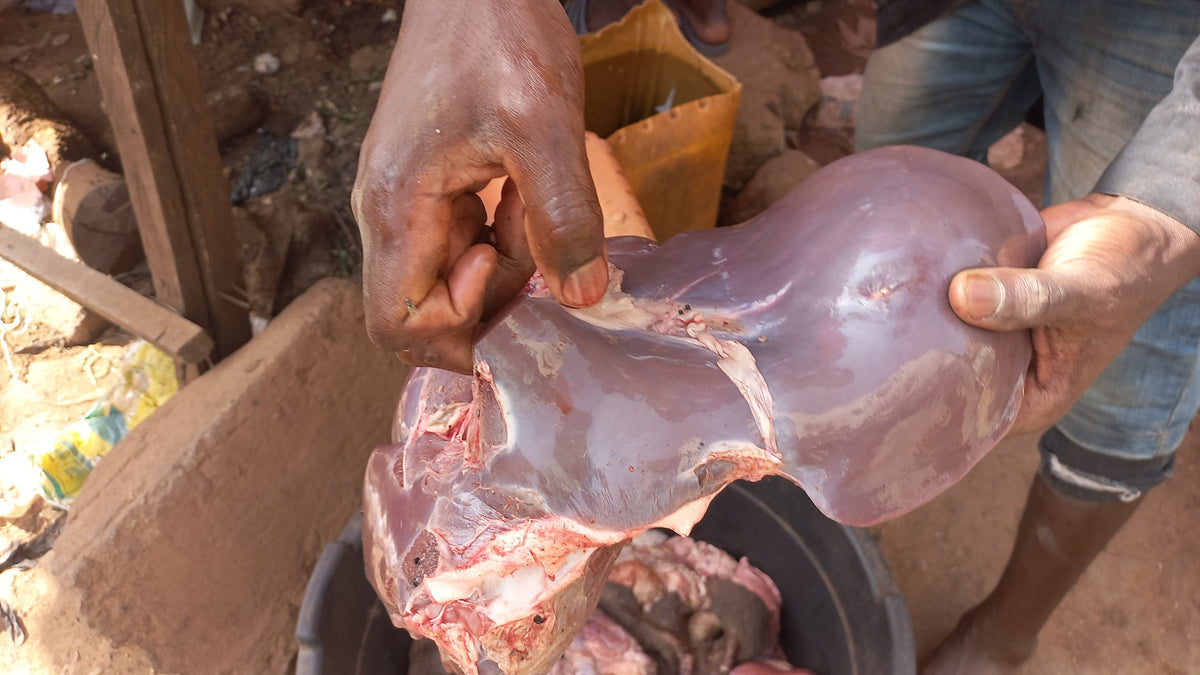
Retinol from animal foods enters the body ready to use. Beta-carotene from plants is a provitamin that must be converted by an enzyme called BCMO1, and that conversion is limited by genetics, zinc status, thyroid output, and gut health. Many people absorb far less vitamin A from plant sources than standard dietary tables estimate.
"Raw liver" by Halima Waziri is licensed under CC BY-SA 4.0. To view a copy of this license, visit https://creativecommons.org/licenses/by-sa/4.0/.
The Core Difference Between Retinol and Beta-Carotene
The basic split is this: retinol is vitamin A. Preformed, ready to use, no assembly required. Your body absorbs it from animal foods, stores it in the liver, and deploys it to tissues without any intermediate chemistry.
Beta-carotene is not vitamin A. It is a carotenoid pigment found in plant foods, classified as provitamin A because the body can, under the right conditions, convert it into retinol. That conversion step is where the two diverge sharply in practice.
The word retinol often appears interchangeably with vitamin A in everyday conversation, and that imprecision creates real confusion. Retinol is the specific active form your body uses. Beta-carotene is one of dozens of carotenoids that may or may not become retinol once consumed, depending on circumstances that vary by individual.
Both count toward dietary vitamin A totals on a nutrition label, expressed in the same unit, retinol activity equivalents (RAE). A carrot looks equivalent to liver on a spreadsheet. Inside the body, they are not equivalent, and the difference matters more than most standard nutrition guidance acknowledges.
How Your Body Handles Preformed Retinol
When you eat liver, egg yolks, or whole-fat dairy, vitamin A arrives as retinyl esters. Intestinal cells break those esters apart, absorb free retinol, and load it into chylomicrons, the lipid transport vehicles that carry fat-soluble nutrients into circulation. The liver picks up the majority, stores it, and releases retinol bound to retinol-binding protein when tissues need it.
Absorption of preformed retinol from whole food runs roughly 70 to 90 percent. The liver holds about 50 to 80 percent of the body's total vitamin A reserve. When dietary intake falls or tissue demand rises, those hepatic stores release and retinol circulates directly to target cells.
No rate-limiting enzyme involved. No genetic variability in uptake. The form absorbed is identical to what cells use.
Bison liver and beef liver rank among the most concentrated food sources of preformed retinol available. Three ounces of beef liver delivers roughly 6,400 mcg RAE. The adult male recommended daily allowance is 900 mcg RAE per day. A single moderate serving exceeds an entire week's requirement.
How the Beta-Carotene Conversion Pathway Works
Beta-carotene is the pigment that makes carrots orange, sweet potatoes vibrant, and winter squash amber. Fat-soluble, antioxidant-active in its own right, and conditionally convertible to vitamin A.
Conversion happens in cells lining the small intestine. The enzyme responsible is BCMO1, short for beta-carotene 15,15'-monooxygenase 1. It cleaves each beta-carotene molecule into two molecules of retinal. Those molecules are then either reduced to retinol or oxidized to retinoic acid, depending on the cell's current needs.
Official dietary guidelines use a 12:1 conversion ratio for food-source beta-carotene: 12 mcg of beta-carotene from food yields 1 mcg of retinol, or 1 RAE. From supplements, the ratio improves to 2:1, because supplement-form beta-carotene sits in a more bioavailable matrix than plant cell walls.
Those ratios are population-level averages from controlled feeding studies. A reasonable starting estimate for policy purposes. Not a designed for any individual.
Carrots were never a direct substitute for liver as a vitamin A source. That does not make them less valuable as food. It means their vitamin A contribution is variable in a way that liver's is not.
Why Conversion Rates Vary So Widely Between Men
BCMO1 activity is not consistent across individuals. The variation is large enough to change the nutritional math meaningfully.
Research published in the FASEB Journal identified two common single-nucleotide polymorphisms in the BCMO1 gene that directly reduce enzyme activity. The first, called R267S, reduces activity by roughly 32 percent in carriers. The second, A379V, reduces it further. People carrying both variants can see conversion efficiency drop by up to 69 percent compared to those with neither. These are not rare mutations. Estimates put the carrier rate at 45 percent or more of the general population.
Beyond genetics, several other factors reduce how efficiently the pathway works:
- Dietary fat. Beta-carotene is fat-soluble. A low-fat meal can reduce absorption by 50 percent or more. Fat must be present at the same meal for meaningful uptake.
- Zinc status. Zinc is needed to synthesize retinol-binding protein, the transport molecule that moves converted retinol through blood. Low zinc limits delivery even when conversion occurs.
- Thyroid hormones. Thyroid hormones stimulate BCMO1 gene expression. Suboptimal thyroid output is associated with reduced conversion and sometimes with elevated blood beta-carotene alongside lower tissue retinol.
- Gut health. BCMO1 operates inside intestinal epithelial cells. Chronic gut inflammation, compromised bile secretion, or damaged intestinal lining all reduce the enzyme's output.
Combine two or three of these factors and the effective conversion ratio climbs well above 12:1.
What Controlled Research Shows on Individual Variation
The variation in beta-carotene conversion between individuals is one of the more striking findings in the vitamin A literature. Studies have documented differences of more than tenfold from one person to the next under identical controlled doses. The NIH Office of Dietary Supplements explicitly notes that wide individual variation in provitamin A conversion is a recognized challenge in estimating vitamin A status from diet alone.
Work the numbers on a large carrot, which provides roughly 5,000 mcg of beta-carotene. At a standard 12:1 ratio, that yields about 417 mcg RAE. At a poor-converter ratio of 28:1 or worse, the same carrot yields under 180 mcg RAE. Less than 20 percent of an adult man's daily reference value from a food that databases list as an excellent vitamin A source.
Beta-carotene has real value outside of its conversion to vitamin A. It functions as a carotenoid antioxidant independently. The body also downregulates BCMO1 activity when liver retinol stores are adequate, which acts as a natural brake. Vitamin A toxicity from plant-source carotenoids under normal eating is not a practical concern.
But for men whose diets depend heavily on plant sources for vitamin A, a tenfold variability in conversion rate is a real planning variable, not a footnote.
Practical Choices Based on This Information
For most men eating varied diets that include animal products, vitamin A status tends to look after itself. Liver once or twice a week covers most adults' requirements from preformed retinol alone. Regular eggs and whole-fat dairy fill in the rest.
If plant-heavy eating is the preference, three adjustments improve beta-carotene utilization: pair orange and yellow vegetables with fat at the same meal; cook them when possible, since heat disrupts plant cell walls and improves carotenoid release; and keep eggs or whole dairy in the rotation to maintain preformed retinol intake alongside plant sources.
Customers often ask us why the team at Wildhorn uses whole bison liver rather than isolated retinyl palmitate or a beta-carotene extract. The answer is the whole-food matrix. Organ tissue delivers retinol alongside the cofactors naturally present in animal tissue: heme iron, copper, vitamin B12. These nutrients coexist in liver for structural reasons. Extracting one and discarding the others produces a simpler ingredient, not a more complete one.
For anyone wanting to know their actual vitamin A status rather than a theoretical estimate from a food diary, a blood serum retinol test is the direct measure. Population surveys using food recall regularly overestimate vitamin A availability in people relying primarily on plant sources, because they apply standardized conversion ratios rather than measuring blood levels directly.
Frequently asked questions
Is beta-carotene the same as vitamin A?
No. Beta-carotene is a provitamin, a plant pigment the body can convert into retinol (the active form of vitamin A), but they are chemically distinct. Retinol from animal foods is absorbed and used directly. Beta-carotene requires enzymatic conversion, and how efficiently that happens depends on genetics, diet composition, and digestive health.
How efficient is the conversion of beta-carotene to retinol?
Official guidelines use a 12:1 ratio for food-source beta-carotene, meaning 12 mcg yields 1 mcg of retinol. In practice, studies show more than tenfold differences between individuals given identical doses under controlled conditions. People with common BCMO1 gene variants may convert up to 69 percent less efficiently than the standard ratio assumes.
Can eating a lot of carrots cause vitamin A toxicity?
Not from beta-carotene itself. The body regulates BCMO1 activity based on current retinol stores, so it converts less when stores are already adequate. High beta-carotene intake can cause carotenemia, a harmless yellowing of the skin from carotenoid accumulation in tissue, but this is distinct from vitamin A toxicity. Preformed retinol from animal sources in sustained high amounts is a separate consideration, which is why liver is generally eaten in moderate portions rather than daily.
What factors most reduce beta-carotene conversion in adults?
Four main factors: genetic variants in BCMO1 (present in roughly 45 percent of people), low dietary fat at the same meal, low zinc status, and reduced thyroid hormone output. Gut inflammation or compromised intestinal lining also limits conversion. These factors can compound each other, pushing the effective conversion ratio well above the standard 12:1.
How is vitamin A status actually measured?
Blood serum retinol concentration is the standard clinical measure of vitamin A status. Food recall surveys estimate intake but apply theoretical conversion ratios that may not reflect individual absorption. For anyone with questions about their vitamin A status, a blood test discussed with a healthcare provider is more informative than a food diary alone.
These statements have not been evaluated by the Food and Drug Administration. This product is not intended to diagnose, treat, cure, or prevent any disease.
Written by The Wildhorn Desk, Men's Health Editor.