Ashwagandha for Men Over 45: What the Research Shows
8 min read
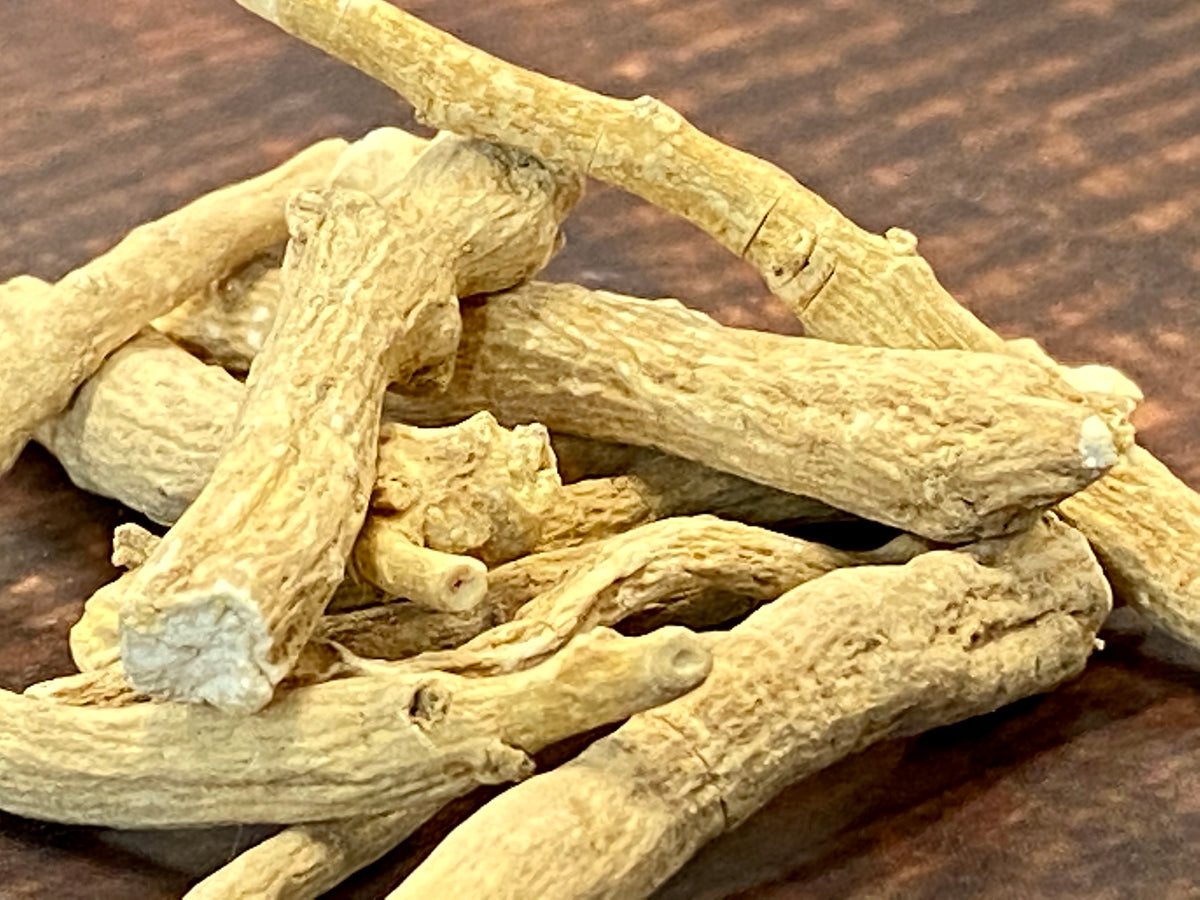
Ashwagandha (Withania somnifera) is an adaptogenic herb with several randomized controlled trials behind it. The strongest evidence focuses on cortisol modulation. Lower cortisol supports healthier testosterone markers in middle-aged men. Most trials used 300-600mg of a standardized root extract daily for 8-12 weeks.
"Ashwagandha Root" by Formulatehealth.com is licensed under CC BY 2.0. To view a copy of this license, visit https://creativecommons.org/licenses/by/2.0/.
The Cortisol-Testosterone Connection in Men Over 45
Cortisol is your primary stress hormone. The adrenal glands produce it, and at normal levels it's essential, regulating energy metabolism, immune activity, and blood pressure. The issue isn't cortisol itself. Chronic elevation is the problem.
Here's the basic physiology. Cortisol and testosterone share a biosynthetic pathway. Both are derived from cholesterol, and the enzyme systems that produce them are linked. When the body is under persistent stress, it prioritizes cortisol synthesis. Testosterone production gets less substrate and less enzymatic attention as a result.
For men between 45 and 65, this matters more than it did at 30. Natural testosterone output declines roughly 1-2% per year from the mid-thirties onward. Cortisol levels, meanwhile, tend to stay elevated with age, driven by disrupted sleep, work stress, slower recovery between training sessions, and low-grade systemic inflammation. Managing cortisol becomes one practical lever for supporting testosterone markers already within a normal range.
This is where ashwagandha has built its most credible body of evidence.
What Clinical Trials Show on Cortisol
The evidence base for ashwagandha centers on standardized root extracts. The two you'll see in serious research are KSM-66 (from Ixoreal Biomed) and Sensoril (from Natreon). Both are concentrated ashwagandha root extracts, but they use different extraction methods and different withanolide profiles, the active compounds behind ashwagandha's adaptogenic effects.
The cortisol data is consistent. A 2012 randomized, double-blind, placebo-controlled study published in the Indian Journal of Psychological Medicine tested 300mg of a high-concentration ashwagandha root extract twice daily in 64 adults under chronic stress. After 60 days, the ashwagandha group showed a serum cortisol reduction of approximately 27.9% from baseline, compared to about 7.9% in the placebo group. That's a meaningful gap. You can review the full study at PubMed (PMID 23439798).
That 20-point difference between groups isn't noise. Cortisol in these trials is measured via serum blood draw in the morning, capturing the cortisol awakening response, the sharpest daily peak. A reduction of that magnitude suggests a genuine effect on HPA axis regulation, not a statistical artifact.
Testosterone Markers: What the Data Found
Cortisol reductions are useful on their own. But the practical question for men reading this: do those reductions translate to measurable testosterone changes?
A 2015 randomized trial published in the Journal of the International Society of Sports Nutrition followed 57 healthy men through 8 weeks of resistance training. One group received 300mg of ashwagandha root extract twice daily. The ashwagandha group ended the trial with serum testosterone levels approximately 44 ng/dL higher than the placebo group, while cortisol was also significantly lower. Both groups stayed within normal ranges throughout.
Customers often ask us whether these results carry over to men who aren't actively training. A 2022 pilot study examined sedentary men specifically and found modest but measurable improvements in testosterone markers and DHEA-S levels after 8 weeks of KSM-66 at 600mg daily. The effect size was smaller than the exercise trial. That's expected.
One honest caveat: most trials run 8-12 weeks, and the majority enroll men aged 18-45. Longer-term data in men specifically over 50 is thinner. The short-term numbers are real, but the evidence has limits worth acknowledging.
KSM-66 vs. Sensoril: Does the Extract Form Matter?
Yes. The distinction matters before you buy anything.
KSM-66 is a root-only extract standardized to at least 5% withanolides. Most testosterone-focused trials use KSM-66. It's produced through an extraction process that includes a milk-based step, worth noting if you're dairy-sensitive.
Sensoril uses both root and leaf and is standardized to a higher withanolide content, typically around 10%. More cortisol-focused trials use Sensoril. Because of the higher concentration, effective doses are lower, usually 125-250mg daily rather than 300-600mg.
Generic ashwagandha powder? The trial evidence doesn't apply. Withanolide content varies enormously in commodity ashwagandha. A label that says "ashwagandha 500mg" without naming the extract or stating the withanolide percentage tells you almost nothing about what you're actually getting.
- KSM-66: root-only, 5% withanolides minimum, 300-600mg per day, strongest testosterone marker data
- Sensoril: root and leaf, 10% withanolides, 125-250mg per day, strong cortisol data
- Generic powder: unstandardized, clinical study results do not apply
Dosage, Timing, and What to Realistically Expect
The dose range that appears consistently in cortisol and testosterone trials: 300-600mg of standardized extract per day. Most studies split this into two 300mg doses, one in the morning and one in the evening with food. A few trials used a single 600mg dose and got comparable results.
Time-to-effect is real. The cortisol trials showing significant reductions ran a minimum of 60 days. Testosterone marker studies ran 8 weeks. Give it that full window before you evaluate whether it's working. Don't judge at week two.
One secondary effect that shows up across multiple trials: sleep quality. Participants in ashwagandha groups consistently report better sleep onset and duration. Sleep is a primary driver of testosterone production, so this pathway likely contributes to how ashwagandha supports the broader hormonal picture.
Men who tend to see the most consistent results are already doing the fundamentals: resistance training at least three days per week, keeping alcohol moderate, eating enough protein. Ashwagandha on that foundation is a meaningful addition. Without that foundation, don't expect it to carry the weight alone.
What to Look For in an Ashwagandha Formula
Not all testosterone support formulas use a clinically studied ashwagandha extract. Many use generic powder at doses well below what the trials used. Before you buy, check these specifically:
- Does the label name KSM-66 or Sensoril explicitly?
- Is the withanolide percentage stated on the label?
- What is the dose per serving? Under 300mg of KSM-66 is below effective study doses.
- Are other ingredients also dosed to match their research? Zinc, magnesium, and vitamin D each have evidence on testosterone markers in men with levels already within a normal range.
- Is the full label visible, or does the brand hide behind a proprietary blend?
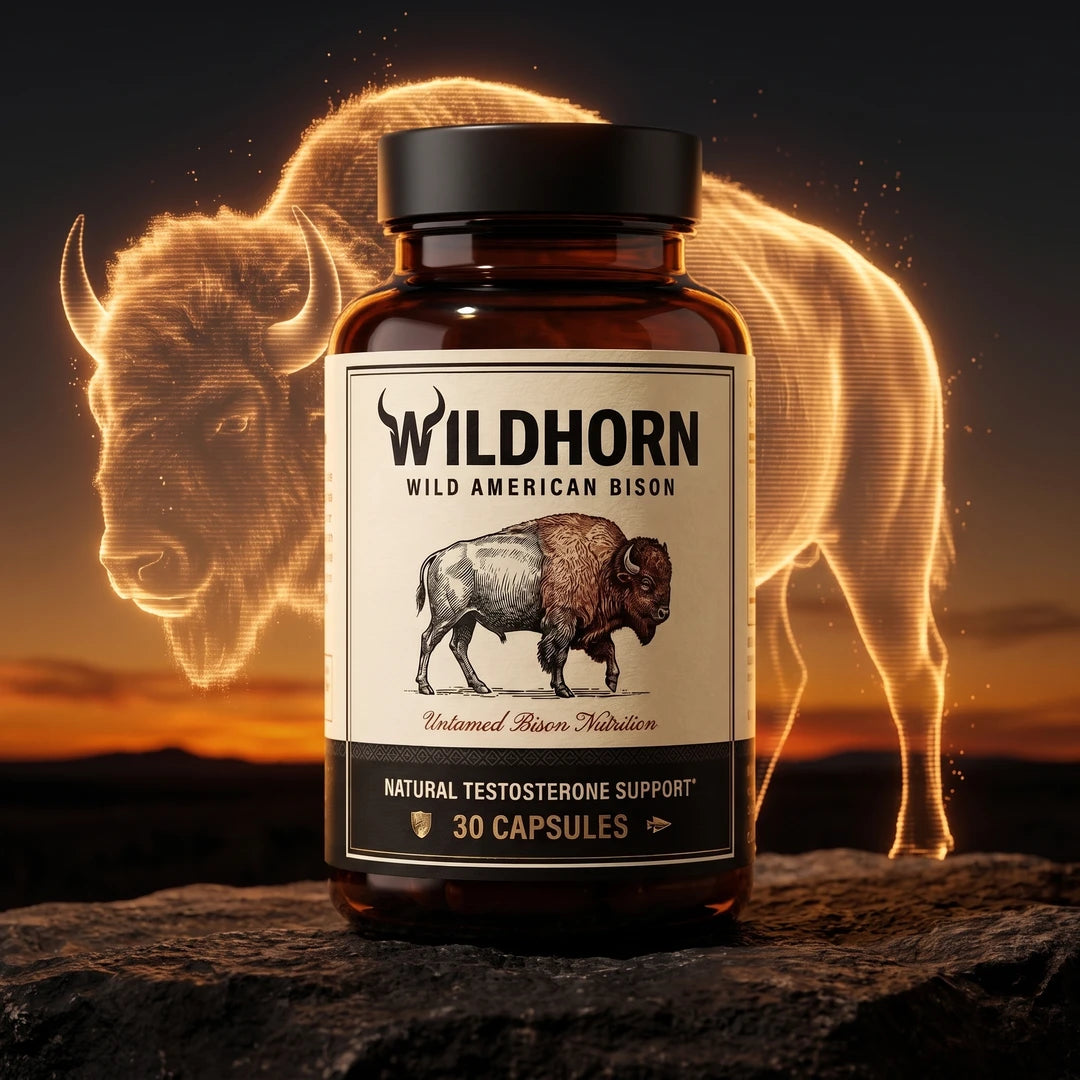
In our formula, Wild Bison, we use KSM-66 at a full 600mg per daily serving. That's the dose the research used. Every ingredient and its dose is on the label before you buy. A lot of testosterone formulas rely on proprietary blends where you never know if the key compounds are dosed to matter. That's not something we do.
If you're looking for a testosterone booster built on clinical evidence, dosing transparency is the minimum standard worth holding any formula to.
Reading the Evidence Without Overstating It
Ashwagandha is not a pharmaceutical. It doesn't replace the effect of consistent sleep, resistance training, or a diet that supports hormone health. But the cortisol evidence is solid, and the testosterone marker data from resistance-training trials is as strong as you'll find for any non-pharmaceutical supplement in this category.
The NIH National Center for Complementary and Integrative Health notes that ashwagandha shows promise but that larger, longer trials are still needed. That's a fair summary. Encouraging, not conclusive.
For men between 45 and 65 who are managing the basics, 600mg of KSM-66 daily for 8-12 weeks is a low-risk, evidence-backed step toward supporting cortisol levels and testosterone markers already within a normal range. The bar for trying it is low. Keep your expectations proportionate.
Frequently asked questions
How long does ashwagandha take to affect cortisol levels?
Most trials showing significant cortisol reductions ran for at least 60 days. Some effects on sleep quality appear earlier, around 2-4 weeks in some participants. For cortisol and testosterone markers, build in a full 8-12 weeks before drawing conclusions.
Is KSM-66 or Sensoril better for testosterone support in men?
The majority of trials specifically measuring testosterone markers used KSM-66 at 300-600mg daily. Sensoril appears more often in cortisol-focused research. For men focused on supporting testosterone markers already within a normal range, KSM-66 has the stronger direct evidence.
Does ashwagandha work if I am not exercising regularly?
The most robust testosterone marker data comes from trials with a resistance training component. A 2022 pilot study in sedentary men found more modest effects. Ashwagandha supports cortisol modulation regardless of exercise status, but the downstream effect on testosterone markers appears larger when combined with regular training.
What does adaptogen actually mean?
An adaptogen is a plant compound that helps the body maintain balance under physiological stress without overstimulating or sedating a specific system. For ashwagandha, this means supporting the HPA axis, the hypothalamic-pituitary-adrenal system that regulates cortisol output.
Can I take ashwagandha alongside zinc, magnesium, or vitamin D?
Ashwagandha is generally well-tolerated alongside zinc, magnesium, and vitamin D, all of which have their own research on testosterone markers in men with levels already within a normal range. If you take prescription medications, check with your doctor before adding any supplement.
These statements have not been evaluated by the Food and Drug Administration. This product is not intended to diagnose, treat, cure, or prevent any disease.
Written by The Wildhorn Desk, Men's Health Editor.