Ashwagandha vs. Rhodiola: Which Adaptogen Should You Take
8 min read
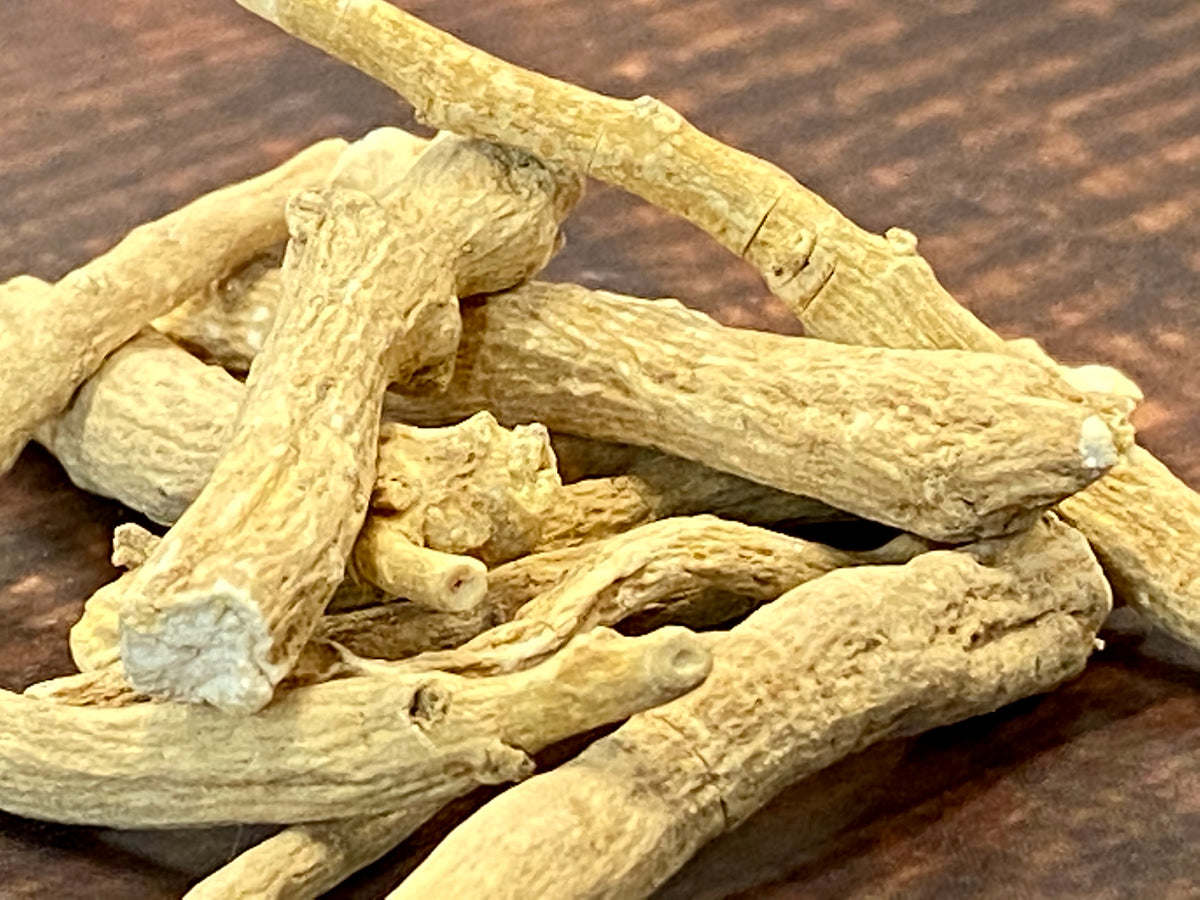
Ashwagandha supports cortisol regulation and helps maintain testosterone already within normal ranges. Rhodiola helps manage fatigue and supports mental sharpness under physical stress. For hormonal balance and sleep quality, ashwagandha is the stronger pick. For energy and workout recovery, Rhodiola earns its place.
"Ashwagandha Root" by Formulatehealth.com is licensed under CC BY 2.0. To view a copy of this license, visit https://creativecommons.org/licenses/by/2.0/.
What These Two Herbs Actually Do
Both sit in the adaptogen category, a functional classification for plants that help the body handle stress without overstimulating it. Neither replaces sleep, consistent training, or a solid diet. They work with your physiology, not around it.
Ashwagandha (Withania somnifera) is an Ayurvedic root with centuries of use in South Asian wellness traditions. Rhodiola rosea grows in cold, high-altitude regions of Europe and Asia, used historically for endurance and mental resilience. Different origins. Different mechanisms. Different best-use cases.
The answer to which one you should take depends on your primary goal. Not your age. Your specific gap.
Ashwagandha: Stress, Sleep, and Hormonal Support
Ashwagandha's most studied mechanism involves the HPA axis, the hormonal chain running from your hypothalamus to your adrenal glands that governs cortisol output. A randomized, double-blind trial indexed on PubMed found that subjects taking 300 mg of KSM-66 ashwagandha daily saw meaningful reductions in serum cortisol and self-reported stress scores over eight weeks.
Cortisol and testosterone have an inverse relationship worth understanding. When cortisol is kept already within a normal range, the hormonal environment for supporting healthy testosterone improves. Ashwagandha does not raise testosterone directly. It supports the conditions that allow testosterone to stay already within a normal range.
A 2019 study in Medicine and Science in Sports and Exercise found that men taking 600 mg of KSM-66 daily for eight weeks maintained testosterone already within normal range at levels measurably higher than placebo, alongside better recovery from resistance training.
Sleep is a third benefit worth noting. Research on KSM-66 specifically shows improvements in sleep onset and quality. Testosterone secretion is concentrated during deep sleep, so anything that supports sleep quality has downstream hormonal effects.
The form matters. KSM-66 is a full-spectrum root extract standardized to at least 5% withanolides, with the strongest clinical record for testosterone-related applications. Sensoril uses root and leaf extract. Both are legitimate; KSM-66 has the edge for hormone support research specifically.
Rhodiola: Fatigue Recovery and Mental Sharpness
Rhodiola works through different pathways. Its two primary active compounds are rosavins and salidroside. These interact with neurotransmitter transport systems and support mitochondrial efficiency, which is the practical reason Rhodiola helps men feel less worn down mid-afternoon or mid-workout.
A study published in Phytomedicine found that a standardized Rhodiola extract (SHR-5) reduced fatigue and improved mental performance in subjects under acute stress. The effect appeared quickly, sometimes within a single dose. That distinguishes it from ashwagandha, which requires consistent use over several weeks to build measurable results.
For physical performance, Rhodiola supports aerobic capacity and endurance output. A 2004 trial found meaningful improvements in time-to-exhaustion after four weeks of 200 mg SHR-5 daily. This is not a stimulant effect. It is a cellular energy support effect.
Rhodiola also has a more activating profile than ashwagandha. Some men notice that ashwagandha causes mild drowsiness at higher doses. Rhodiola does the opposite. If your main problem is afternoon energy crashes or sustained fatigue during hard training blocks, Rhodiola fits that picture more precisely than ashwagandha does.
The Testosterone Question: Where Each Herb Stands
Customers often ask us which adaptogen is better for testosterone support specifically. The direct answer: ashwagandha has more evidence here.
The 2019 Medicine and Science in Sports and Exercise study used 600 mg KSM-66 daily in healthy, resistance-training men. The ashwagandha group maintained testosterone already within normal range at levels measurably higher than placebo after eight weeks. No comparable testosterone-specific data exists for Rhodiola.
That said, Rhodiola's contribution is indirect but meaningful. Chronic fatigue suppresses luteinizing hormone output, the pituitary signal that tells the testes to produce testosterone. When Rhodiola helps manage fatigue and keeps the stress system from running hot, it removes a hormonal barrier. Both herbs approach the same goal from different directions.
The most effective testosterone support formulas combine both, because the mechanisms stack without redundancy. Ashwagandha handles the cortisol-testosterone connection. Rhodiola handles fatigue and energy recovery. Nothing in the mechanisms conflicts.
If you are only going to use one and testosterone support is your primary goal, ashwagandha is the pick. If fatigue and energy come first, Rhodiola leads.
Side-by-Side: Stress, Fatigue, Recovery, and Hormones
Here is how the two compare on the criteria men ask about most:
- Stress modulation: Ashwagandha leads. Multiple trials show statistically significant reductions in cortisol and perceived stress scores. Rhodiola helps maintain mental composure under acute stress, but the sustained cortisol data is thinner.
- Fatigue recovery: Rhodiola leads. Faster onset, strong data on both physical and cognitive fatigue, and a more activating profile. Ashwagandha contributes through sleep and cortisol reduction, but that is a slower and more indirect route.
- Testosterone support: Ashwagandha leads on direct evidence. Rhodiola supports testosterone already within a normal range indirectly, by keeping fatigue and stress from disrupting hormonal signaling.
- Sleep quality: Ashwagandha. KSM-66 has specific sleep-onset and sleep-quality data. This matters because testosterone secretion peaks during deep sleep.
- Speed of effect: Rhodiola acts faster, sometimes within a single dose for mental fatigue. Ashwagandha builds over four to eight weeks.
Neither herb is universally better. The right choice is the one that matches your primary gap.
Dosing and Timing: Getting the Details Right
For ashwagandha, KSM-66 at 300 to 600 mg daily is the evidence-supported range. Take it with food. Evening dosing makes sense given its cortisol-lowering and sleep-supporting properties. Some men split the dose: 300 mg with dinner, 300 mg before bed.
For Rhodiola, the studied extract is SHR-5 at 200 to 400 mg daily. Take it in the morning or early afternoon on an empty stomach. Avoid taking it close to bedtime. Its mildly activating effect can interfere with sleep onset in sensitive individuals. Cycling works well for many men: five days on, two days off, or using it during high-demand training periods rather than year-round.
Both herbs are generally well tolerated. Ashwagandha is in the nightshade family, and men with nightshade sensitivities sometimes report mild GI discomfort. High doses above 1,000 mg daily have been linked to rare liver enzyme elevations in isolated case reports. Stay in the studied range and you are unlikely to encounter problems.
No clinically documented interactions exist between the two adaptogens. You can take both simultaneously or at separate times without concern.
How Wild Bison Brings Both Adaptogens Together
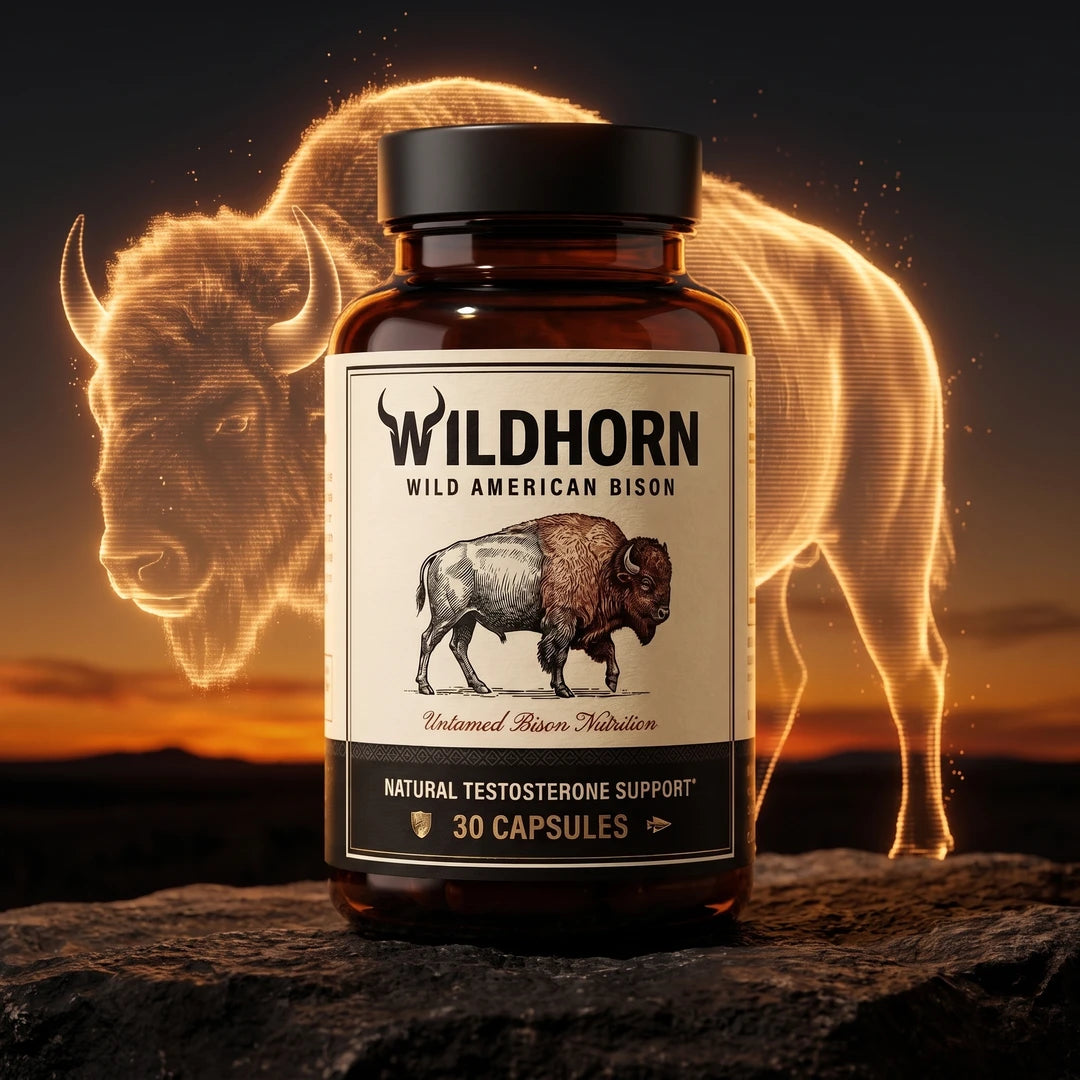
In our formula, Wild Bison combines KSM-66 ashwagandha at 600 mg with Rhodiola rosea standardized to 3% rosavins, alongside zinc and vitamin D, two nutrients with direct roles in supporting testosterone already within a normal range. The goal was not to include every herb that has ever appeared in a testosterone study. It was to pick the two with genuine, non-overlapping mechanisms and dose them at levels the research actually supports.
If you have been relying on one adaptogen alone and not getting full coverage, the issue is usually that one herb does not address both pathways. Ashwagandha alone does not cover fatigue the way Rhodiola does. Rhodiola alone does not have ashwagandha's cortisol-modulation and sleep data. The right testosterone support formula for men addresses both without guesswork.
If you are building your own stack, the targets are clear: 300 to 600 mg KSM-66 plus 200 to 400 mg SHR-5, timed appropriately. If you want that combination already worked out, Wild Bison was built for exactly this situation.
Frequently asked questions
Can I take ashwagandha and Rhodiola at the same time?
Yes. No interactions between the two have been documented in clinical research. A common approach is ashwagandha with food in the evening, and Rhodiola in the morning on an empty stomach. That timing takes advantage of each herb's individual profile rather than fighting it.
How long does ashwagandha take to work?
Most men notice meaningful effects after four to eight weeks of consistent daily use. Sleep quality improvements tend to appear first, sometimes within two to three weeks. The testosterone-support data comes from eight-week studies, so give it that full window before drawing conclusions.
Is Rhodiola safe for long-term use?
Rhodiola has a strong safety profile in trials running up to three months. Many practitioners suggest cycling it rather than using it continuously: five days on, two days off, or reserving it for high-demand training or work periods. The evidence base for continuous daily use beyond three months is thinner than for ashwagandha.
Does ashwagandha actually support testosterone, or is that just marketing?
For KSM-66 ashwagandha specifically, the data is real. A peer-reviewed randomized trial found that 600 mg daily helped healthy men maintain testosterone already within a normal range at levels significantly higher than placebo after eight weeks of resistance training. The effect is genuine but works best as part of a complete approach that includes adequate sleep, training, and protein.
Which adaptogen is better for men over 50?
Both are useful, and the combination tends to deliver more than either alone in this age range. Testosterone support and sleep quality, where ashwagandha has its strongest data, become more relevant as men age. So does fatigue management and sustained energy, which is Rhodiola's territory. If you can only pick one, ashwagandha has the stronger direct evidence for hormonal support in healthy men.
These statements have not been evaluated by the Food and Drug Administration. This product is not intended to diagnose, treat, cure, or prevent any disease.
Written by The Wildhorn Desk, Men's Health Editor.