Grass-Fed vs Grain-Fed Bison: Does Nutrition Change?
9 min read
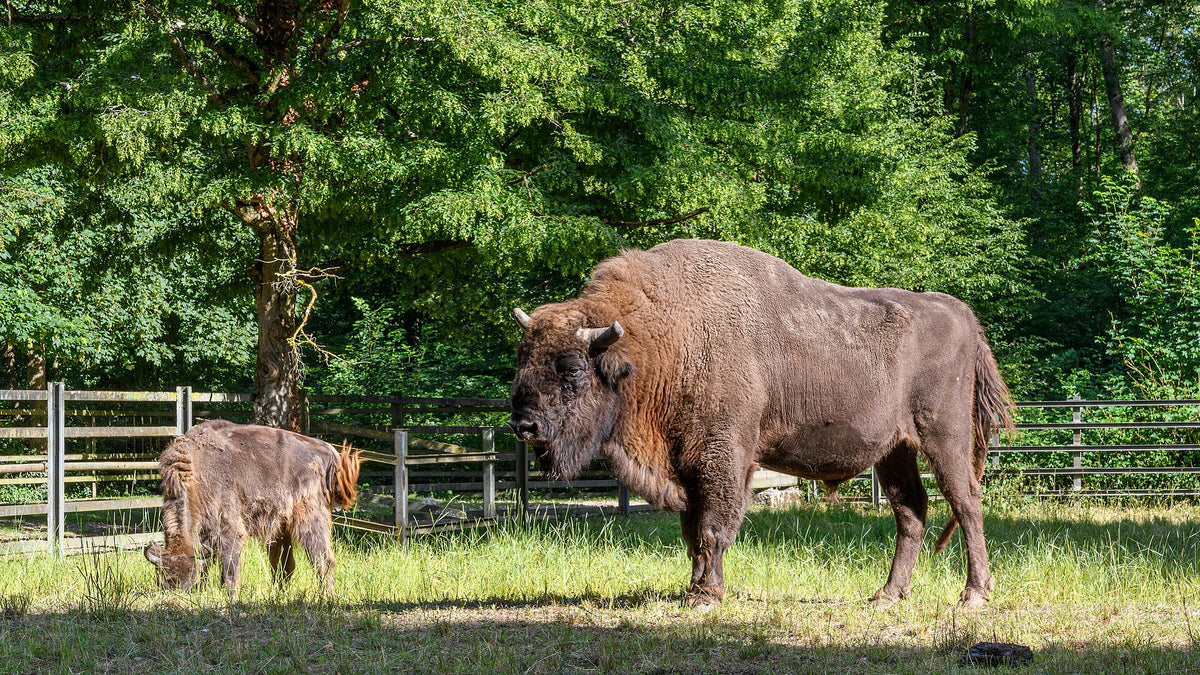
Yes, diet changes bison nutrition measurably. Grass-fed bison liver contains higher retinol, more favorable omega-3 to omega-6 ratios, and greater concentrations of vitamin K2 compared to grain-finished animals. Wild-harvested bison, living on native rangeland year-round, represents a distinct category above both.
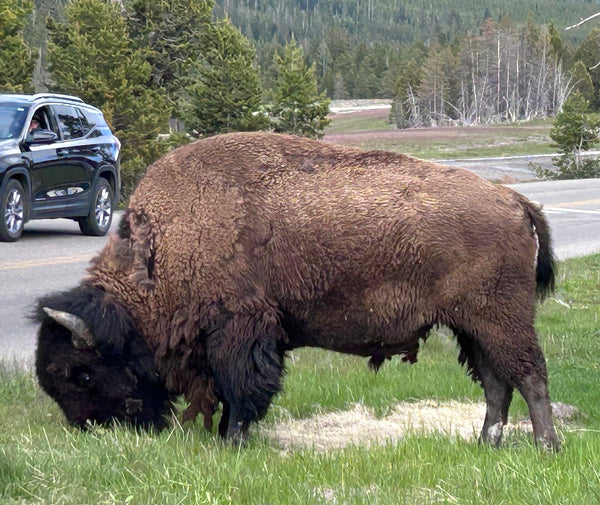
Achim Lammerts (Syntaxys) / CC BY-SA 4.0 / via Wikimedia Commons
How Bison Are Actually Raised in the US
Most Americans picture bison as wild animals on open plains. The commercial reality is different. The majority of bison sold in the US today start on pasture and then move to a feedlot for finishing, typically 90 to 120 days before harvest. A smaller share are raised on pasture for their entire lives. Fewer still are truly wild-harvested from herds on native rangeland.
These three categories produce animals with different tissue compositions. Diet shapes what ends up in the liver, fat stores, and organs. This is not a marketing point. It is basic nutritional biochemistry.
Customers often ask us whether sourcing matters as much as the label suggests. The short answer is yes, and the differences show up most clearly in fat-soluble vitamins, fatty acid ratios, and certain trace minerals. The rest of this article walks through each one.
Fat Profiles: How Omega Ratios Shift with Diet
Ruminants are bioconverters. They eat plant material and transform it into meat, fat, and organ tissue. What those plants contain flows into the animal's tissues over time.
Grass and native forbs are rich in alpha-linolenic acid, an omega-3 fatty acid. Corn and soy, the backbone of grain finishing rations, are dominated by linoleic acid, an omega-6. Months in a feedlot eating grain shifts the animal's tissue fat profile accordingly.
A widely cited review published in Nutrition Journal (Daley et al., 2010) found that grass-finished ruminants contain 2 to 5 times more omega-3 fatty acids than grain-finished animals of the same species. Bison follow a similar pattern. Bison is leaner than beef overall, so absolute fat content is lower across all feeding methods. But the ratio still shifts.
The omega-3 to omega-6 ratio matters because both fatty acid families compete for the same metabolic enzymes. Grass-fed animals tend to deliver tissue ratios closer to 1:2 or 1:3. Grain-finished animals can run 1:10 or higher.
Bison liver is not a primary fat source. But even in organ tissue, where fat content is lower than in muscle, the fatty acid signature of the diet remains visible.
Fat-Soluble Vitamins: Where Grass Makes the Biggest Difference
Vitamins A, D, E, and K2 are fat-soluble. They accumulate in fatty tissue and organs rather than flushing out in urine. They also depend heavily on diet and environment for synthesis or absorption. This is where a grass-fed or wild diet separates most clearly from a grain-finishing program.
Vitamin A (retinol). Grass is rich in beta-carotene, the plant precursor to retinol. Ruminants convert beta-carotene efficiently and store the resulting retinol in the liver. Grain-fed animals receive far less dietary beta-carotene. Grass-fed bison liver is measurably higher in retinol as a result. Traditional food cultures prized liver from wild or pastured animals partly for this reason.
Vitamin D. Animals on open pasture synthesize vitamin D3 through sun exposure, the same mechanism that works in humans. Confined animals synthesize far less. Feedlot operators often compensate with synthetic D3 in feed, which raises blood levels but is not identical to years of UV-driven synthesis in a free-ranging animal.
Vitamin E (alpha-tocopherol). Fresh grass is a meaningful source of tocopherols. Grain rations are low in natural vitamin E, so synthetic tocopherols are typically added. The form differs even when the measured blood level looks similar.
Vitamin K2 (menaquinone-4). This is arguably the most diet-sensitive of the four. K2 in ruminants comes from bacterial fermentation of green plant matter in the rumen. Animals eating green grass produce and store MK-4. Grain-fed animals produce substantially less. K2 is found primarily in organ meats and animal fats. Muscle meat contains very little.
Mineral Density: Soil, Feed, and Trace Elements
Liver is one of the most mineral-dense foods known. Gram for gram, it outperforms muscle meat in copper, zinc, selenium, and iron by a significant margin. The question is whether an animal's diet shifts that density.
Partially. It depends on the mineral.
- Copper. Liver is the primary copper storage organ in mammals. Grass-fed animals on diverse native soils typically maintain adequate copper from forage. Grain rations can be lower in copper, though feedlot operators usually add supplemental copper. Levels in properly supplemented grain-fed animals can be comparable to grass-fed.
- Zinc. Plant-based feed contains phytates that bind zinc and reduce absorption. Ruminants partly overcome this, but animals on diverse pasture generally show better zinc bioavailability than those on high-grain diets.
- Selenium. Almost entirely determined by soil, not feed type. Selenium-rich soil produces selenium-rich forage. Animals in low-selenium regions may be deficient regardless of diet unless supplemented.
- Heme iron. Relatively stable across feeding methods. The iron content of bison liver does not vary dramatically between grass-fed and grain-finished animals. Both deliver substantial heme iron, the most bioavailable dietary iron form. See the NIH Office of Dietary Supplements: Iron Fact Sheet for reference values.
In short: fat-soluble vitamins and fatty acid ratios are the clearest markers of diet quality in bison. Mineral content is more influenced by soil geography than by feeding method alone.
Wild Bison: A Third Category
Pasture-raised is meaningfully different from grain-finished. Wild-harvested is different from both. Wild American bison live year-round on native grasslands, eating a rotating mix of native grasses, forbs, sedges, and browse as the seasons shift. No managed nutritional program. No supplemented feed ration. No finishing period.
Wild animals typically carry more diverse fatty acid profiles and higher concentrations of fat-soluble vitamins than even well-managed pasture operations. This is not universal. Range quality, season of harvest, and individual animal variation all play into it. But as a general principle, a wild-harvested organ represents the top end of the dietary quality spectrum for that species.
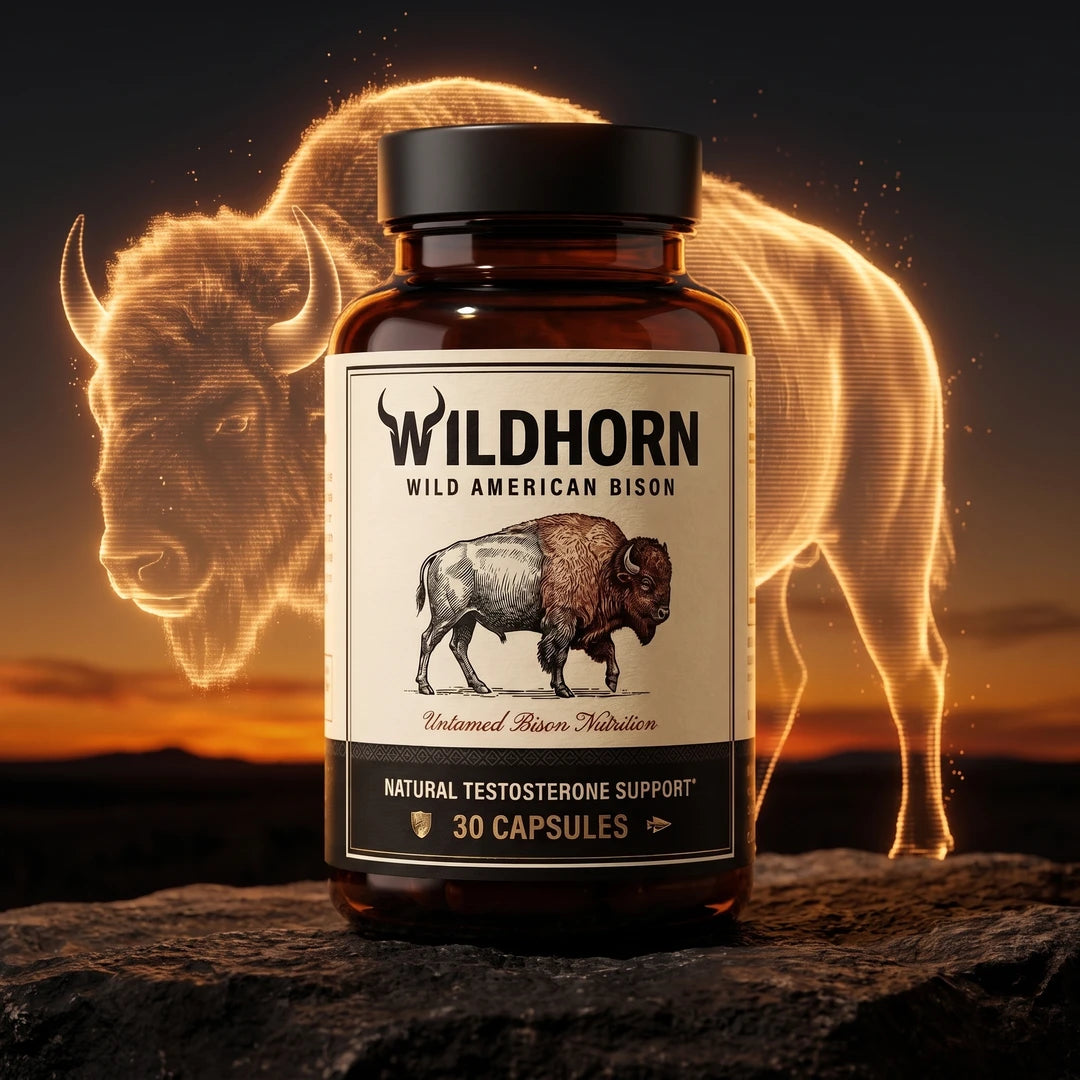
The team behind our formula sources exclusively from wild-harvested American bison for exactly this reason. The animals live and are harvested on open range. No feedlot phase.
This also means the nutrient profile is inherently variable, as wild diets are. A bison harvested in late summer after months of lush forage will have different tissue concentrations than one taken in early spring. That variability is expected. It is not a quality problem. It is what wild food actually looks like.
Whole Organ vs Isolated Nutrient: A Parallel Question
The grass-fed vs grain-fed question matters. So does a related question: whole organ vs isolated nutrient.
Liver contains retinol within the cellular matrix, alongside cofactors, transport proteins, and other micronutrients. A synthetic retinyl palmitate supplement delivers isolated retinol without that context. Whether the surrounding molecular context affects how the nutrient is used is an area of active nutritional research, and the honest answer is that we do not fully know yet.
The same logic applies to B12, copper, and heme iron. These nutrients occur in organ tissue alongside the molecular neighbors they have coexisted with in animal physiology for a long time. The nose-to-tail eating tradition, found in nearly every pre-industrial food culture, reflects an intuitive recognition of this. Organ meats were not a poverty food in most of human history. They were prized because they concentrated nutrients that were otherwise hard to obtain.
Heart adds CoQ10, a compound present in every cell that helps maintain normal cellular energy production already within a healthy range. Kidney concentrates selenium and B vitamins. Together, a liver, heart, and kidney formula delivers a nutrient profile no standard multivitamin replicates exactly, because multivitamins are assembled from isolated and often synthetic compounds rather than whole-food matrices.
Freeze-drying preserves this matrix without heat damage. It removes moisture while keeping cellular structure largely intact. That distinction matters if the goal is to deliver the nutrient as it exists in the food, not a copy of it.
What to Check Before Buying a Bison Organ Product
Not all bison organ capsules are equal. A few questions worth asking before you commit.
- Wild-harvested or pasture-raised? For the reasons above, this is the most important sourcing question. Look for brands that specify the harvest method, not just the species name.
- Freeze-dried or desiccated? Freeze-drying preserves more heat-sensitive nutrients than conventional drying. If the label does not specify, that is worth finding out.
- Which organs are included? Liver alone is nutritionally valuable. A combination of liver, heart, kidney, and other organs provides a broader range of micronutrients than any single organ.
- How much organ material per serving? A meaningful daily amount of concentrated freeze-dried organ capsules typically runs 1,500 to 2,000 mg per day. Products at 200 to 300 mg per serving are delivering far less actual nutrient matrix, regardless of what the label says about sourcing.
- Are there fillers? Quality organ supplements should contain organ powder and a capsule shell. Nothing else.
Grass-fed vs grain-fed is a real and measurable distinction. It is also one piece of a larger sourcing picture that includes wild vs managed, freeze-dried vs desiccated, and single organ vs a full nose-to-tail blend. Ask all of those questions together, not just the first one.
Frequently asked questions
Is grass-fed bison liver more nutritious than grain-fed?
Grass-fed bison liver generally contains higher retinol (vitamin A), more favorable omega-3 to omega-6 ratios, and greater concentrations of vitamin K2 than grain-finished animals. Heme iron content is relatively stable across both. The clearest differences appear in fat-soluble vitamins and fatty acid profiles, not mineral content.
What vitamins are found in bison liver?
Bison liver is rich in retinol (vitamin A), vitamin B12, heme iron, and copper. In grass-fed and wild-harvested animals, it also carries higher concentrations of vitamins D, E, and K2 compared to grain-finished animals. These nutrients are present in whole-food form within the organ's cellular matrix, not as isolated compounds.
Does wild bison have better nutrition than farmed bison?
Wild-harvested bison typically shows more diverse fatty acid profiles and higher concentrations of fat-soluble vitamins than even pasture-raised farmed animals. This reflects year-round consumption of diverse native grasses and forbs with no supplementation or grain finishing. Nutrient levels vary by season and individual animal, as expected with wild food.
What is the difference between freeze-dried and desiccated organ meat?
Freeze-drying removes moisture at low temperature, which preserves heat-sensitive nutrients, enzymes, and the organ's cellular structure more effectively than conventional desiccation, which uses heat. For fat-soluble vitamins and enzymatic cofactors, the lower processing temperature helps maintain the nutrient matrix closer to its natural state.
Why do traditional diets include multiple organs rather than just liver?
Each organ carries a distinct nutrient signature. Liver concentrates vitamin A, B12, copper, and heme iron. Heart is a concentrated source of CoQ10. Kidney provides selenium and additional B vitamins. Eating a range of organs together delivers a broader micronutrient spectrum than any single organ alone, which is why nose-to-tail eating appeared independently across many food cultures.
These statements have not been evaluated by the Food and Drug Administration. This product is not intended to diagnose, treat, cure, or prevent any disease.
Written by The Wildhorn Desk, Men's Health Editor.