How CoQ10 Supports Mitochondrial Function
9 min read
CoQ10 sits inside the inner mitochondrial membrane and shuttles electrons between protein complexes, driving the electrochemical gradient that powers ATP synthesis. Endogenous production peaks in the 20s and measurably declines by the 40s, which is why dietary and supplemental sources attract more attention as men age.
James St. John / CC BY 2.0 / via Wikimedia Commons
What CoQ10 Actually Is
Coenzyme Q10 goes by several names: CoQ10, ubiquinone, ubiquinol (its reduced form). The "ubiquitous" root in ubiquinone tells you something useful. It is present in virtually every cell in the human body. It is not a vitamin. The body synthesizes it through a 17-step biosynthetic pathway that draws on B vitamins, vitamin C, and amino acids, tyrosine in particular.
Concentrations are not uniform across tissues. The organs that work hardest carry the most CoQ10. Cardiac muscle, liver, kidney, and skeletal muscle top the list. That distribution is not random. It tracks mitochondrial density. Wherever energy demand is high, CoQ10 follows.
The compound is fat-soluble and anchors itself inside cell membranes, specifically the inner mitochondrial membrane where its electron-carrying function takes place. Dissolve that context and its role becomes clearer fast.
CoQ10's Role as an Electron Carrier in the ETC
The inner mitochondrial membrane houses the electron transport chain, a series of four protein complexes labeled I through IV. Their job is to extract energy from NADH and FADH2, the electron carriers produced earlier in metabolism, and use it to pump hydrogen ions across the membrane. That pumping builds an electrochemical gradient. ATP synthase, sitting at Complex V, uses that gradient to phosphorylate ADP into ATP. The entire mechanism depends on maintaining continuous electron flow.
CoQ10 is the mobile shuttle that keeps that flow going. In its oxidized form, ubiquinone, it accepts electrons from Complex I (or from Complex II via a separate entry point). Loaded up, it diffuses laterally through the membrane lipid bilayer and delivers those electrons to Complex III, becoming ubiquinol in the process. Complex III then passes them down the chain toward oxygen.
Stall the shuttle and upstream traffic backs up. ATP output drops. It is a mechanical dependency, not a loose correlation. A foundational review by Ernster and Dallner in Biochimica et Biophysica Acta documented this dual role: electron carrier and membrane-bound antioxidant, noting that CoQ10's positioning in the lipid bilayer makes it structurally irreplaceable in the ETC sequence.
The antioxidant function deserves a sentence. Electron transfer is efficient but imperfect. Some electrons escape and form reactive oxygen species. Ubiquinol donates electrons to quench them before they can damage nearby membrane proteins or initiate lipid peroxidation. CoQ10 is doing two jobs simultaneously.
Why Endogenous Production Falls With Age
Peak CoQ10 synthesis happens in the 20s. By the mid-40s, tissue concentrations are measurably lower. Cardiac tissue shows some of the steepest drops. Post-mortem analyses have found heart CoQ10 levels in men in their 40s roughly half those seen in 20-year-old samples. That is not a marginal difference.
Several mechanisms drive the decline:
- Pathway complexity. The biosynthetic route involves 17 enzyme-catalyzed steps. Age-related shifts in mitochondrial enzyme activity slow throughput at multiple points along the chain.
- Statin use. HMG-CoA reductase inhibitors, among the most prescribed medications for men over 50, block a step shared by both cholesterol synthesis and the mevalonate pathway that builds CoQ10's isoprenoid tail. The pharmacological mechanism directly suppresses endogenous CoQ10 production alongside cholesterol output.
- Oxidative burden. As oxidative stress accumulates, ubiquinol gets oxidized back to ubiquinone faster than the cell can recycle it. The net effect is less active CoQ10 per mitochondrion, even when dietary intake stays constant.
- Absorption changes. Fat-soluble nutrient absorption tends to become less efficient with age, which reduces the dietary contribution to tissue stores.
The NIH Office of Dietary Supplements notes that no official Dietary Reference Intake has been established for CoQ10 because it is not classified as an essential nutrient. The body makes it. But that classification was set when endogenous synthesis was assumed to be adequate throughout life, an assumption the aging literature now complicates.
Which Foods Deliver CoQ10
Diet contributes to CoQ10 status, though the body's own synthesis dominates in younger adults. As synthesis declines, the dietary contribution matters more. The numbers are worth knowing.
Organ meats are the most concentrated food sources by a significant margin. Heart muscle leads. A 100-gram serving of beef or bison heart delivers roughly 100 to 130 mg of CoQ10. Lean beef muscle provides about 3 to 4 mg per 100 grams. Most plant foods come in under 1 mg per 100 grams. That is not a small gap.
Other reasonable contributors:
- Fatty fish (sardines, mackerel, herring): 4 to 6 mg per 100 grams
- Chicken breast or thigh: 2 to 3 mg per 100 grams
- Beef liver: approximately 2 mg per 100 grams
- Spinach and broccoli: under 1 mg per 100 grams
Heart muscle's extraordinary CoQ10 content is not accidental. Cardiac tissue runs continuously, never resting, from the first beat to the last. That demands high aerobic metabolic capacity and therefore high mitochondrial density. CoQ10 concentrations in tissue directly reflect mitochondrial density. The organ's metabolic reality shows up in its nutrient profile.
Practical note: because CoQ10 is fat-soluble, consuming it alongside dietary fat improves absorption whether the source is food or a supplement capsule.
Whole-Food CoQ10 vs. Isolated Supplements
Most CoQ10 on the supplement market is synthetic ubiquinone manufactured via yeast fermentation. It works, but bioavailability is a genuine challenge. The molecule is large and has low water solubility, so standard powder-in-capsule formulations are absorbed poorly. Soft-gel formulations in oil, or nano-emulsified versions, perform better in absorption studies. Taking any CoQ10 supplement with a fat-containing meal roughly doubles plasma uptake compared to a fasted state.
Some products have shifted to ubiquinol (the pre-reduced form) on the premise that older adults convert ubiquinone to ubiquinol less efficiently. The evidence is mixed. Some trials show modestly higher plasma levels with ubiquinol; others show equivalent outcomes at matched doses. The research is ongoing.
Whole-food CoQ10, as it exists in heart tissue, is embedded in a phospholipid matrix alongside heme iron, zinc, and B vitamins. Whether that food matrix improves CoQ10 uptake relative to isolated supplements is not yet conclusively established. It is, however, a logical question. Customers often ask us specifically about the CoQ10 content of freeze-dried bison heart. The freeze-drying process removes water at low temperature under vacuum, which preserves heat-sensitive and fat-soluble compounds, including CoQ10, far better than cooking or conventional high-heat dehydration. The structural integrity of the source tissue is maintained to a degree that heat processing cannot match.
What Adequate CoQ10 Status May Support
Because CoQ10 sits at the center of ATP production, its status has implications across every tissue with sustained energy demands. In structure and function terms, maintaining adequate CoQ10 levels is associated with supporting:
- Normal cellular energy metabolism in cardiac muscle, liver, and skeletal tissue
- The body's antioxidant network within the mitochondrial membrane, where ubiquinol quenches reactive oxygen species generated during electron transfer
- Normal mitochondrial membrane integrity over time
- General cardiovascular tissue function already within a normal range
These are not disease claims. CoQ10 does not supports or supports any condition. What the science describes is a compound the body requires to sustain normal mitochondrial function, whose endogenous synthesis declines in a predictable and well-documented pattern with age, and whose dietary replenishment may help support normal cellular energy status in aging tissue.
One specific note for anyone on a statin: the pharmacological mechanism of HMG-CoA reductase inhibition directly overlaps with endogenous CoQ10 synthesis. This is worth discussing with a prescribing physician, not something to self-manage based on blog reading.
Bison Heart, Nose-to-Tail Eating, and the Case for Organ Meats
Before organ meats fell out of fashion in mid-20th century Western diets, heart, liver, and kidney appeared regularly on the table. The reasoning was practical, not sentimental. These tissues were dense with nutrients. The CoQ10 in heart muscle. The B12 and heme iron in liver. The trace minerals concentrated in kidney. Not folk wisdom. Metabolic reality expressed through centuries of dietary selection.
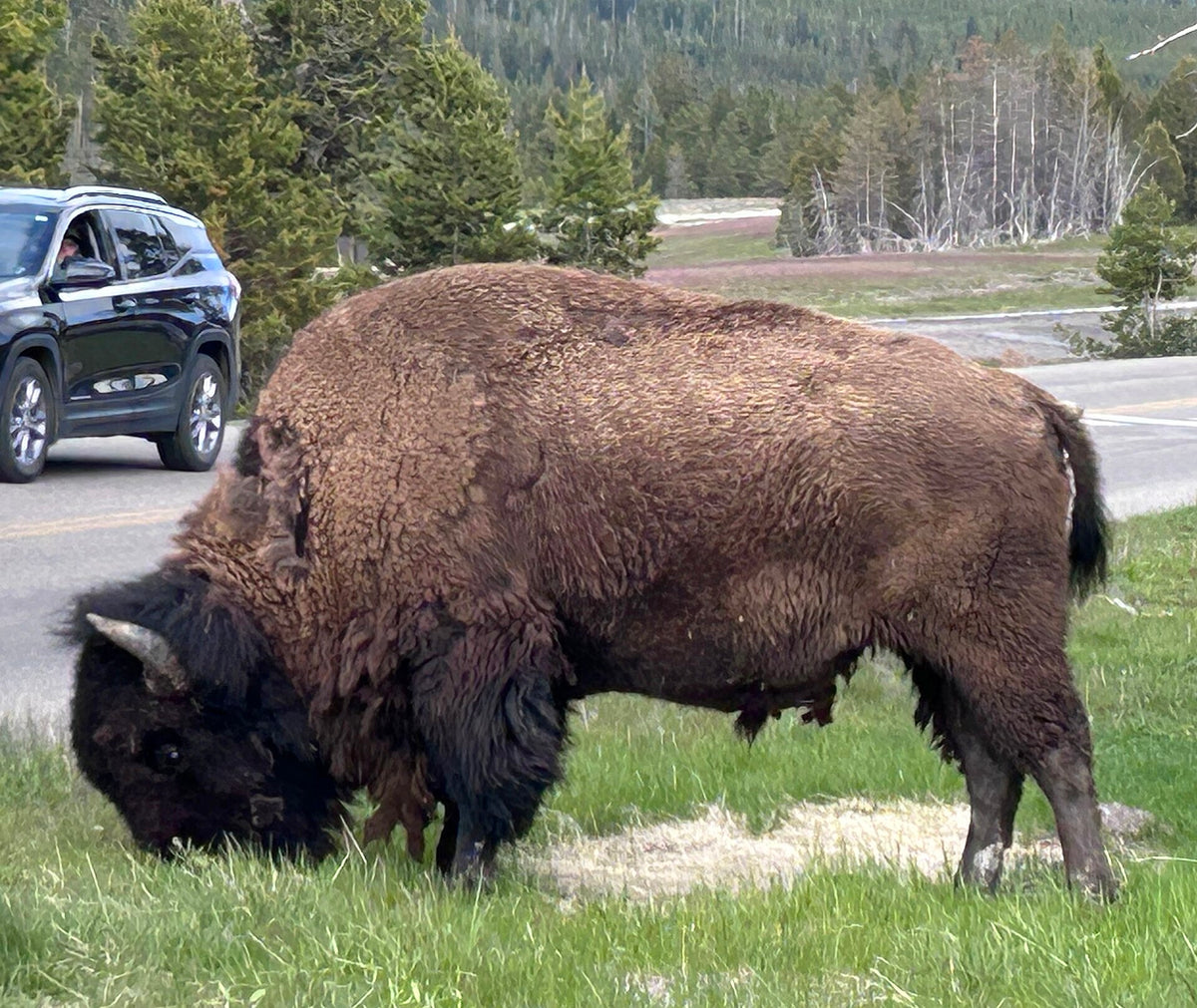
Wild bison live on continuous open-range movement. That sustained aerobic demand maintains high mitochondrial density in their cardiac tissue throughout the animal's life. The metabolic pressure never lets up, which means the CoQ10 content of bison heart reflects active working tissue rather than feedlot-fattened sedentary muscle.
The team at the Wildhorn shop works with freeze-dried wild American bison organs specifically because the cold, low-pressure drying process preserves fat-soluble and heat-sensitive compounds that cooking destroys. For men who want organ meats as a regular part of their diet but are not set up to source and prepare fresh heart, liver, and kidney on a consistent basis, freeze-dried capsules are a practical alternative with a preserved nutrient profile.
The nose-to-tail approach is not new. What is relatively new is the biochemical framework that explains precisely why these tissues deliver what they deliver at the molecular level. CoQ10's role in the electron transport chain is one clear example of that explanation.
Frequently asked questions
How is CoQ10 different from a vitamin?
Vitamins are nutrients the body cannot synthesize and must obtain entirely from food. CoQ10 is produced endogenously through a 17-step biosynthetic pathway. Dietary intake supplements rather than replaces what the body makes. The distinction matters because CoQ10 was not assigned a Dietary Reference Intake the way vitamins have been. But as endogenous synthesis declines with age, the dietary contribution to maintaining tissue levels becomes more relevant.
What is the difference between ubiquinone and ubiquinol?
Ubiquinone is the oxidized form of CoQ10; ubiquinol is its reduced form. The body cycles between the two continuously. Ubiquinone accepts electrons and becomes ubiquinol; ubiquinol donates electrons and reverts to ubiquinone. Both are active in different parts of the mitochondrial process. Most supplements labeled 'CoQ10' contain ubiquinone. Products marketed as 'CoQ10 ubiquinol' contain the pre-reduced form, which some research suggests may be absorbed more readily by older adults.
Can statins lower CoQ10 levels?
Statins inhibit HMG-CoA reductase, an enzyme used in both cholesterol synthesis and the mevalonate pathway that builds CoQ10's isoprenoid side chain. Multiple studies have documented reduced plasma CoQ10 levels in statin users. Whether this consistently reduces tissue CoQ10 at clinically meaningful levels remains an active research question. Anyone on a statin who is curious about their CoQ10 status should raise it with their prescribing physician rather than self-supplementing without context.
Why does heart tissue contain so much more CoQ10 than muscle meat?
Cardiac muscle operates without pause from birth to death, requiring continuous high-output aerobic metabolism and therefore extraordinary mitochondrial density. Skeletal muscle has variable demand and lower resting mitochondrial content by comparison. CoQ10 concentrations in any tissue directly reflect that tissue's mitochondrial density. The heart's non-stop workload results in CoQ10 levels per gram that are 20 to 40 times higher than lean skeletal muscle cuts.
Is there an official recommended intake for CoQ10?
No. The NIH Office of Dietary Supplements has not established a Dietary Reference Intake for CoQ10 because it is not classified as an essential nutrient since the body synthesizes it. Research on optimal intake, particularly in the context of aging and statin use, is ongoing. Clinical trials studying CoQ10's effects on various health markers have used supplemental doses typically ranging from 100 to 300 mg per day, though these doses are not official recommendations.
These statements have not been evaluated by the Food and Drug Administration. This product is not intended to diagnose, treat, cure, or prevent any disease.
Written by The Wildhorn Desk, Men's Health Editor.