The Role of B Vitamins in Daily Energy Metabolism
9 min read
B vitamins are eight distinct water-soluble nutrients the body relies on to convert carbohydrates, fats, and proteins into usable cellular energy. They work as coenzymes, meaning they activate the enzymes that drive metabolic reactions. Without adequate B vitamins, those reactions run below full capacity.
What B Vitamins Are (and What They Are Not)
The B vitamins are eight distinct water-soluble compounds. Most people supports them as a single nutrient, but that grouping is more historical than biological. Each has its own chemical structure, its own metabolic function, and its own primary food sources.
The eight are: thiamine (B1), riboflavin (B2), niacin (B3), pantothenic acid (B5), pyridoxine (B6), biotin (B7), folate (B9), and cobalamin (B12). The numbering reflects the history of discovery. Early researchers initially believed they were dealing with one compound, then kept finding new ones. B4, B8, B10, and B11 once appeared in the literature but were eventually reclassified or shown to be non-essential.
Water-solubility matters practically. Fat-soluble vitamins accumulate in tissue. Most water-soluble vitamins are excreted when intake exceeds need, which is why toxicity from food sources is essentially unheard of for most of them. B12 is the notable exception: the liver holds a reserve that can last years, which is why deficiency builds slowly even when intake drops significantly.
Worth stating clearly: B vitamins do not provide calories. They are not fuel. What they do is allow the body to extract fuel from the carbohydrates, fats, and proteins in food. That distinction shapes how to think about everything that follows.
How B Vitamins Work as Coenzymes
An enzyme is a protein that catalyzes a chemical reaction. Many enzymes cannot function without a coenzyme, a small non-protein molecule that binds to the enzyme and makes it active. B vitamins either function directly as coenzymes or are converted into coenzymes inside the cell.
Thiamine becomes thiamine pyrophosphate (TPP). Riboflavin becomes FAD and FMN. Niacin becomes NAD+ and NADP+. Pantothenic acid becomes part of coenzyme A. These are the active forms that interact with enzymatic machinery. The dietary form and the working form are not always the same thing.
Three central pathways require B vitamin coenzymes at multiple steps:
- Glycolysis: the initial breakdown of glucose into pyruvate, requiring thiamine and niacin coenzymes
- The Krebs cycle: the extraction of electrons from acetyl-CoA, requiring B1, B2, B3, and B5
- The electron transport chain: where electrons are used to generate ATP, requiring B2 and B3 as electron carriers
Adequate coenzyme availability at each step keeps these reactions running at capacity. Shortfalls slow the chain. The effect is not always obvious in the short term, which is one reason subclinical inadequacy can persist without clear symptoms for years.
B1, B2, and B3: The Energy Trio
Thiamine (B1) acts at pyruvate dehydrogenase, the enzyme complex that converts pyruvate into acetyl-CoA. This is the gateway reaction between glycolysis and the Krebs cycle. Thiamine is also required at alpha-ketoglutarate dehydrogenase, an enzyme operating inside the Krebs cycle itself. Pork and whole grains are among the better dietary sources.
Riboflavin (B2) forms FAD and FMN. Both carry electrons in the respiratory chain and in beta-oxidation, the process that breaks down fatty acids for energy. The body also requires riboflavin to regenerate glutathione. Dairy, eggs, and organ meats provide meaningful amounts.
Niacin (B3) forms NAD+ and NADP+. These participate in over 400 enzymatic reactions, according to the NIH Office of Dietary Supplements. NAD+ is required at multiple steps in glycolysis and the Krebs cycle. It also serves as a substrate for sirtuins, enzymes involved in cellular stress response pathways. Meat, fish, and poultry are the primary dietary sources; the body can convert tryptophan to niacin, though at a roughly 60:1 ratio by weight, which makes it an unreliable primary source.
B5, B6, and B7: Roles Often Overlooked
Pantothenic acid (B5) is a structural component of coenzyme A. Coenzyme A carries acetate groups through the cell, enabling both carbohydrate and fat oxidation via the Krebs cycle. Without adequate B5, coenzyme A synthesis slows and both pathways are affected. B5 is present in a wide range of foods, including meat, mushrooms, eggs, and avocado, which is why isolated deficiency is uncommon in men eating a varied diet.
Pyridoxine (B6) is required for over 100 enzymatic reactions, most involving amino acid metabolism. It enables transamination, the process by which nitrogen groups are shifted between molecules to build non-essential amino acids. It is also required for converting tryptophan to niacin, for heme synthesis, and for releasing glucose from stored glycogen. Poultry, fish, potatoes, and bananas are reliable sources.
Biotin (B7) activates carboxylase enzymes that fix carbon dioxide into organic molecules. Pyruvate carboxylase feeds into gluconeogenesis; acetyl-CoA carboxylase initiates fatty acid synthesis. Both require biotin to function. Eggs, salmon, nuts, and sweet potatoes provide meaningful amounts. Despite how biotin is most commonly marketed, its core metabolic role is in these carboxylation reactions, not in hair or nail structure directly.
Folate and B12: The Methylation Pair
Folate (B9) and cobalamin (B12) have overlapping functions that make them worth addressing together. Both are required for DNA synthesis and cell division. Their shared mechanism runs through the methylation cycle: folate donates a methyl group to homocysteine, converting it back to methionine. B12 is the coenzyme that enables this transfer. When either nutrient is inadequate, homocysteine can rise above its normal range.
B12 has a second distinct role. It acts as a coenzyme in the conversion of methylmalonyl-CoA to succinyl-CoA inside the Krebs cycle. This step is required for the metabolism of odd-chain fatty acids and several amino acids, including valine, isoleucine, and methionine. When B12 is inadequate, methylmalonyl-CoA accumulates. This is why elevated plasma methylmalonic acid is used clinically as a sensitive marker of B12 status, often more sensitive than serum B12 alone.
B12 absorption requires intrinsic factor, a protein secreted by stomach cells. The full process needs adequate stomach acid to separate B12 from dietary protein, then intrinsic factor binding, then transport to the terminal ileum. Both stomach acid and intrinsic factor output tend to decrease with age. As the NIH Office of Dietary Supplements notes, the same dietary intake can result in lower B12 absorption in older men than in younger adults, which is why status testing becomes more useful after 50.
Whole-Food Sources and Why Form Matters
B vitamins in whole foods arrive alongside cofactors, peptides, and binding proteins that affect absorption and utilization. Whether this difference from isolated synthetic forms is clinically significant varies by nutrient, but it is a real distinction, not just marketing language.
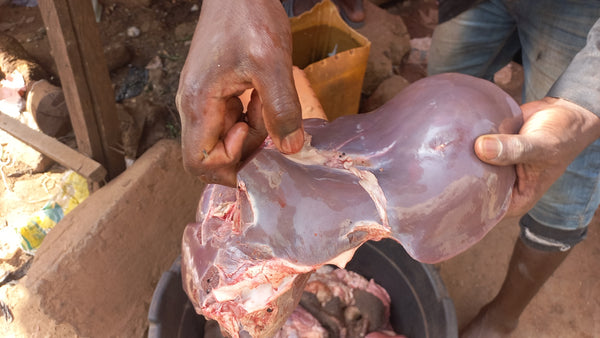
Liver is one of the most concentrated dietary sources of B12, alongside heme iron and copper. These nutrients are present in the same tissue in the ratios found in whole food. Heart muscle is rich in CoQ10, a compound that supports the mitochondrial electron transport chain alongside the B vitamin coenzymes described above. Both tissues have high metabolic demands, and both accumulate the nutrients required to sustain that metabolism.
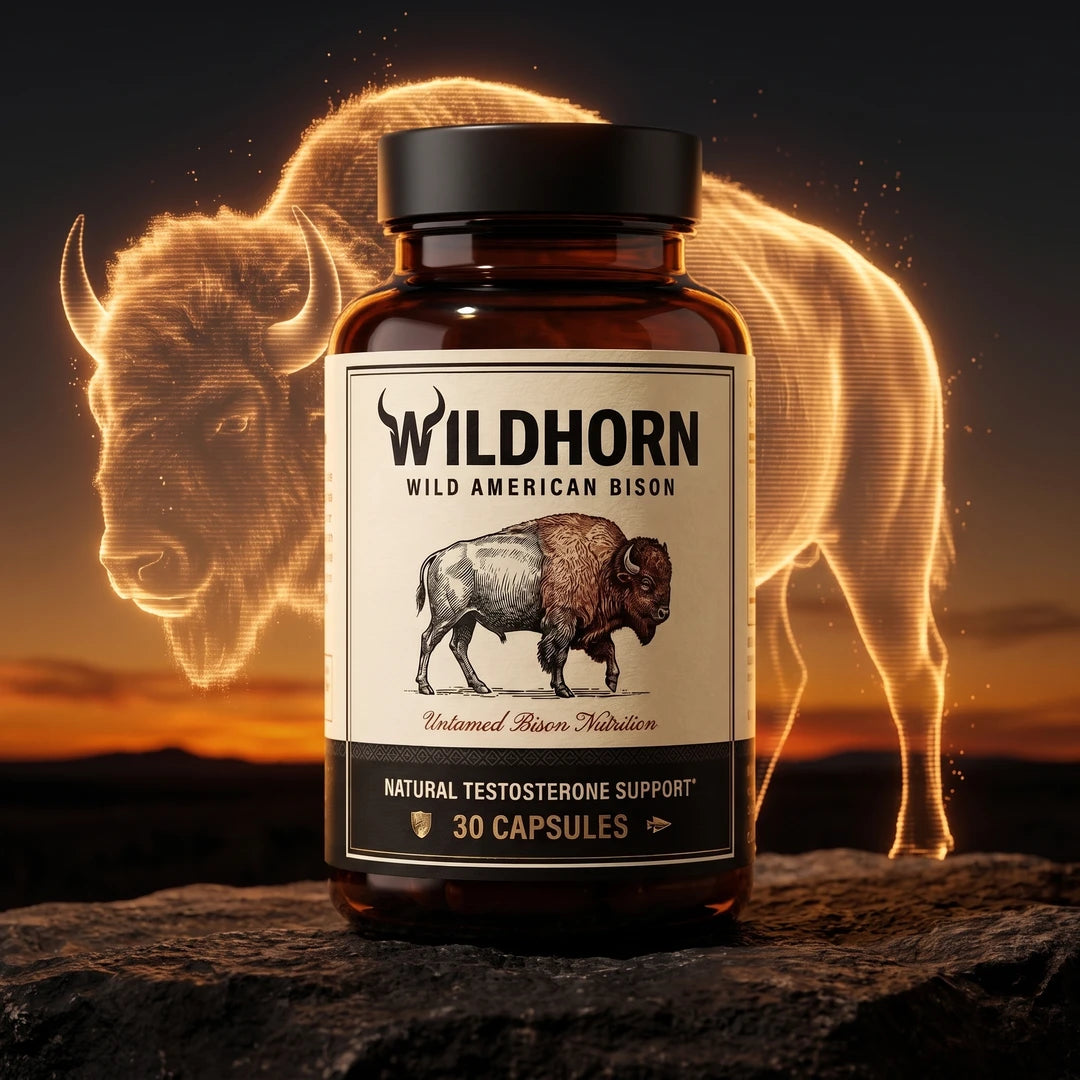
Customers often ask us why our organ capsule formula includes liver, heart, and kidney together rather than one organ alone. Each tissue contributes a different nutrient profile, and the nose-to-tail approach supports that whole-food complexity as an asset rather than something to strip away. Freeze-drying at low temperatures preserves the nutrient ratios found in the raw tissue without applying sustained heat.
For men who do not eat organ meats regularly, this is one practical way to include those nutrient profiles without preparing liver twice a week.
Testing and Practical Benchmarks
Testing is the most reliable way to know where B vitamin status actually stands. Dietary intake estimates are imprecise, and absorption varies enough between individuals that intake alone cannot predict status reliably.
The NIH sets the RDA for B12 at 2.4 mcg per day for adult men, and 1.7 mg per day for B6 in men over 50. These are intake targets, not blood level designed. The most actionable blood markers are serum B12, plasma folate, and homocysteine. Elevated homocysteine with low-normal serum B12 suggests functional inadequacy already within a normal range may not be optimal. Methylmalonic acid adds further specificity: a high reading alongside normal serum B12 points toward subclinical B12 insufficiency.
Men over 50 who take proton pump inhibitors or metformin should ask their physician specifically about B12 status. Both medications reduce absorption through different mechanisms, and the cumulative effect over years of use can be meaningful.
Regular intake of meat, eggs, dairy, and leafy greens covers most B vitamin needs for men eating a varied diet. For those who include liver or heart regularly, B12 and the mitochondrial B vitamins are less likely to be limiting. For everyone else, targeted supplementation with active forms (methylcobalamin for B12, methylfolate for B9) or a whole-food concentrate is worth discussing with a physician, particularly past age 50.
Frequently asked questions
Do B vitamins provide energy directly?
No. B vitamins do not contain calories. They function as coenzymes that help enzymes complete the reactions which extract energy from food. Without adequate B vitamins, those reactions run below capacity. The actual energy comes from carbohydrates, fats, and proteins in the diet.
Why does B12 absorption decline with age?
B12 absorption requires stomach acid to separate it from dietary protein, then binding to intrinsic factor (a protein made by stomach cells), then transport to absorption sites in the small intestine. Both stomach acid production and intrinsic factor output tend to decrease with age, which means the same dietary intake can yield lower circulating B12 over time. Testing rather than estimating intake is the reliable way to know where you stand.
What are the best whole-food sources of B12?
Animal products are the only significant dietary sources of B12. Liver is the most concentrated, followed by clams and other shellfish, then beef, eggs, and dairy. Plant foods contain no meaningful B12. Men who reduce animal product intake should monitor B12 status through blood testing rather than assuming dietary variety is sufficient.
How does CoQ10 relate to B vitamin metabolism?
CoQ10 is not a B vitamin, but it operates in the same part of the cell: the mitochondrial electron transport chain. Riboflavin (as FAD) and niacin (as NAD+) carry electrons that are transferred to CoQ10, which then passes them down the chain where ATP is produced. Heart tissue is a natural source of CoQ10 and is concentrated in the B vitamins involved in mitochondrial function, reflecting the high metabolic demands of cardiac muscle.
Is there a meaningful difference between active and inactive forms of B vitamins?
Yes. Some supplements use forms the body must convert before use. Folic acid (synthetic B9) must be converted to methylfolate; cyanocobalamin (synthetic B12) must be converted to methylcobalamin or adenosylcobalamin. Individuals with certain MTHFR gene variants convert folic acid less efficiently. Methylcobalamin and methylfolate are the active forms that bypass this step. Whole-food sources provide B vitamins in naturally occurring forms alongside other nutrients, though both food and supplemental sources can help maintain B vitamin levels already within a normal range when consumed consistently.
These statements have not been evaluated by the Food and Drug Administration. This product is not intended to diagnose, treat, cure, or prevent any disease.
Written by The Wildhorn Desk, Men's Health Editor.