Vitamin B12: Why Men Over 45 Should Pay Attention
9 min read
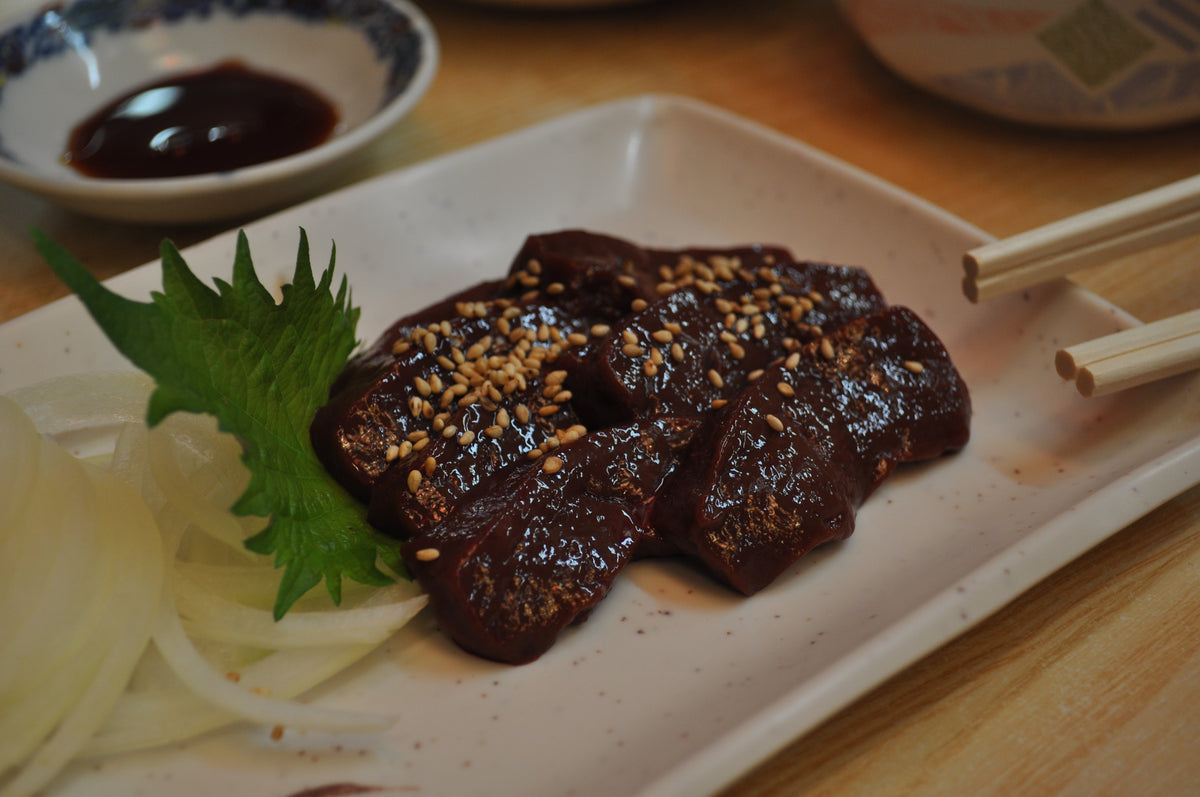
B12 absorption tends to drop after 45 because stomach acid production declines, and acid is what frees B12 from food protein so the body can take it in. A man can eat adequate B12 and still show low serum levels. Organ meats, especially liver, remain among the most concentrated whole-food sources of naturally occurring B12.
"Beef liver sashimi" by Schellack is licensed under CC BY 3.0. To view a copy of this license, visit https://creativecommons.org/licenses/by/3.0/.
What B12 Does in the Body
B12 is a water-soluble vitamin your body cannot make. It has to come from food or supplements. At a basic level, it does three things your physiology depends on every day.
Red blood cell formation. Cells that divide rapidly, including red blood cell precursors, require B12 for normal DNA synthesis. Without adequate B12, those cells can develop abnormally large and misshapen.
Nerve support. The myelin sheath that insulates nerve fibers depends in part on B12. Healthy myelin helps support normal nerve signal transmission throughout the body.
Homocysteine regulation. B12 works alongside folate to convert homocysteine into methionine. Homocysteine is an amino acid; doctors routinely track it alongside other cardiovascular markers. B12 helps keep levels already within a normal range where they belong.
Normal adult serum B12 runs roughly 200 to 900 picograms per milliliter. Levels in the 200 to 300 range are sometimes called "low normal." Technically in range, but worth watching, especially past 50.
Why Absorption Shifts After 45
Most nutrition writing focuses on how much B12 you eat. The more important question past 45 is how much you actually absorb. Those two numbers can diverge significantly.
The absorption pathway runs in three steps. First, stomach acid (hydrochloric acid) breaks the chemical bond between B12 and the food protein it is attached to. Second, a glycoprotein made in the stomach called intrinsic factor binds to the now-free B12. Third, that intrinsic factor-B12 complex travels to the terminal ileum, the last stretch of the small intestine, where it crosses into the bloodstream.
After 45, two things can quietly compromise this sequence. Parietal cells in the stomach lining gradually produce less hydrochloric acid, a condition called hypochlorhydria. Less acid means weaker pepsin activation, which means B12 stays bonded to food protein rather than getting freed. Separately, a condition called atrophic gastritis, which becomes more prevalent with age, can reduce intrinsic factor production directly.
Two common medications compound the problem. Proton pump inhibitors (PPIs), prescribed for acid reflux, deliberately reduce stomach acid as their primary mechanism. Metformin, widely used for blood glucose management, has been shown in multiple studies to reduce B12 absorption at the ileum. Research published in the Annual Review of Nutrition identified reduced gastric acid output as the main driver of B12 malabsorption in older adults.
The net result: the same steak at 55 delivers less absorbed B12 than it did at 30, even if the meal looks identical on a nutrition label.
How Common Is the Absorption Gap?
The gap between B12 intake and B12 status is not rare. According to the NIH Office of Dietary Supplements, an estimated 10 to 30 percent of adults over 50 have some degree of reduced ability to absorb food-bound B12. Many have no noticeable symptoms early on.
Serum B12 alone can mislead. A clearer picture comes from pairing it with methylmalonic acid (MMA), a metabolite that rises when B12 is functionally low at the cellular level, even when blood levels sit at the lower end of the acceptable range. If you have not had MMA tested alongside a standard B12 panel, it is worth raising with your doctor.
Customers often ask us whether organ-based sources can help fill this gap. The honest answer is that the nutrient is present in meaningful concentration, particularly in liver, but individual absorption still depends on each person's gastric function. No food source bypasses the acid-and-intrinsic-factor requirement the way high-dose sublingual supplements can.
Food Sources Ranked by B12 Concentration
Not all B12 sources are equal. Here is how common foods compare per standard serving:
- Clams (3 oz, cooked): approximately 84 mcg. The highest common food source by volume.
- Beef liver (3 oz, cooked): approximately 70 to 80 mcg. Close behind clams, and far more practical for most men.
- Sardines (3 oz, canned): approximately 8 mcg. Convenient and consistently underrated.
- Salmon (3 oz, cooked): approximately 3.2 mcg.
- Beef muscle meat (3 oz, cooked): approximately 2.4 to 3 mcg.
- Whole milk (1 cup): approximately 1.1 mcg.
- Large egg: approximately 0.6 mcg, concentrated in the yolk.
The adult RDA is 2.4 mcg per day. That figure assumes normal absorption. For men with reduced gastric acid, the absorbed fraction of dietary B12 is lower, meaning effective intake needs to be higher to reach the same absorbed amount. One serving of liver covers that RDA many times over. Muscle meat alone does not come close at comparable portions.
Bison liver carries a nutrient profile close to beef liver. Wild-harvested bison eat diets closer to what their species evolved consuming, which influences the nutrient density of their organs.
Whole-Food B12 vs Synthetic Forms
The form of B12 listed on a supplement label matters more than most people realize.
Cyanocobalamin is the cheapest and most common form in multivitamins. It is synthetic and must be converted by the body into methylcobalamin or adenosylcobalamin before your cells can use it. Most healthy adults handle that conversion without issue, but it is an extra metabolic step.
Methylcobalamin is one of the two active forms your cells use directly. It is the predominant B12 form found in animal tissue. No conversion required.
Adenosylcobalamin is the second active form, less discussed, and particularly concentrated in organ meats including liver and kidney.
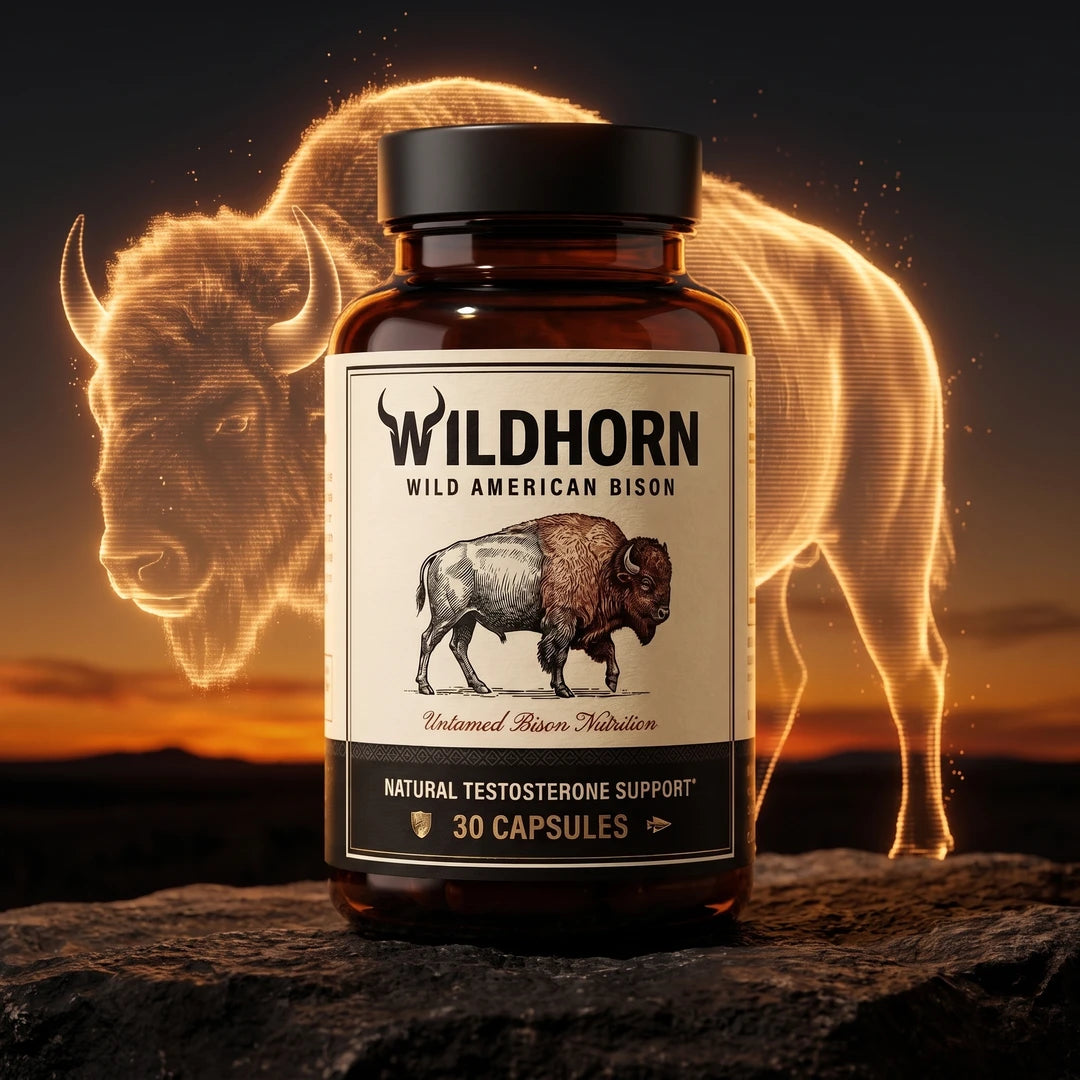
When B12 exists inside animal tissue, it is bound to protein in these active forms, embedded in a complete food matrix alongside cofactors and co-occurring vitamins. That differs structurally from an isolated synthetic compound in a capsule. The Wildhorn organ formula is built on this principle, using freeze-dried bison organs that carry B12 as it naturally exists in tissue, alongside vitamin A, heme iron, copper, and CoQ10.
Neither form is dangerous. If you are comparing supplement labels, methylcobalamin is closer to what food delivers.
Organ Meats: A Historically High-Concentration Source
Before supplements existed, organ meats were the primary high-concentration B12 source in human diets. Liver was consistently valued across traditional food cultures on every continent where large animals were hunted or herded. Not trend-following. Just eating the most nutrient-dense part of the animal.
Modern Western diets have moved organ meats to the margins. Many men today get their B12 primarily from muscle meat, dairy, and eggs. Those are legitimate sources, but the numbers are hard to argue with: three ounces of beef muscle contains roughly 3 mcg of B12. Three ounces of liver contains 70 to 80 mcg. That is a roughly 25-fold difference from the same animal.
Freeze-drying preserves nutrient content without heat exposure, which matters because some heat-sensitive compounds in organ tissue degrade during cooking. In our formula, we use freeze-dried wild bison organs including liver, heart, kidney, and testicle. The liver contributes naturally occurring B12, vitamin A, heme iron, and copper. The heart contributes CoQ10. A daily serving is four capsules at 422 mg each.
If preparing liver from scratch does not fit your week, whole-food organ concentrates offer a practical alternative worth looking into.
Practical Steps Worth Discussing with Your Doctor
B12 is worth knowing your number on, especially past 45. A few concrete steps:
- Ask for MMA alongside serum B12. MMA rises when B12 is functionally low at the cellular level even when blood levels sit in the low-normal range. Together, the two give a more complete picture.
- Note your medications. If you take a PPI or metformin, mention B12 status at your next visit. Both have solid published evidence for reducing B12 absorption over time.
- Prioritize liver in your diet. Even once a week covers your B12 needs many times over from a concentration standpoint. The active forms in liver require no conversion by the body.
- If supplementing, choose methylcobalamin. It is the active form, closer to what food delivers, and skips the conversion step cyanocobalamin requires.
- Consider the full food matrix. Nutrients inside a complete food structure behave differently than the same nutrient in isolation, and research on cofactor interactions continues to develop.
None of this replaces a conversation with your doctor. B12 status is easy to test, the dietary change is straightforward, and it is one of the more actionable nutritional markers for men in this age group to stay current on.
Frequently asked questions
What are early signs that B12 levels might be lower than optimal?
Low B12 can be subtle early on. Fatigue that does not resolve with rest, tingling or numbness in the hands or feet, and difficulty concentrating are among the signs some people notice. These overlap with many other conditions, which is why blood testing, including methylmalonic acid alongside serum B12, gives a clearer picture than symptoms alone. A doctor can interpret those numbers in the context of your full health history.
How often should men over 45 have their B12 tested?
There is no universal guideline, but many physicians include B12 in routine bloodwork every one to two years past 50, particularly for men on PPIs or metformin. If your diet is low in animal products, or if you have had any gastrointestinal surgery, more frequent testing is worth discussing with your doctor.
Is B12 from organ meats absorbed differently than from supplements?
Food-bound B12, including from organ meats, uses the same intrinsic factor pathway as any dietary B12. It requires stomach acid and intrinsic factor for normal absorption. High-dose supplemental B12 above roughly 1,000 mcg gets partially absorbed through passive diffusion, bypassing intrinsic factor. This is why high-dose supplements can help people whose intrinsic factor pathway is impaired.
Can muscle meat alone cover B12 needs in men over 45?
Muscle meat contains B12, but at far lower concentrations than organ meats. Three ounces of beef muscle delivers roughly 3 mcg; the same weight of beef liver delivers 70 to 80 mcg. For men with normal absorption, muscle meat combined with dairy and eggs can cover the 2.4 mcg RDA. For men with reduced gastric acid, the gap between dietary intake and actually absorbed B12 may widen over time.
Does cooking affect the B12 content of liver and organ meats?
Yes. High heat over extended time causes the most B12 loss. Studies suggest cooking meat typically preserves around 60 to 80 percent of its B12 content. Freeze-drying removes moisture without heat exposure, which is why it is used when retaining the full nutrient profile of organ tissue is the priority.
These statements have not been evaluated by the Food and Drug Administration. This product is not intended to diagnose, treat, cure, or prevent any disease.
Written by The Wildhorn Desk, Men's Health Editor.