Body Fat and Testosterone: Understanding the Connection
8 min read
Fat cells contain an enzyme called aromatase that converts testosterone into estradiol, a form of estrogen. The more body fat you carry, the more active this conversion becomes. That explains why body composition matters for men trying to maintain healthy testosterone levels past 40.
Bain News Service, publisher / Public domain / via Wikimedia Commons
What Aromatase Actually Does
Aromatase is an enzyme. Technically it goes by CYP19A1, and its job is to convert androgens into estrogens. In men, some estrogen is normal and necessary. Bones need estradiol. So does the brain. The problem arises when that conversion runs faster than it should.
In healthy men, aromatase activity happens mainly in the gonads and liver. But adipose tissue, meaning body fat, also contains aromatase. Unlike the liver, fat is tissue you can accumulate in large quantities. The more fat you carry, the more aromatase you have working around the clock.
The conversion itself is straightforward: testosterone and other androgens get processed into estradiol, the primary estrogen in men. Nothing about that process is inherently a problem. The ratio is what matters. A man carrying more fat is running more of his available androgens through the aromatase pathway than a leaner man of the same age. That shift has downstream effects worth understanding.
Adipose Tissue Is Not Passive
Most people think of body fat as storage. A reserve tank. It is that, but it is also metabolically active tissue. Fat cells produce hormones called adipokines. They communicate with the immune system. They regulate appetite signals. And they convert sex hormones.
Research on aromatase expression in adipose tissue shows that activity increases with total fat mass. A paper examining this relationship, available through PubMed, linked greater adiposity in men to higher rates of androgen-to-estrogen conversion. More fat generally means more aromatase activity, which means more testosterone getting converted to estradiol.
For men in their 40s and 50s, this is not a small consideration. Testosterone production already decreases naturally with age, roughly 1 to 2 percent per year after 30. Add increased aromatase activity from accumulated body fat and the effect compounds. Output drops from one direction while conversion losses climb from another. Both trends move in the same unfavorable direction at the same time.
The Feedback Loop Worth Understanding
Here is where it gets circular, and not in a good way.
Testosterone plays a role in supporting lean body mass and helps the body manage fat distribution. When circulating testosterone levels drop, the metabolic environment shifts. The body tends to store more fat, particularly around the midsection. That additional fat carries more aromatase. More aromatase converts more testosterone. Levels drop further.
This is not a catastrophe. It is a slow process that plays out over years. But understanding the mechanism matters if you want to interrupt it. The loop has entry points. Body composition is one of the most accessible ones available to men who are paying attention.
Customers often ask us why energy and body composition seem to change together. The answer is rarely one thing. Hormones, metabolic rate, and fat distribution are connected in ways that tend to show up simultaneously rather than one at a time.
Visceral Fat vs. Subcutaneous Fat: Does Location Matter?
Not all fat is equal in this context. Subcutaneous fat sits under the skin. You can pinch it. Visceral fat sits deeper, packed around the organs in the abdominal cavity. You cannot see it directly, but a large waist circumference is a reasonable proxy for how much is there.
Visceral fat carries higher aromatase expression per gram of tissue than subcutaneous fat does. A man with significant visceral fat is running more conversion than the scale alone would suggest. Waist size matters here more than total body weight.
The practical implication is real. Two men with the same body weight can have very different testosterone-to-estradiol ratios depending on how their fat is distributed. A man with a 40-inch waist and moderate overall weight may have more active aromatase than a heavier man who carries proportionally more muscle and less visceral fat. This is one reason waist circumference is a more useful health marker than total weight for men tracking their hormone-related health, particularly as they move through their 40s and 50s.
What Shifting Body Composition Actually Does
Reducing body fat, particularly visceral fat, is one of the most direct ways to reduce excess aromatase activity. No extreme measures required. Meaningful changes happen with consistent effort over months, not weeks.
Studies have shown that even modest fat loss in men who started with higher body fat can produce measurable changes to testosterone and estradiol ratios. Absolute testosterone numbers sometimes rise. Estradiol numbers often come down. The ratio shifts in a favorable direction. Ten to fifteen percent reductions in body weight in men with elevated fat mass have shown these effects in the research literature, and the changes tracked with reductions in fat mass rather than total weight, which points back to the aromatase mechanism.
Resistance training supports this process two ways. It helps reduce fat mass over time. It also places demand on muscle tissue in ways that can support testosterone already within a normal range. Neither effect is dramatic in isolation. Together they compound in the same direction the aromatase feedback loop does, only this time they are working for you instead of against you.
Nutrients That Play a Role in Hormone Support
Diet shapes body composition, which shapes aromatase activity. But specific nutrients also matter more directly.
Zinc is one. It is involved in testosterone synthesis, and many men do not get enough from diet alone. Red meat is one of the better dietary sources. Shellfish, particularly oysters, are even denser. Magnesium is another. Research links lower magnesium intake to lower testosterone in men with levels already within a normal range. Dark leafy greens, nuts, and seeds contain it, though amounts vary widely.
Vitamin D functions more like a hormone than a vitamin. Receptors for it appear throughout the endocrine system, and lower vitamin D status correlates with lower testosterone in several population studies. The causal direction is still being worked out, but the association is consistent enough to take seriously, especially for men in northern latitudes who spend limited time outdoors.
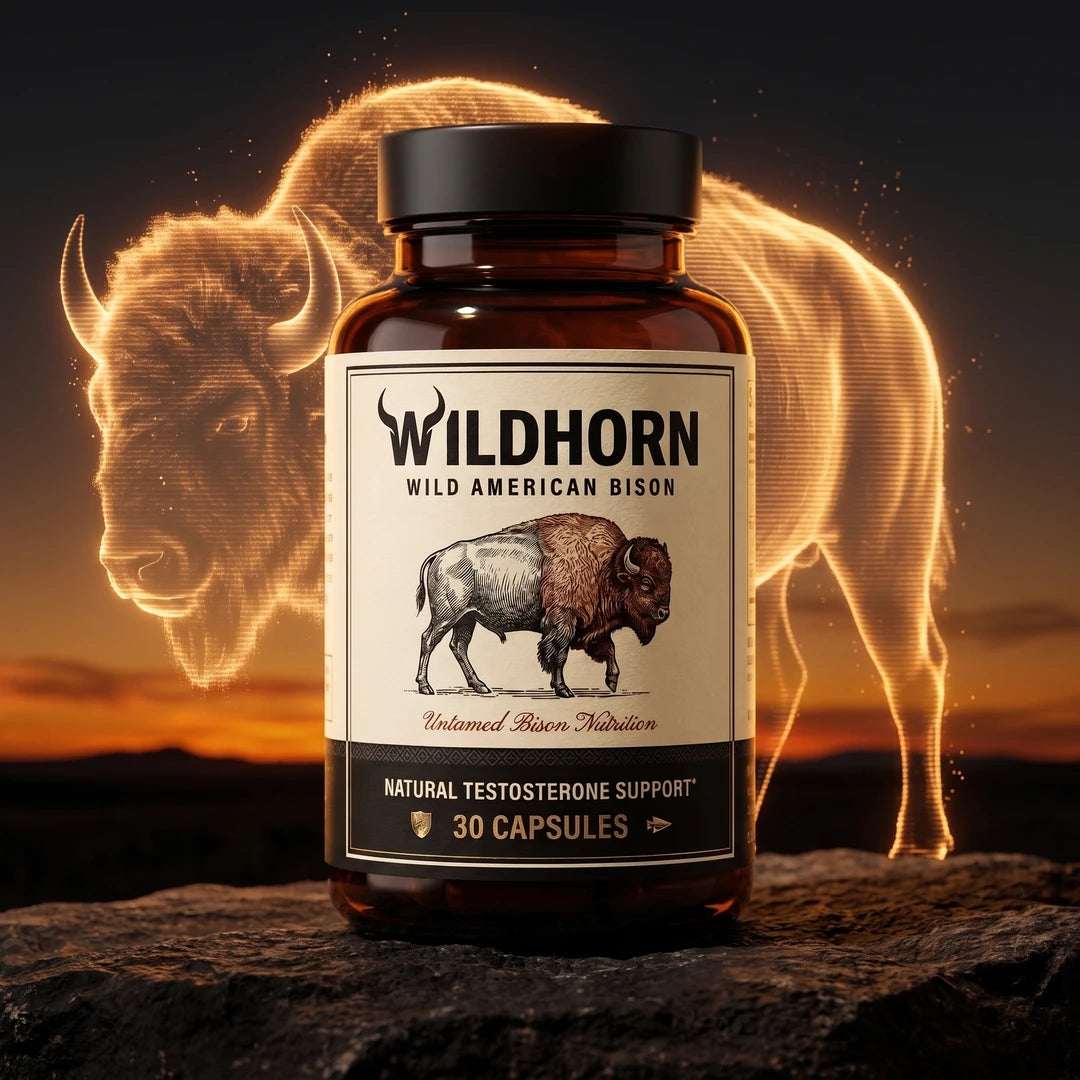
In our formula for Wild Bison, we focus on compounds that support the body's natural hormone maintenance pathways. Not to override the system. To give it what it needs. Men who pair targeted nutritional support with real body composition changes tend to see better results than those chasing either alone. If you are looking for a natural testosterone support supplement built around those fundamentals, Wild Bison covers the key bases without unnecessary filler.
A Practical Framework for Men Over 45
The science points in one direction. Body fat affects testosterone through aromatase. Reducing that fat, especially the visceral kind, shifts the balance. Resistance training reinforces it. Targeted nutrition fills gaps.
None of this is complicated. It is consistent. Body composition changes take months. Hormone levels lag behind those changes by weeks. Patience is not optional here, it is mechanistically required. The men who try to short-circuit this process with extreme cuts or crash programs tend to lose muscle alongside fat, which works against the lean-mass side of the equation.
Sleep quality matters more than most men realize. Consistently poor sleep is associated with lower testosterone in men with levels already within a normal range, and chronic sleep debt has measurable effects on body composition over time. Stress management belongs in the same category. Cortisol and testosterone share precursors and compete for resources. That is not soft lifestyle advice. It is biochemistry.
The men who maintain better body composition and healthier hormone ratios into their 50s and 60s are not doing anything exotic. Lift consistently. Watch calorie density without obsessing over every meal. Sleep. Fill nutritional gaps with a few well-chosen supplements. That is the whole list. The fundamentals compound just like aromatase does, except they work in your favor.
Frequently asked questions
Does carrying extra body fat actually lower testosterone?
Fat tissue contains aromatase, an enzyme that converts testosterone into estradiol, a form of estrogen. Higher body fat generally means more aromatase activity, which can shift the testosterone-estrogen ratio over time. The degree of effect depends on how much fat you carry and where, with visceral fat being particularly active per gram of tissue.
How much fat loss does it take to see a change in hormone ratios?
Research suggests that 10 to 15 percent reductions in body weight in men who started with higher fat mass can produce measurable changes in testosterone and estradiol levels. Smaller reductions may still help, particularly when visceral fat is reduced, since that tissue carries more aromatase activity than subcutaneous fat does.
Does resistance training directly support testosterone levels?
Resistance training helps maintain lean body mass and can support testosterone already within a normal range. It also reduces fat mass over time, which reduces aromatase activity. The effects are real but take consistency to accumulate. Acute hormonal responses to training are well-documented, and the long-term body composition changes that come with regular lifting matter even more.
Why does waist size matter more than body weight for hormone health?
Visceral fat, which accumulates around the organs and shows up as a larger waist circumference, has higher aromatase activity per gram than the fat you can pinch under the skin. Two men at the same body weight can have very different testosterone-estrogen ratios depending on where their fat is distributed. Waist measurement gives a better read on metabolically active fat than the scale does.
Can a testosterone support supplement help with aromatase activity?
A well-formulated supplement can help fill nutritional gaps, including zinc, magnesium, and vitamin D, that support the body's natural hormone maintenance pathways. Supplements work best as part of a broader approach that includes body composition management and consistent resistance training, not as a standalone fix for excess aromatase activity driven by accumulated body fat.
These statements have not been evaluated by the Food and Drug Administration. This product is not intended to diagnose, treat, cure, or prevent any disease.
Written by The Wildhorn Desk, Men's Health Editor.