How CoQ10 Supports Cellular Energy After 40
8 min read
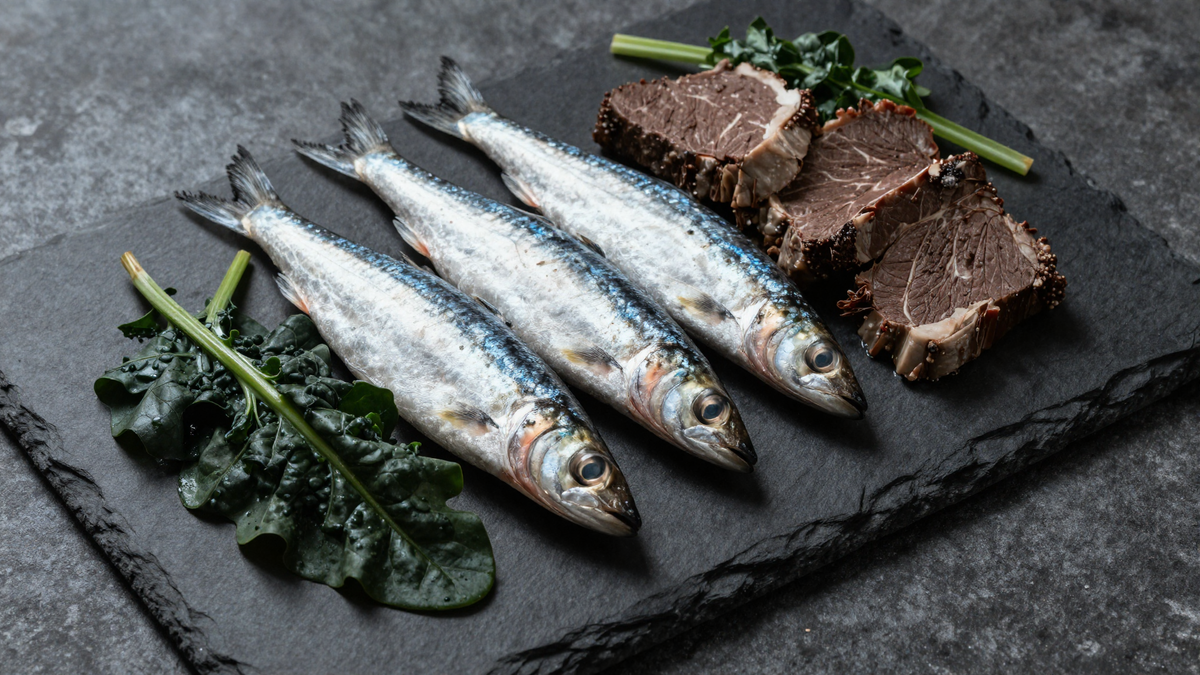
CoQ10 is a fat-soluble compound your body produces naturally and uses to generate ATP inside mitochondria. Levels tend to decline starting in your late 30s, which is why men over 40 look for ways to support their cellular energy. The richest dietary sources are organ meats like heart and liver, where CoQ10 concentrations far exceed ordinary muscle cuts.
What CoQ10 Actually Is and Why Your Cells Need It
CoQ10, short for coenzyme Q10, is a fat-soluble compound your body synthesizes in every cell. It concentrates most heavily in organs with the highest energy demands. Your heart muscle, liver, and kidneys hold roughly 10 times more CoQ10 than ordinary skeletal muscle. That distribution is not accidental. It reflects where the mitochondria are densest and where ATP production is most continuous.
The compound has two jobs. First, it acts as an electron carrier in the mitochondrial respiratory chain, the sequence of chemical reactions that converts food energy into ATP. Second, it works as a fat-soluble antioxidant inside cell membranes, helping to maintain oxidative balance in tissues under constant metabolic load.
Neither job is optional. ATP is the currency your body uses for everything: muscle contraction, protein synthesis, hormone production, neural signaling. When ATP production slows, you feel it. Not as a dramatic crash, but as a gradual heaviness that used to be easier to shake. Understanding CoQ10 starts with understanding where it fits in that chain.
Mitochondria and the ATP Production Chain
Your mitochondria are not just the powerhouses of the cell. That phrase is accurate but undersells the precision involved. Each mitochondrion runs a multi-step process called oxidative phosphorylation. Glucose and fatty acids get broken down into electrons, those electrons move through four protein complexes in the inner mitochondrial membrane, and the energy released drives a molecular motor that stamps out ATP.
CoQ10 carries electrons between Complex I and Complex II on one side, and Complex III on the other. Without it, the relay stops. The electron transport chain stalls. ATP output drops.
The numbers put it in perspective. At rest, your body produces and consumes roughly 40 kilograms of ATP per day. Under exertion, that figure rises sharply. Every heartbeat, every breath, every cellular repair process draws from that pool. Mitochondrial efficiency underpins everything from physical endurance to cognitive sharpness to how quickly tissue repairs itself after strain.
This is why CoQ10 research tends to focus on high-demand tissues first. The heart runs 24 hours a day with no rest cycles. Cardiac CoQ10 concentrations reflect that reality directly.
How CoQ10 Levels Shift After 40
Your body's internal CoQ10 synthesis peaks sometime in your mid-20s to early 30s. After that, production gradually declines. Research has shown that CoQ10 concentrations in human heart tissue can be significantly lower in older adults compared to those in their 20s. Muscle tissue follows a similar pattern, though the decline starts later and moves more slowly.
Age is not the only variable. Certain medications affect the same biosynthetic pathway that produces CoQ10, so some men are starting from a lower baseline regardless of lifestyle. Diet matters too. A diet that excludes organ meats and fatty fish is a diet low in dietary CoQ10, which puts more pressure on endogenous synthesis to compensate.
The result is a gap between what cells need and what they get. It does not announce itself with a specific symptom. It shows up as slower recovery, less consistent energy across the day, or the sense that your baseline has quietly shifted downward since your 30s. Men in their 40s and 50s often describe it as feeling off without being able to point to a single cause.
Ubiquinol vs. Ubiquinone: The Form That Matters
CoQ10 exists in two interconvertible forms. Ubiquinone is the oxidized form, the version most common in older supplements and the form your body produces internally. Ubiquinol is the reduced form, the active version that circulates in the bloodstream and is ready to work in cell membranes without further conversion.
Young, healthy adults convert ubiquinone to ubiquinol efficiently. That conversion efficiency appears to decrease with age. Some researchers focus on ubiquinol specifically for men over 40 for this reason. The argument is straightforward: why ask an aging system to do extra conversion work when you can supply the end product directly.
In practice, both forms show up in food. Organ meats provide CoQ10 embedded in a full mitochondrial matrix, alongside cofactors that support conversion and utilization. That context matters. An isolated supplement delivers a single molecule. Whole food delivers that molecule surrounded by the biological machinery it normally operates within.
Customers often ask us whether to prioritize supplement forms or dietary sources. The honest answer is that both have a place, and they are not mutually exclusive.
Food Sources and What the Numbers Show
The richest dietary sources of CoQ10 are organ meats. Beef heart contains roughly 60 to 120 mg of CoQ10 per 100 grams, depending on the analysis method. Beef liver runs about 40 mg per 100 grams. Sardines and mackerel land between 5 and 10 mg per 100 grams. Standard muscle meat, the kind most men eat daily, falls well below 5 mg per 100 grams.
That gap is substantial. If you eat only muscle cuts, you get a fraction of the CoQ10 that traditional diets delivered through regular consumption of heart, liver, and kidney. The shift away from organ meat over the past several decades has quietly reduced dietary CoQ10 intake for most Western men.
The NIH Office of Dietary Supplements confirms that organ meats and fatty fish are the primary food sources of CoQ10, with muscle meat and plant foods providing meaningfully smaller amounts. Dietary CoQ10 contributes to tissue levels, even though endogenous synthesis remains the dominant source for most adults.
Why Grass-Fed Bison Organ Meat Is a Different Animal
Not all organ meat is the same. Grain-finished feedlot animals carry different nutritional profiles than animals raised on pasture. Bison have never been fully domesticated. They spend their lives grazing on native grasses, which influences their fatty acid ratios and the density of fat-soluble compounds in their tissues.
Grass-fed bison heart and liver provide CoQ10 in the context of B12, zinc, selenium, heme iron, and fat-soluble nutrients that support the same mitochondrial pathways where CoQ10 operates. You are not getting a single extracted compound. You are getting a functional matrix of nutrients that work together the way they do in nature.
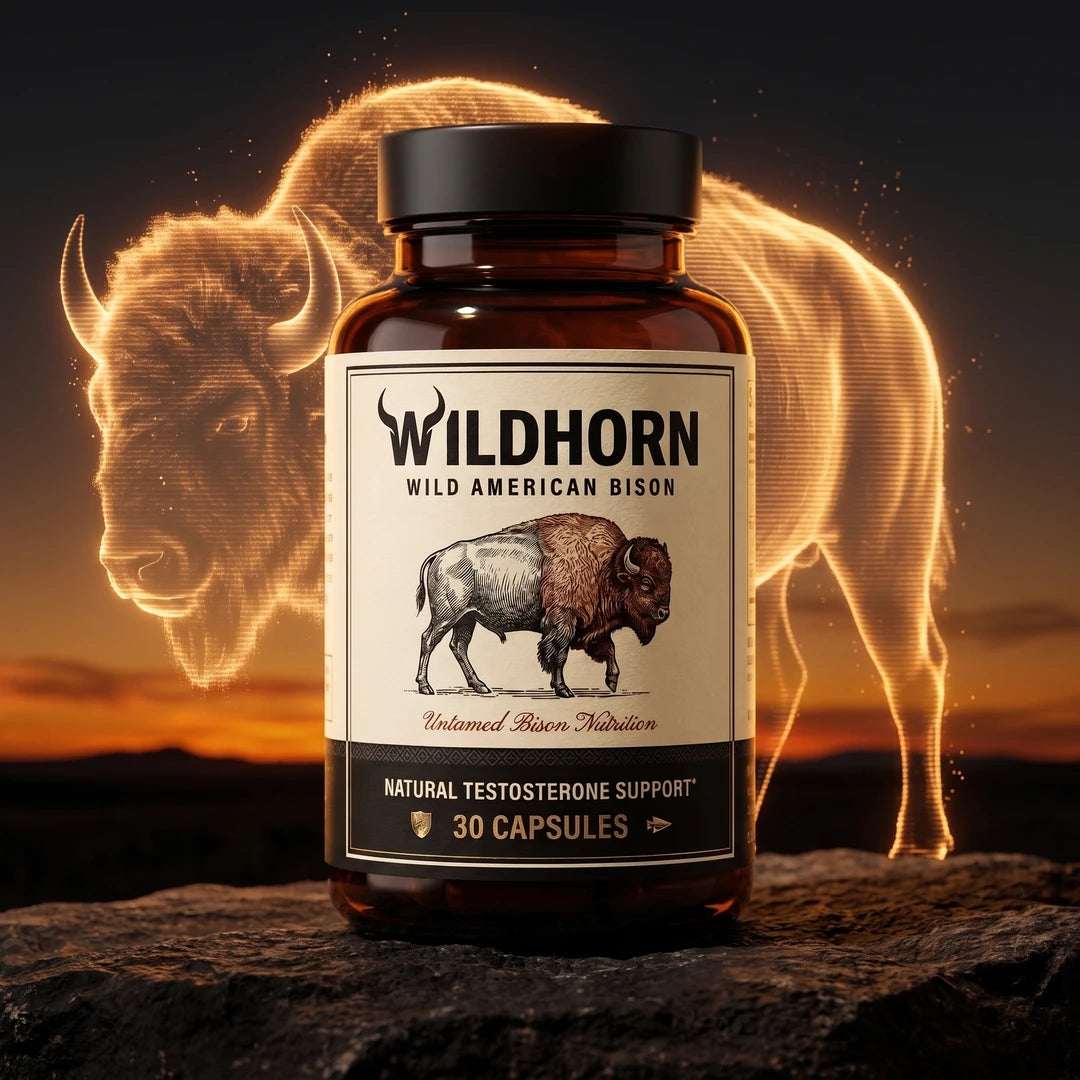
This is the reasoning behind our Wild American Bison organ blend. We use bison heart, liver, and kidney because those three organs are where CoQ10, carnitine, and key cofactors concentrate most heavily. We freeze-dry at low temperature to preserve nutrient density, and we source from animals raised without hormones or antibiotics.
Three capsules deliver the nutritional equivalent of a meaningful serving of organ meat, without the sourcing, preparation, or acquired taste that puts most men off. For men who want the whole-food benefit without reorganizing their kitchen, it is a practical route.
Supporting Your Cellular Energy at 40 and Beyond
There is no single intervention that maintains mitochondrial function as you age. Sleep quality, resistance training, caloric balance, and micronutrient status all influence how well your mitochondria operate. CoQ10 supports one part of that system. It is not the whole picture.
What the evidence does support is that dietary CoQ10 contributes to tissue levels already within a normal range, that those levels matter for mitochondrial efficiency, and that organ meats are the most concentrated food source available. Men who train regularly and want to support recovery, men who notice their energy is less consistent than it was a decade ago, and men who want to eat closer to how humans ate for most of history all have practical reasons to pay attention to their CoQ10 intake.
Start with food. Organ meats twice a week, fatty fish regularly, eggs included. If your diet does not reliably include those sources, a concentrated organ supplement offers a direct path to the same nutrients. The goal is not chasing a number. It is giving your cells what they need to run the processes they already know how to run.
Frequently asked questions
Does CoQ10 support energy levels?
CoQ10 plays a role in how efficiently your cells generate ATP inside mitochondria, which is your body's primary energy currency. It is not a stimulant. Eating organ meats regularly helps maintain the dietary CoQ10 that supports these mitochondrial processes as part of a balanced diet.
How does CoQ10 in food compare to isolated supplements?
Food sources like organ meat deliver CoQ10 alongside cofactors including B vitamins, selenium, and zinc that support mitochondrial function in the same tissues where CoQ10 operates. An isolated supplement delivers the molecule alone. Both can contribute to tissue levels; whole-food sources provide more nutritional context around the compound.
Can I get enough CoQ10 from diet alone?
If your diet includes regular servings of organ meats and fatty fish, you are consuming meaningful amounts of dietary CoQ10. Most Western diets that center on muscle meat fall short of what organ-rich traditional diets provided. A concentrated organ supplement can help close that gap without overhauling your entire eating pattern.
What is the difference between ubiquinol and ubiquinone?
Ubiquinone is the oxidized form your body produces internally and the form most common in older supplements. Ubiquinol is the reduced, active form that circulates in blood and works directly in cell membranes. Both forms appear in organ meats, embedded in the full mitochondrial matrix alongside the cofactors that support their use.
Why use bison organ meat instead of regular beef organ meat?
Bison are raised entirely on pasture and have never been selectively bred for grain feeding. Their tissue composition reflects a more varied natural diet, which supports a different fatty acid and fat-soluble nutrient profile compared to conventionally raised cattle. Grass-fed bison organ meat tends to be a cleaner, denser source of the compounds concentrated in high-demand animal tissues.
These statements have not been evaluated by the Food and Drug Administration. This product is not intended to diagnose, treat, cure, or prevent any disease.
Written by The Wildhorn Desk, Men's Health Editor.