How Your Diet Shapes Testosterone Production After 40
8 min read

Your testosterone levels are partly a reflection of what you eat. Dietary fat provides the raw material for hormone synthesis. Key minerals like zinc and magnesium support the enzymatic steps that help convert cholesterol into testosterone. Eating consistently below your caloric floor signals the body to deprioritize hormone production.
Fat Is the Raw Material, Not the Enemy
Testosterone is a steroid hormone. That means cholesterol is its direct precursor. If you spent the past decade eating low-fat on medical advice, you may be working against your own hormone production without knowing it.
Studies show men shifting from a 40% fat diet to a 25% fat diet see measurable reductions in circulating testosterone. The type of fat matters alongside the total. Saturated and monounsaturated fats show the strongest association with testosterone synthesis. Excess omega-6 polyunsaturated fats from seed oils show a weaker link. Most men eating a modern Western diet are running an inverted fat ratio, heavy on canola and soybean oil and light on the whole food fats their endocrine system actually uses.
A practical target for men over 40: aim for 30 to 35 percent of daily calories from fat. Build that from eggs, beef, salmon, olive oil, and avocado. These aren't exotic foods. They're the ones men in this age group were probably eating more of thirty years ago, before the low-fat era turned red meat and egg yolks into villains.
Three Micronutrients That Actually Move the Needle
Adequate fat sets the ceiling for testosterone production. Three specific micronutrients determine how close you actually get to it.
Zinc supports healthy regulation of aromatase, the enzyme that converts testosterone into estrogen. Men with consistently low zinc status often show testosterone already within a normal range sitting toward the lower end of that range. Red meat and shellfish, particularly oysters, are the richest dietary sources. Men who shifted toward chicken-heavy diets for cardiovascular reasons often see their zinc intake drop significantly without realizing it. The NIH Office of Dietary Supplements maintains a thorough reference on zinc requirements and food sources by age group.
Magnesium helps support testosterone bioavailability by influencing sex hormone-binding globulin (SHBG). SHBG binds testosterone and makes it unavailable to tissue. A study published in Biological Trace Element Research found positive correlations between magnesium status and free testosterone in both sedentary men and trained athletes. Magnesium is depleted by alcohol, chronic stress, and high-carbohydrate diets, three factors many men over 45 are dealing with simultaneously.
Vitamin D is a hormone precursor, not simply a vitamin. Leydig cells, the testosterone-producing cells in the testes, carry vitamin D receptors. A 12-month randomized trial published in Hormone and Metabolic Research found that men supplementing with roughly 3,300 IU of vitamin D daily maintained testosterone levels already within a normal range that were meaningfully higher than the placebo group. Most men in northern climates are functionally deficient from October through April.
The Caloric Floor You Didn't Know You Had
Most men focus on what they eat and ignore how much. Chronic caloric restriction sends a famine signal. The body responds by downregulating processes it supports as nonessential for immediate survival. Hormone production gets deprioritized early.
Studies on athletes in aggressive weight-cut phases consistently show suppressed testosterone and elevated cortisol. This isn't only a competitive sport issue. Men who eat 1,400 to 1,700 calories trying to lose body fat, or who skip meals habitually, can create a similar hormonal environment at a slower pace over months.
A rough floor for a 180-pound man over 45: consistent intake below 2,000 calories per day creates metabolic pressure that can suppress hormone production over time. That floor shifts up with activity level. If you're training four to five days a week and eating 1,800 calories, you may be undereating for your hormonal needs, even if the scale is moving in the direction you want.
Dieting phases are fine. Extended, deep caloric deficits stretched across many months are a different matter. The research on testosterone and energy availability is fairly consistent on this point.
How Protein Fits Into the Picture
Protein intake is one of the most discussed pieces of the hormone conversation and one of the most misunderstood. The relationship is indirect: adequate protein supports lean muscle mass, and higher lean mass is associated with testosterone levels already within a normal range tending toward the higher end.
What doesn't get said often enough is that very high-protein diets that crowd out dietary fat can reduce the substrate available for steroidogenesis. A macronutrient split of 40% protein and 20% fat is not optimal for hormone production, even if it serves short-term body composition goals.
A practical target for men over 40 doing regular resistance training: 0.7 to 1.0 grams of protein per pound of bodyweight. Source it from animal proteins where you can. Red meat, eggs, and dairy carry zinc, saturated fat, and other co-factors that plant proteins largely don't. The protein and the co-factors come bundled together in whole food sources. That bundling matters.
Practical Plate Changes Worth Making
Knowing what matters is one thing. Here is what it looks like as practical changes most men can make without overhauling their entire diet at once:
- Replace cooking oils heavy in omega-6, canola, soybean, sunflower, with butter, olive oil, or tallow. One swap, meaningful shift in your fatty acid ratio over months.
- Eat whole eggs most days. The yolk is where the cholesterol, choline, and fat-soluble nutrients live. An egg white omelet is mostly protein and not much else.
- Include red meat three to four times per week. Ruminant fat and high-bioavailability zinc in one package.
- Eat enough total calories. Don't stay in a deep deficit for more than eight to ten weeks at a stretch without a maintenance phase in between.
- If you're supplementing vitamin D, take it with a fat-containing meal. It's fat-soluble. Absorption drops significantly without dietary fat present.
Customers often ask us whether diet alone is sufficient or whether supplementation adds anything meaningful on top. The honest answer: diet is the foundation. The gaps that are hardest to close through food alone tend to be zinc and magnesium, particularly for men who aren't eating oysters or leafy greens with any regularity.
Where a Targeted Formula Fits
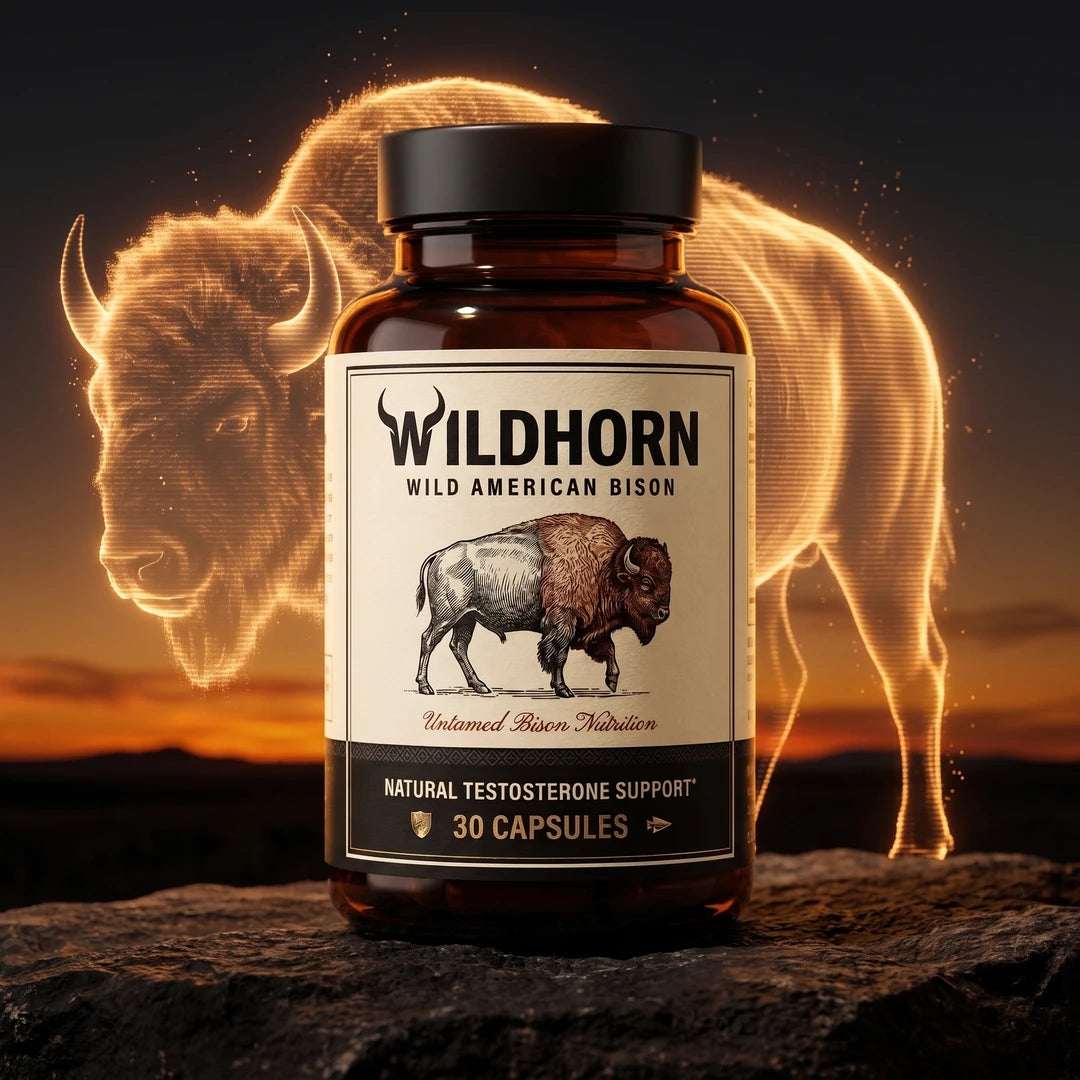
Targeted supplementation makes the most sense as a complement to dietary work, not a replacement for it. The men who report the most noticeable outcomes from formulas like Wild Bison are generally the ones also eating well, sleeping adequately, and training consistently. The supplement fills gaps. It doesn't manufacture results from nothing.
Our Wild Bison formula was built around the micronutrient profile covered in this article: zinc, magnesium, and vitamin D, alongside botanical compounds with a meaningful body of human research behind them. The goal was to address the gaps that whole food diets in the real world reliably miss. Think of a daily testosterone support formula as nutritional insurance for the foundation you're already building, not a shortcut around it.
One practical note: give it eight to twelve weeks before assessing results on blood markers. Hormonal changes reflect slowly in lab values. A three-week check-in doesn't tell you much about where things are headed.
What to Track and When to Retest
If you're making dietary changes and want to know where your baseline sits, a standard testosterone panel is worth requesting through your doctor. Ask for these specifically:
- Total testosterone: normal adult male range is roughly 300 to 1,000 ng/dL, though most men report feeling considerably better in the upper portion of that range
- Free testosterone: often more informative than total in men over 45, because SHBG rises with age and can bind testosterone that would otherwise be active in tissue
- SHBG: high SHBG explains why some men show normal total testosterone on paper but don't feel like it
- 25-OH Vitamin D: functional sufficiency is generally considered above 40 ng/mL; deficiency is common and straightforward to address with supplementation
Give yourself a 12-week window before retesting after dietary or supplemental changes. That's enough time for meaningful movement on markers, assuming you're consistent. Short-term retests at four weeks mostly reflect daily variation, not a real trend. Set the 12-week mark as your first useful data point.
Frequently asked questions
Does dietary fat actually affect testosterone levels?
Research supports the connection. Testosterone is synthesized from cholesterol, which comes from dietary fat. Studies show men on very low-fat diets tend to have testosterone already within a normal range sitting toward the lower end compared to men eating adequate fat. Saturated and monounsaturated fats show the strongest association with supporting healthy testosterone synthesis.
Which micronutrients matter most for hormone production after 40?
Zinc, magnesium, and vitamin D have the strongest research support for their role in hormone health. Zinc supports healthy aromatase regulation. Magnesium helps promote testosterone bioavailability by influencing SHBG levels. Vitamin D plays a role in the function of Leydig cells, which are the primary testosterone-producing cells in the testes.
Can eating too few calories suppress testosterone?
Yes. Consistent caloric restriction below your maintenance threshold signals metabolic stress. The body tends to deprioritize hormone production in response. Men in sustained caloric deficits often show testosterone already within a normal range trending toward the lower end, alongside elevated cortisol. Maintaining adequate caloric intake on most days helps the body maintain healthy hormonal output.
How long does it take to see results from dietary changes?
Blood markers for testosterone shift slowly. Most dietary changes take eight to twelve weeks to show up meaningfully on a lab panel. A retest at three or four weeks mostly reflects normal daily variation rather than a real trend. Set your 12-week mark as the first meaningful assessment point, and stay consistent until then.
Does a testosterone support supplement replace a good diet?
No. A well-formulated supplement supports the nutritional work you're already doing, not replaces it. Men who tend to notice the most from a formula like Wild Bison are also eating adequate protein and fat, training consistently, and sleeping well. Supplementation fills micronutrient gaps. Diet builds the foundation those gaps sit on.
These statements have not been evaluated by the Food and Drug Administration. This product is not intended to diagnose, treat, cure, or prevent any disease.
Written by The Wildhorn Desk, Men's Health Editor.