Fenugreek vs. Tribulus: Which Has Stronger Research?
8 min read
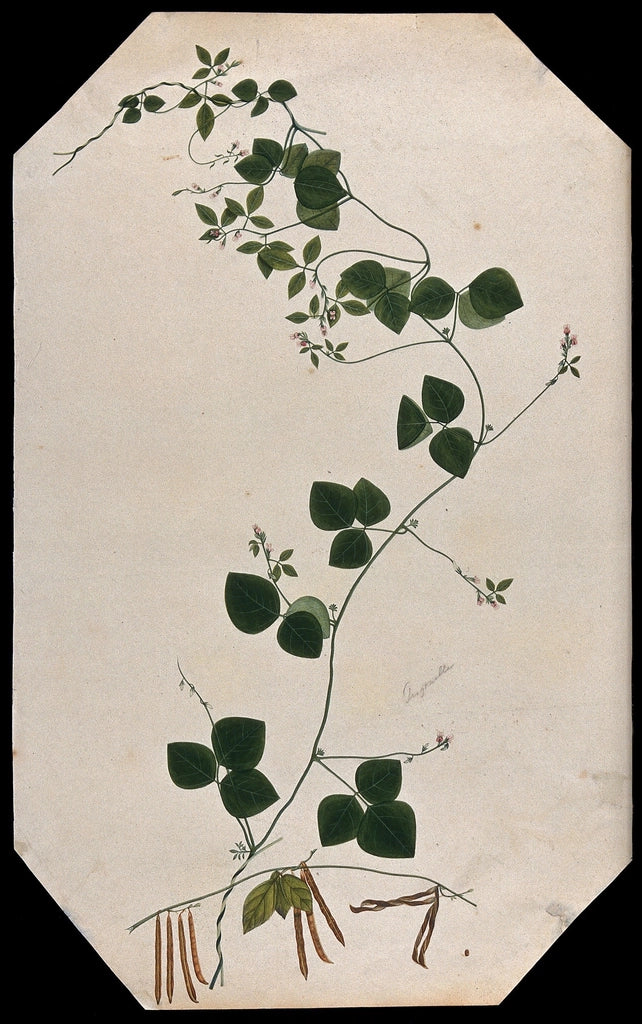
Fenugreek has the stronger body of human clinical evidence. Multiple randomized controlled trials show statistically meaningful support for free testosterone levels in healthy men. Tribulus research is thinner and more inconsistent, with most well-designed trials in athletes showing little measurable effect on testosterone markers.
Two Old Herbs, Very Different Evidence Trails
Fenugreek (Trigonella foenum-graecum) and tribulus terrestris have both been used in traditional medicine for centuries, and both show up constantly in testosterone-support formulas. The similarity ends there. Score them on trial quality, effect size, and relevance to men over 40, and they land in very different territory.
Fenugreek seeds contain furostanolic saponins, compounds that may help support the enzymes involved in testosterone synthesis and conversion. Tribulus contains steroidal saponins including protodioscin, which researchers originally thought might act on luteinizing hormone. The mechanism sounded promising on paper. The clinical data told a more complicated story.
This comparison focuses on human randomized controlled trials in men, not animal studies, not in vitro cell work. Those are interesting starting points. They are not what matters if your goal is supporting your own hormonal health.
The Fenugreek Research File
The fenugreek case is built on several well-designed RCTs. The most cited involves a patented standardized extract called Testofen (600 mg/day) studied in a double-blind, placebo-controlled trial published in Phytotherapy Research. At 12 weeks, men in the active group showed statistically significant improvements in free testosterone compared to baseline. The extract was standardized to 50% fenugreek glycosides.
A separate trial had resistance-trained men take 500 mg/day of fenugreek extract for 8 weeks. The fenugreek group maintained testosterone levels that declined slightly in the placebo group over the same training period. Not a dramatic spike, but a meaningful difference in the direction you want. A third study found similar patterns, with the fenugreek group showing no testosterone decline under training load while placebo subjects did.
The proposed mechanism: fenugreek saponins may inhibit aromatase (the enzyme that converts testosterone to estrogen) and 5-alpha reductase (which converts testosterone to DHT). Both pathways, if modestly modulated, would help maintain free testosterone levels already within a normal range. This is different from claiming fenugreek raises testosterone above normal, which the evidence does not support.
Dose matters. Trials that showed results generally used 500 to 600 mg/day of a standardized extract. Proprietary blends that hide fenugreek inside a blended total make it impossible to verify you are getting a clinically relevant dose.
The Tribulus Research File
Tribulus terrestris has a more complicated story. The herb became popular largely through Eastern European sports medicine research in the 1980s and 1990s, particularly Bulgarian studies suggesting benefits for strength athletes. Those early studies were small, often lacked proper controls, and have been difficult to replicate in Western RCTs.
The original Bulgarian research created expectations that persisted for years despite thin replication. Part of the challenge is that tribulus is not a single ingredient. It is a family of extracts varying widely by source, standardization, and protodioscin content. Most manufacturers do not specify which version they use.
More rigorous modern trials have been less encouraging. A study in the Journal of Strength and Conditioning Research put tribulus through an 8-week placebo-controlled trial with elite rugby players and found no significant effect on testosterone, strength, or body composition. A separate RCT using 3.21 mg/kg/day in resistance-trained men reached the same conclusion.
Where tribulus shows some signal is in animal studies and in men with testosterone on the low end of the normal range. The effect in healthy men with testosterone already within a normal range? The RCT record is thin.
Protodioscin content varies dramatically by source. Bulgarian tribulus typically contains 6 to 8% protodioscin; Indian-sourced material often runs below 1%. Without disclosure of geographic source and protodioscin percentage on the label, you have almost no way to evaluate what you are actually buying.
Head-to-Head: Scoring Each Herb on Three Criteria
Here is a direct comparison across three criteria that actually matter:
- Trial quality: Fenugreek wins. Multiple double-blind RCTs with standardized extracts and pre-registered outcomes. Tribulus RCTs in healthy men consistently show null results.
- Effect size: Fenugreek wins. Studies show statistically significant differences in free testosterone at 12 weeks. Tribulus trials in athletic populations show effect sizes near zero.
- Real-world relevance for men 45+: Fenugreek wins for men focused on maintaining healthy free testosterone levels already within a normal range. Tribulus may have a narrower use case the current research has not cleanly defined.
This does not mean tribulus is worthless. It remains under-studied in men over 40, which is exactly the population most interested in testosterone support. New research may sharpen the picture. Right now, fenugreek has the cleaner evidence trail by a notable margin.
One more point: both herbs are generally well-tolerated at standard doses. Safety is rarely what separates them. Evidence is.
Why Free Testosterone Matters More After 45
Total testosterone gets most of the attention. Free testosterone, the fraction not bound to sex hormone-binding globulin (SHBG), is what actually acts on tissue. SHBG levels tend to rise with age, which means free testosterone can drift lower even when total testosterone looks normal on a lab panel.
This is why the free testosterone findings from fenugreek trials are particularly relevant for men in this age group. If fenugreek's aromatase-modulating effect holds up across longer follow-up periods, it would be meaningful for men in the 45 to 65 range, where SHBG elevation is common and free T is the number worth watching.
If you have had a testosterone panel done, ask your doctor whether it included free testosterone or just total. Many standard male hormone panels default to total T only. Knowing your free T gives you a better baseline, especially if you plan to track changes over time with supplementation.
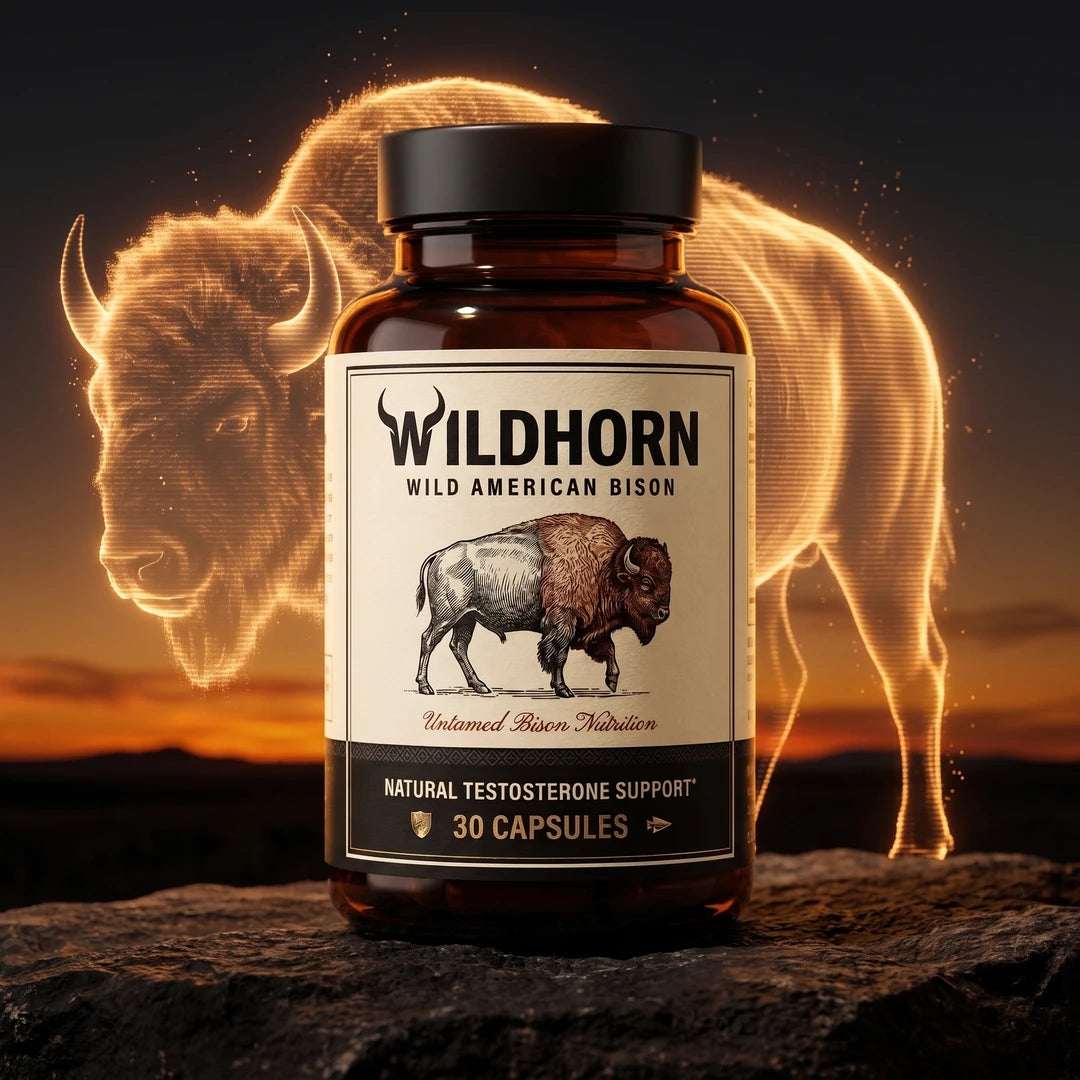
Customers often ask us whether they need a separate SHBG-support product. In our formula, fenugreek is included specifically for its free testosterone support profile. See how we have stacked it inside the Wild Bison testosterone booster for the full ingredient picture.
What to Look for on a Label Before You Buy
Whatever product you choose, check these specifics before handing over money:
- Fenugreek dose: minimum 500 mg/day of a standardized extract (50% fenugreek glycosides or furostanolic saponins). Generic fenugreek seed powder at an unstated dose is not comparable to what was used in trials.
- Tribulus sourcing: if a formula includes it, look for the geographic source and protodioscin percentage. No disclosure means you are guessing at quality.
- Proprietary blend math: a blend totaling 400 mg across six ingredients cannot deliver 500 mg of fenugreek. Simple arithmetic exposes a lot of underdosed products.
The published trial record on fenugreek is accessible on PubMed if you want to read the primary sources yourself. For tribulus, the NIH Office of Dietary Supplements maintains updated reviews on herbal ingredients. Both are worth 20 minutes before you buy anything.
The Verdict Between These Two Herbs
Fenugreek has better human clinical evidence, more consistent effect direction, and a plausible mechanism in the free testosterone pathway. Tribulus has tradition and a good-sounding mechanism, but the RCT record in healthy men is thin enough that you would not want to rely on it as a formula's primary ingredient.
Neither herb substitutes for sleep, resistance training, or managing body fat. All three have robust evidence for supporting healthy testosterone levels already within a normal range. These herbs are tools that may work alongside the fundamentals, not around them.
If you want a formula built around the stronger evidence, that is where to start.
Frequently asked questions
Is fenugreek safe to take daily?
In doses used in clinical trials (500 to 600 mg/day of standardized extract), fenugreek has a good safety record in healthy men. Some notice a maple-syrup-like body odor, which is harmless and resolves when you stop. Check with your doctor if you take medications, particularly blood thinners, as fenugreek may have mild effects on platelet activity.
Can tribulus support testosterone?
In healthy men with testosterone already within a normal range, the clinical evidence is weak. Multiple well-designed trials in athletes found no significant effect on testosterone markers. Tribulus may have a role in specific contexts the current research has not fully explored, but strong expectations are not supported by the existing RCT record in healthy men.
How long does fenugreek take to show results?
Trials showing meaningful support for free testosterone ran 8 to 12 weeks. Short-term effects in the first few weeks may be subtle. Run a minimum 8-week trial at a proper dose before drawing conclusions about whether it is working for you.
Do I need both fenugreek and tribulus in a formula?
Not necessarily. Combining ingredients only makes sense if each is dosed at levels supported by research. A proprietary blend hiding both inside a small combined total is unlikely to deliver the doses that produced results in clinical trials. Check the math before buying.
What is the difference between free and total testosterone?
Total testosterone includes all testosterone in the blood, most of which is bound to proteins (mainly SHBG and albumin) and unavailable for the body to use. Free testosterone is the unbound fraction that can interact with receptors and help promote energy, strength, and drive. As men age, SHBG tends to rise, which is why free testosterone is worth tracking even when total T looks normal on a panel.
These statements have not been evaluated by the Food and Drug Administration. This product is not intended to diagnose, treat, cure, or prevent any disease.
Written by The Wildhorn Desk, Men's Health Editor.