Grass-Fed vs Grain-Fed: Why It Changes Nutrient Density
8 min read
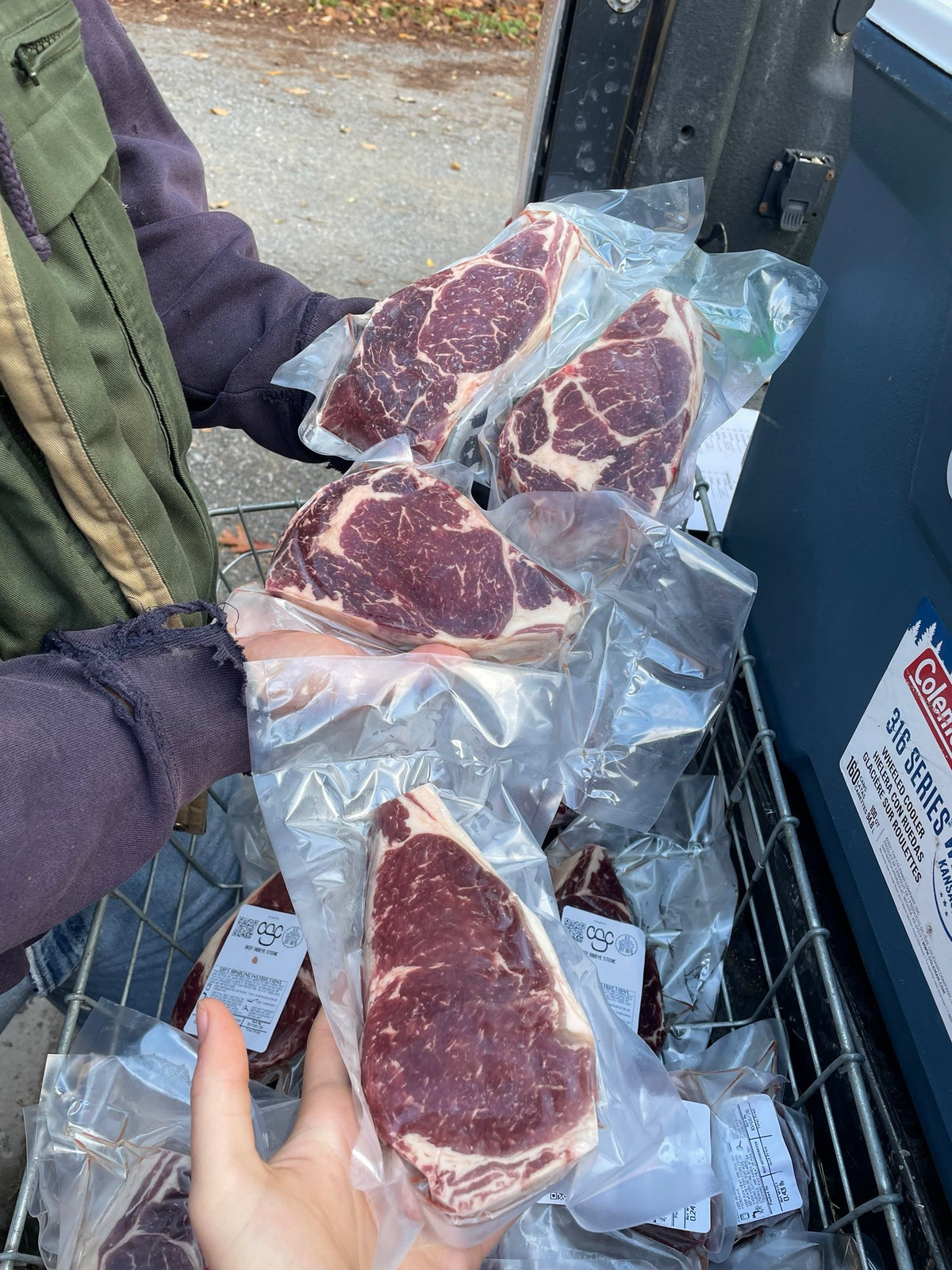
The nutrient profile of animal tissue is directly shaped by what the animal ate. Grass-fed ruminants consistently show higher concentrations of fat-soluble vitamins A, E, and K2, a better omega-3 to omega-6 ratio, and significantly more conjugated linoleic acid (CLA) compared to grain-fed counterparts. Diet determines density.
The Diet-to-Tissue Connection
The cow, the bison, the sheep you eat is, nutritionally speaking, a product of what it ate. Feed an animal grain and you change its fat composition within weeks. Put it back on grass and the profile shifts again. This is not theoretical. Researchers have been measuring these differences since at least the 1960s, and the pattern is consistent across ruminant species.
Here is the mechanism. Grass is rich in alpha-linolenic acid (ALA), the precursor omega-3 fatty acid. Grain is rich in linoleic acid, an omega-6. When a ruminant eats predominantly one or the other, those fatty acids accumulate in its tissues. Fat-soluble compounds, including vitamins A, E, and K2, concentrate in fat and organ tissue in proportion to what the animal ate. Water-soluble nutrients flush through. Fat-soluble ones stick.
Green plants are dense in carotenoids (precursors to vitamin A), tocopherols (vitamin E), and phylloquinone (vitamin K1), which ruminants convert to MK-4, a form of K2. Grain contains very little of any of these. An animal fed corn and soy for 90 to 120 days before slaughter is not the same animal, nutritionally, as one that spent those same months on pasture.
This is why sourcing matters. Not as marketing language. As biochemistry.
Fat-Soluble Vitamins: What the Numbers Show
Beta-carotene, the dietary precursor to vitamin A, is found almost exclusively in green plants. Grain contains almost none. This difference is visible: grass-fed animal fat is yellow because of beta-carotene accumulation; grain-fed fat is white. Studies comparing grass-fed to grain-fed ruminants consistently show 3 to 5 times higher beta-carotene concentrations in grass-fed tissue.
Vitamin E tells a similar story. A 2010 comprehensive review published in Nutrition Journal examined fatty acid and antioxidant profiles of grass-fed versus grain-fed beef across multiple studies. Grass-fed beef showed significantly higher concentrations of alpha-tocopherol. Vitamin E helps maintain antioxidant status already within a normal range and supports normal cell membrane integrity. In some studies, grass-fed tissue showed 2 to 4 times the vitamin E concentration of grain-finished beef.
Vitamin K2 as MK-4 is synthesized in ruminant tissues from vitamin K1 found in green plants. Grain-fed animals, deprived of that substrate, produce substantially less. MK-4 supports calcium metabolism and promotes normal bone density and vascular tissue function already within a normal range.
Vitamin D3 follows a comparable pattern. Grass-fed, sun-exposed animals accumulate more in their fat than those raised indoors on grain. The compound does not appear from nothing. The animal has to encounter it in its environment and diet to concentrate it in tissue. These are not marginal differences. They are measurable at the tissue level, study after study.
CLA: The Research Is Clearer Than Most People Know
Conjugated linoleic acid (CLA) is a naturally occurring fatty acid found in the fat and milk of ruminants. It forms during biohydrogenation of linoleic acid by bacteria in the rumen, a process that happens when the animal grazes on fresh grass. No grass, substantially less CLA.
Grass-fed beef contains 2 to 3 times more CLA than grain-fed beef. The dominant isomer is cis-9, trans-11 CLA, which accounts for roughly 75 to 80 percent of total CLA in ruminant fat. Research has examined this isomer's role in supporting normal body composition and metabolic function already within a normal range.
The feedlot effect is worth understanding. Finishing cattle on grain for even 60 to 90 days can reduce CLA levels by more than half. The reason is not that CLA is destroyed but that the biological process producing it slows dramatically when the animal stops eating grass. A steer raised on pasture for 18 months and then grain-finished for 120 days is not the same animal that walked off the pasture. The last 120 days did real nutritional work, and not in a favorable direction.
The Omega-6 to Omega-3 Ratio
This ratio matters because omega-3 and omega-6 fatty acids compete for the same enzymes in metabolic pathways. Load the diet with one and you suppress the other's activity. Most people eating a standard diet consume omega-6 to omega-3 at a ratio somewhere between 15:1 and 20:1. Traditional diets, before industrial seed oils and feedlot beef became the norm, ran closer to 4:1.
Grass-fed beef typically runs at 2:1 or even 1:1 (omega-6 to omega-3). Grain-fed beef can reach 7:1 or higher. The absolute amount of omega-3 in beef is still modest compared to fatty fish, but the ratio shapes how these fats function across metabolic pathways in ways that quantity alone does not capture.
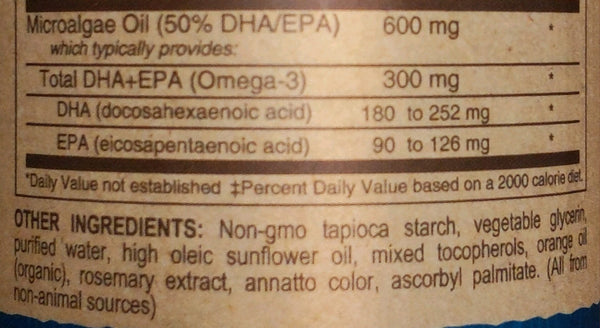
EPA and DHA, the long-chain omega-3 fatty acids most studied for their roles in cardiovascular and inflammatory function, appear in small but measurable amounts in grass-fed ruminant fat. They are nearly absent in grain-fed fat. These fatty acids help maintain normal inflammatory response and support cardiovascular function already within a normal range.
Bison specifically tends to have a leaner fat profile than cattle, with a ratio that tracks alongside grass-fed beef. Its naturally low total fat also means you get a high protein-to-fat ratio without needing to trim.
Bison vs. Grain-Fed Cattle: By the Numbers
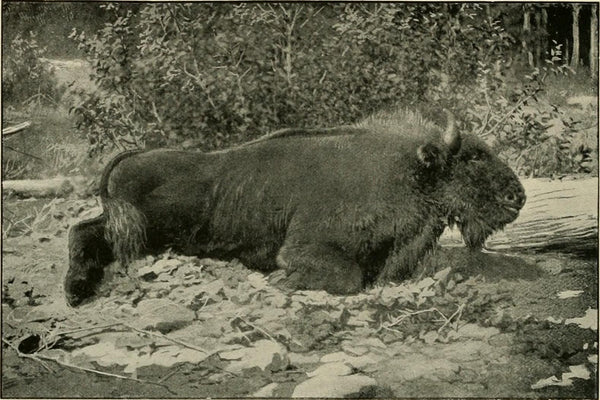
Bison are not well-suited to feedlots. They are large, difficult to confine, and do not respond well to the grain-heavy finishing protocols used in conventional beef production. Most commercial bison live on pasture for the majority of their lives, which means their nutritional profile reflects that by default, not by marketing choice.
The comparison to grain-fed beef is direct:
- 3 oz cooked bison: approximately 24g protein, 2.2g total fat
- 3 oz 80/20 ground beef (grain-fed): approximately 18g protein, 14g total fat
- Bison omega-6 to omega-3 ratio: roughly 3:1 to 4:1, versus grain-fed beef at 7:1 or higher
- CLA in bison fat: comparable to grass-fed beef, 2 to 3 times higher than grain-finished cattle
- Beta-carotene and vitamin E concentrations: track with grass-fed ruminants broadly
The USDA FoodData Central database confirms bison's lean profile. More protein per serving, less fat, a more favorable fatty acid ratio. The numbers are not close. And because bison rarely go through a grain-finishing phase, you are not dealing with the nutrient degradation that occurs in the final months of conventional beef production.
What This Means for Whole-Food Supplements
Customers often ask us why sourcing is specified in our formula. The direct answer: the nutrient profile of the raw material is not uniform, and an animal that ate grain for the last four months of its life is not nutritionally equivalent to one that grazed on pasture.
If you are using organ-derived or tissue-derived ingredients in a supplement, the diet of the source animal determines what ends up in the capsule. Grass-fed bison organ tissue carries meaningfully higher concentrations of fat-soluble vitamins, CLA, and co-factors than grain-fed feedlot liver. This is not branding. It is substrate composition.
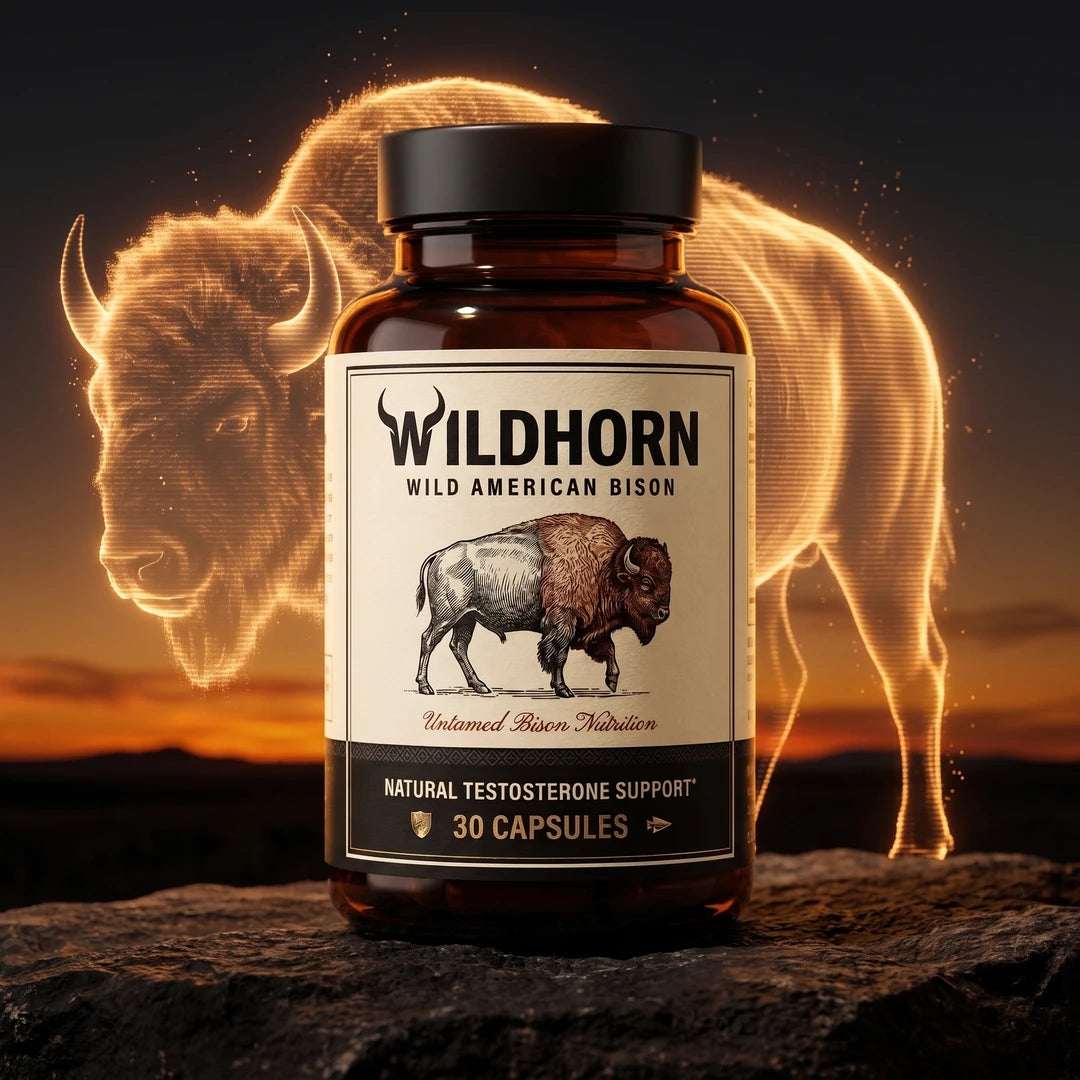
Our Wild Bison testosterone support formula uses grass-fed bison as the source material for exactly this reason. The goal is a dense, consistent nutrient profile, not the cheapest animal protein that clears a label claim. When you are paying for a whole-food supplement, the quality of the whole food matters.
If you are comparing products, ask where the animal was raised, what it ate, and whether the producer can verify grass-fed sourcing with documentation. Vague pasture-raised language without verification is common. Specificity is the indicator that someone has actually thought this through.
Frequently asked questions
Does grass-fed really make a measurable difference in nutrient content?
Yes. Multiple peer-reviewed studies show grass-fed ruminants carry 3 to 5 times higher beta-carotene, 2 to 4 times more vitamin E, 2 to 3 times more CLA, and a significantly better omega-6 to omega-3 ratio compared to grain-fed animals. These are tissue-level differences confirmed by direct measurement, not label claims.
Is bison naturally grass-fed?
Most commercial bison are pasture-raised because the economics and temperament of the animal make feedlot finishing impractical. This means bison tends to carry a nutritional profile closer to grass-fed beef than to conventional grain-finished cattle by default, which is one reason we chose it as a source material.
What is CLA and what does it do in the body?
CLA (conjugated linoleic acid) is a naturally occurring fatty acid in ruminant fat, produced when grass-eating animals digest fresh grass. Research has examined its role in supporting normal body composition and metabolic function already within a normal range. Grass-fed ruminants produce 2 to 3 times more than grain-fed animals.
Can an animal's feed really change the vitamin content in its tissue?
Yes. Fat-soluble vitamins like A, E, and K2 accumulate in animal fat and organ tissue in proportion to dietary intake. Animals eating green plants, which are rich in carotenoids and tocopherols, concentrate those compounds in their tissue. Grain-fed animals, with almost no access to these plant compounds, do not.
How quickly does grain-finishing change an animal's nutrient profile?
Fairly quickly. Research shows that 60 to 90 days of grain finishing can reduce CLA levels by more than 50 percent and significantly shift the omega fatty acid ratio, even in animals that were grass-fed for most of their lives. The final phase of production has an outsized effect on what ends up in the meat.
These statements have not been evaluated by the Food and Drug Administration. This product is not intended to diagnose, treat, cure, or prevent any disease.
Written by The Wildhorn Desk, Men's Health Editor.