A Morning Routine to Support Testosterone Naturally
8 min read
Testosterone follows a predictable daily rhythm, peaking in the early morning and falling through the afternoon. A few specific habits -- timed light exposure, resistance training, protein-forward breakfasts, and supplements taken at the right hour -- help your body maintain levels already within a normal range.
Michal Klajban / CC BY-SA 4.0 / via Wikimedia Commons
Why Your Hormones Run on a Clock
Your body doesn't produce testosterone at a flat rate all day. Levels spike during sleep, peak between roughly 6 and 8 a.m., then drop steadily through the afternoon. By late evening, they can sit 30 to 35 percent lower than they were at dawn. That's not a malfunction. That's normal male physiology doing exactly what it's supposed to do.
The trouble is that most men in their 40s and 50s build their mornings around habits that work against that natural arc. Skipping breakfast, staying in artificial light, avoiding movement, taking supplements on an empty stomach -- each of these sends a signal that doesn't favor the hormonal environment you want. The morning window is real. How you use it changes what your body does with it.
This routine doesn't require a total life overhaul. It requires sequencing things you're mostly already doing -- in the right order, at roughly the right times. That's the lever most men haven't pulled yet.
Light Before Anything Else
The first variable is natural light through your eyes, within 30 minutes of waking. This isn't wellness trend content. Morning light exposure sets your circadian anchor -- the internal clock that coordinates when your body releases key hormones, including luteinizing hormone (LH), which signals testosterone production downstream.
You don't need a bright sunny day. Overcast outdoor light still delivers 10,000 lux or more. A window indoors gives you 200 to 400 lux. The gap is significant. Five to ten minutes outside, even on a gray morning, is enough to trigger the circadian signal.
One practical note: skip the sunglasses for those first five minutes. Tinted lenses filter the short-wavelength light that drives the circadian response. After that window, wear them all day if you like. But for those first few minutes, bare eyes are the point.
If going outside isn't realistic in your morning, a 10,000-lux light therapy lamp placed 12 to 16 inches from your face for 10 minutes does the same job. Same mechanism, same result.
Move Before Noon
Resistance training is the most studied lifestyle factor that supports testosterone levels already within a normal range. Compound movements -- squats, deadlifts, rows, bench press, overhead press -- produce a stronger acute hormonal response than isolation exercises or steady-state cardio. That doesn't mean cardio is useless. It means compound lifting is the priority.
Timing has a modest effect. Training in the morning or mid-morning, while testosterone is naturally elevated, may let you work with that hormonal peak rather than against it. What tends to work against you is heavy training late at night, when cortisol -- which competes with testosterone for the same biological substrate -- is harder to suppress and sleep is only a few hours away.
You don't need a two-hour session. Three to four compound movements, four to five sets each, three days a week, is enough stimulus to keep this variable working in your favor. Rest periods matter: 90 seconds to 2 minutes between sets, not five. The brief metabolic demand is part of what drives the hormonal response.
Protein First, Not Coffee
Customers often ask us why their supplement isn't performing the way they expected. The answer is almost never the formula. Nine times out of ten, it's breakfast -- or the absence of one.
Testosterone synthesis requires cholesterol as a raw material, along with zinc, magnesium, and adequate caloric intake. A morning that starts with black coffee and nothing else is a morning that works against your endocrine system from the first hour. Cortisol rises when you're fasted and under stress. Testosterone and cortisol share a common precursor. When cortisol climbs hard, something pays for it.
The practical fix: eat within 30 to 60 minutes of waking. Lead with protein -- 30 to 40 grams. Eggs are a solid choice because they provide both quality protein and dietary cholesterol in a single food. A handful of mixed nuts or full-fat Greek yogurt adds the dietary fat component your hormone-producing cells need as raw material.
Carbohydrates aren't the problem. A bowl of oats alongside your eggs is fine. What you're trying to avoid is a carb-only or skipped breakfast that drives a cortisol spike and leaves you in a stress-elevated state by 9 a.m.
The Supplement Window That Matters
Timing your supplements is something most labels address vaguely, if at all. Fat-soluble botanicals and chelated minerals absorb significantly better alongside dietary fat. Taking a formula on an empty stomach means a meaningful portion of the active compounds pass through without being used efficiently.
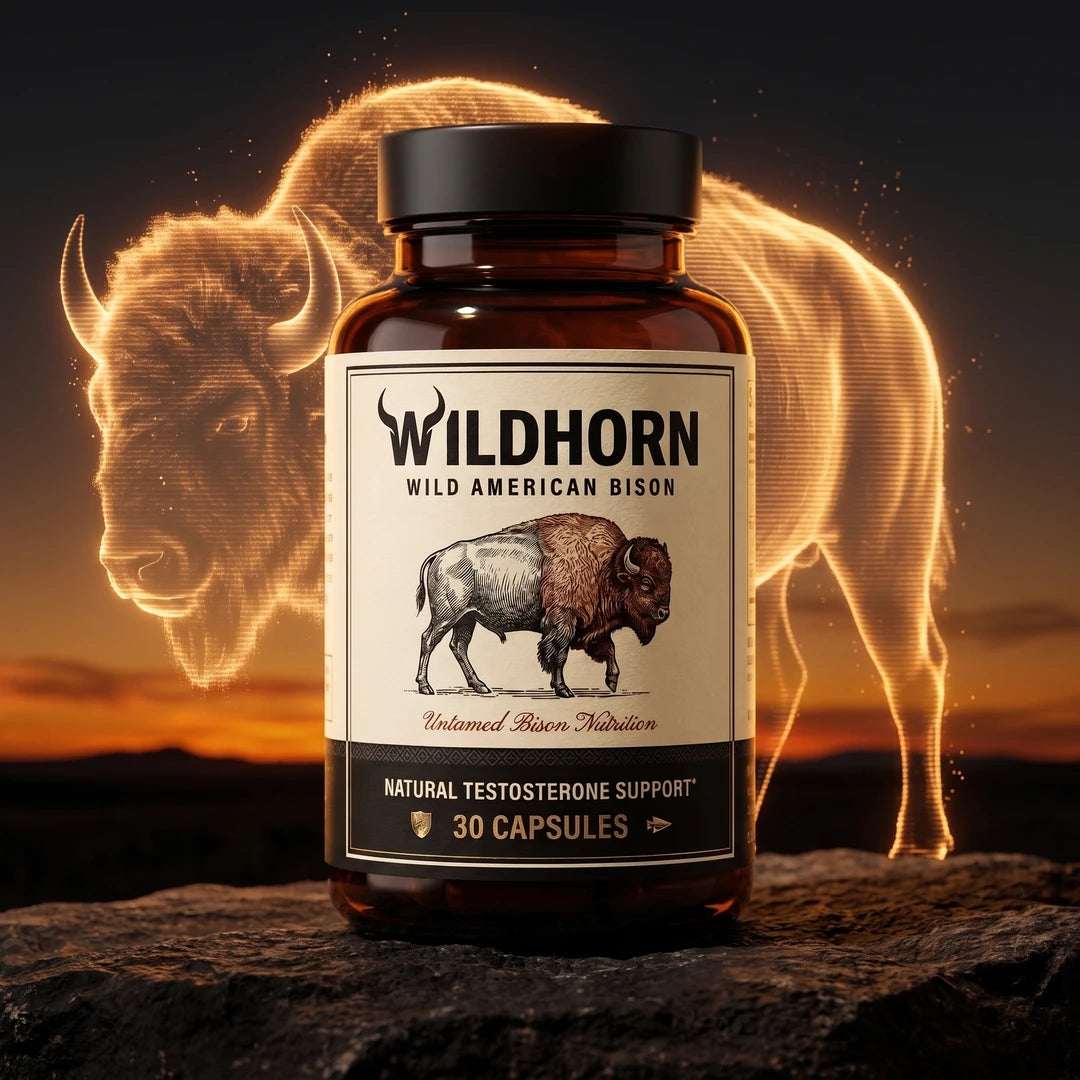
We designed the dosing window for our formula with this absorption reality in mind. The Wild Bison natural testosterone support formula combines Tongkat Ali root extract -- studied for its role in supporting testosterone levels already within a normal range in healthy men -- with zinc bisglycinate, a chelated form that absorbs roughly twice as efficiently as zinc oxide, the cheap form found in most multivitamins.
Take your supplement within 15 to 20 minutes of finishing breakfast. That's when digestive enzymes are active, bile flow is at its peak, and fat-soluble compounds can reach systemic circulation. Taking it three hours later in a rush isn't a disaster. But it's not the optimal window.
On zinc specifically: research published in Nutrition found that zinc restriction in otherwise healthy men produced significant reductions in testosterone levels, and that supplementation supported restoration. Zinc depletion is common in men who sweat regularly or eat a diet low in red meat and shellfish.
What Works Against You Before 9 A.M.
You can do everything above and still undercut the effort with a few common habits. These are the main ones to manage:
- Chronic sleep under 6 hours. A single week of sleep restricted to 5 hours per night has been shown to reduce testosterone by 10 to 15 percent, according to data published in JAMA. Sleep is when the bulk of testosterone synthesis happens. Not optional infrastructure.
- Alcohol the night before. Two drinks at 9 p.m. disrupts REM sleep architecture and blunts the overnight testosterone surge. You feel the effect at 7 a.m. whether you notice it consciously or not.
- Extended fasted training. Short fasted workouts -- 20 to 30 minutes -- are generally fine. Going 90 minutes or longer without eating raises cortisol in a way that doesn't favor testosterone support. Eat first or keep fasted sessions short.
- Unmanaged stress with no physical outlet. Cortisol and testosterone share a biosynthetic precursor. Under chronic stress, cortisol production takes priority. A short walk, 5 minutes of slow breathing before checking email, or any brief physical reset in the morning helps buffer this shift.
The Complete Morning Checklist
Here's the full sequence. Five checkpoints, ordered by time of day. None require extra time -- just a different order for things you're mostly already doing.
- Within 5-10 minutes of waking: Get outside or near a bright window. No sunglasses for the first five minutes. Ten minutes is enough.
- Within 30-60 minutes of waking: Eat a protein-forward breakfast. Thirty to forty grams of protein, some dietary fat. Eggs, Greek yogurt, smoked salmon -- your call.
- With breakfast or within 15-20 minutes of finishing: Take your testosterone-support supplement with the meal, not on an empty stomach.
- Before noon: Get your resistance training in. Three to four compound lifts. Four to five sets each. Ninety-second rest periods. Done in under an hour.
- Evening: Protect 7 to 8 hours in bed. Keep alcohol to one drink or none. Consistent sleep and wake times matter more than total hours alone.
The biology is running on a schedule whether you pay attention to it or not. This routine just puts your morning in sync with it.
Frequently asked questions
What time of day is testosterone naturally highest?
Testosterone typically peaks between 6 and 8 a.m. in most men, following a surge that occurs during sleep. Levels then fall through the day, reaching their lowest point in the early evening. This natural rhythm is why morning habits have an outsized effect on supporting testosterone levels already within a normal range.
Does skipping breakfast affect testosterone levels?
It can work against you. Testosterone synthesis requires cholesterol, zinc, and adequate calories. A fasted morning state raises cortisol, which competes with testosterone for the same biosynthetic raw material. Eating within 30 to 60 minutes of waking, with protein and some dietary fat, helps keep that cortisol response in check.
How long before I notice results from adjusting my morning routine?
Most men notice changes in energy and morning readiness within 2 to 4 weeks of consistent habit changes. A testosterone-support supplement taken consistently for 6 to 8 weeks alongside a solid morning routine gives you a realistic window to assess whether it's working for you.
Can I take Wild Bison at night instead of morning?
You can, but morning with breakfast is the preferred window. The fat-soluble botanicals in the formula absorb better alongside dietary fat, and taking it in the morning aligns the supplement with your body's natural testosterone peak. Evening dosing isn't counterproductive, but it's not the optimal timing.
Does the type of exercise matter for supporting testosterone?
Yes. Compound resistance exercises -- squats, deadlifts, rows, presses -- produce a stronger acute response than cardio or isolation work. That said, any regular physical activity beats none. Three days per week of compound strength training is a solid minimum to keep this variable working in your favor.
These statements have not been evaluated by the Food and Drug Administration. This product is not intended to diagnose, treat, cure, or prevent any disease.
Written by The Wildhorn Desk, Men's Health Editor.