5 Signs Your Body May Be Running Low on B12
8 min read

Men over 45 often notice suboptimal B12 status through functional cues before a standard blood test catches it: persistent brain fog, fatigue that sleep doesn't resolve, flat mood and low drive, tingling in the hands or feet, and a washed-out complexion. These signs can appear gradually and are easy to misread as normal aging.
Why B12 Status Shifts After 45
After 45, the body's ability to absorb vitamin B12 from food starts to decline. The main factor is a drop in intrinsic factor, a protein produced in the stomach lining that the small intestine requires to pull B12 from food. Less intrinsic factor means less B12 gets through, regardless of how much protein you eat.
Two common medications compound the problem. Proton pump inhibitors, a widely prescribed class of acid-reducing medications, reduce the stomach acid needed to free B12 from food proteins. Metformin, a prescription drug taken by many men in this age group, can interfere with B12 absorption in the gut. If you're on either and haven't had your B12 checked recently, that's worth addressing at your next appointment.
The body stores B12 in the liver, enough to last two to five years in some cases. That reserve is why a slow decline can go unnoticed for a long time. By the time you feel something off, the deficit may have been building quietly for years. Men who eat little red meat or follow a plant-heavy diet carry the highest baseline risk, since B12 occurs naturally only in animal products.
Sign 1: Brain Fog That Hits Without Warning
This is the one we hear about most from customers. Not the foggy feeling after a bad night of sleep. This is a different kind of thickness. Words take longer to find. You re-read the same paragraph twice and it still doesn't stick. You lose the thread of a conversation mid-sentence. The mental horsepower you used to take for granted now requires effort.
B12 supports the production of myelin, the insulating sheath around nerve fibers that helps electrical signals move cleanly from point to point. When B12 status drops below optimal, signal transmission may slow. The brain compensates for a while. Then it stops compensating.
Research indexed on PubMed consistently shows associations between lower B12 status and reduced cognitive performance markers in older adults, independent of other nutritional variables. The correlations are strong enough to take seriously even before a formal deficiency threshold is crossed.
Worth knowing: standard serum B12 testing can look normal even when tissue-level status is suboptimal. Methylmalonic acid (MMA) is a more sensitive functional marker. Elevated MMA alongside a normal serum B12 result often indicates the body is not using what the blood test says is present. Ask for both at your next draw.
Sign 2: Fatigue That Sleep Does Not Fix
Eight hours of sleep. Still dragging. This pattern brings more men in their 50s to a doctor's office than almost anything else.
B12 supports red blood cell production. Red blood cells carry oxygen to muscles, the heart, and the brain. When B12 status is suboptimal, the body may produce red blood cells that are larger and fewer than normal. Fewer, less efficient cells mean less oxygen reaches working tissue.
The fatigue that follows isn't the kind that comes from hard physical effort. It's a low, pervasive drain. Stairs feel heavier. The afternoon slump arrives earlier. Some men notice it first in the gym: weights that used to feel manageable start to feel heavier, recovery between sets slows, and endurance drops before it should. Easy to misread as overtraining or low testosterone. Both are worth checking too, but B12 is cheaper to test and faster to address.
The NIH Office of Dietary Supplements lists fatigue among the recognized functional signs of suboptimal B12 status in adults. If iron and thyroid panels look normal but fatigue persists, add B12 to the next blood draw.
Sign 3: Flat Mood and Missing Drive
This one is quieter than the others. Not a sudden shift. More like a slow dimming. The things that used to pull at you feel neutral. Projects that excited you feel like obligations. Motivation requires more effort than it used to. You are not down, exactly. Just flat.
B12 plays a role in the synthesis of serotonin and dopamine, two neurotransmitters that help regulate mood, motivation, and the sense of reward. Without adequate B12, the conversion of certain amino acids into these compounds may be slowed. The effect is gradual, which makes it easy to attribute to stress, workload, or age rather than nutritional status.
Published research has found associations between B12 status and mood markers in middle-aged men, with effects observed in emotional regulation scores already within a normal range when nutritional status was optimized. This is not a claim that B12 directly changes mood. It is a pattern worth factoring in alongside the other signs on this list.
If your drive has been slipping and you have ruled out obvious causes, a panel that includes B12, folate, and vitamin D is a practical starting point before accepting that this is just how things are now.
Sign 4: Tingling in the Hands or Feet
This sign is more specific than the rest. Intermittent tingling, numbness, or a pins-and-needles sensation in the hands, fingers, or feet, especially when you have been sitting still for a while, can reflect changes in peripheral nerve function.
B12 supports the maintenance of the myelin sheath around nerve fibers. Suboptimal B12 status over time may allow that sheath to thin, degrading electrical signals in peripheral nerves. Sensory nerves, the ones that carry information from the extremities back to the brain, tend to be affected first.
B12-related tingling tends to be bilateral, meaning both hands or both feet, and persistent rather than tied to one position or movement. Many things can produce similar sensations, so this symptom alone is not conclusive. But combined with fatigue, brain fog, or flat mood, it shifts the picture meaningfully. Don't sit on this one. Get it evaluated.
Sign 5: Pale or Washed-Out Skin
Skin color reflects how well oxygen is being delivered to the surface. When red blood cell production is impaired by suboptimal B12 status, less oxygen reaches the skin. The result can be a paler, more washed-out tone than your normal baseline. Gums and the inner lining of the lower eyelid can also lighten noticeably.
One simple screen: pull down your lower eyelid and look at the inner tissue. In most healthy adults, that surface is pink to red. Lighter or whitish coloring there can point to reduced red blood cell density. It is not a diagnostic tool, but it is a useful check between lab visits.
Pallor from suboptimal B12 typically appears alongside at least one of the other signs on this list. Isolated pallor has plenty of other explanations. Combined with persistent fatigue or brain fog, it changes the picture. Add it to the checklist when you talk to your doctor.
Food Sources and When to Consider a Supplement
The most direct way to support B12 status is through food. Organ meats lead the list. Beef liver delivers roughly 70 mcg of B12 per 3-ounce serving, far above the recommended daily intake of 2.4 mcg for adults. Clams, sardines, salmon, and eggs are strong secondary sources. Most men eating varied animal protein are getting adequate intake on paper. The issue is absorption, not diet.
Red meat, including bison, provides meaningful B12 per serving. Bison is leaner than conventional grain-fed beef, typically carries a better omega-3 to omega-6 ratio, and is nutritionally dense in ways that reflect how these animals are raised. Wild-raised bison eat grass and forage. That changes the nutrient profile of the meat in ways that matter.
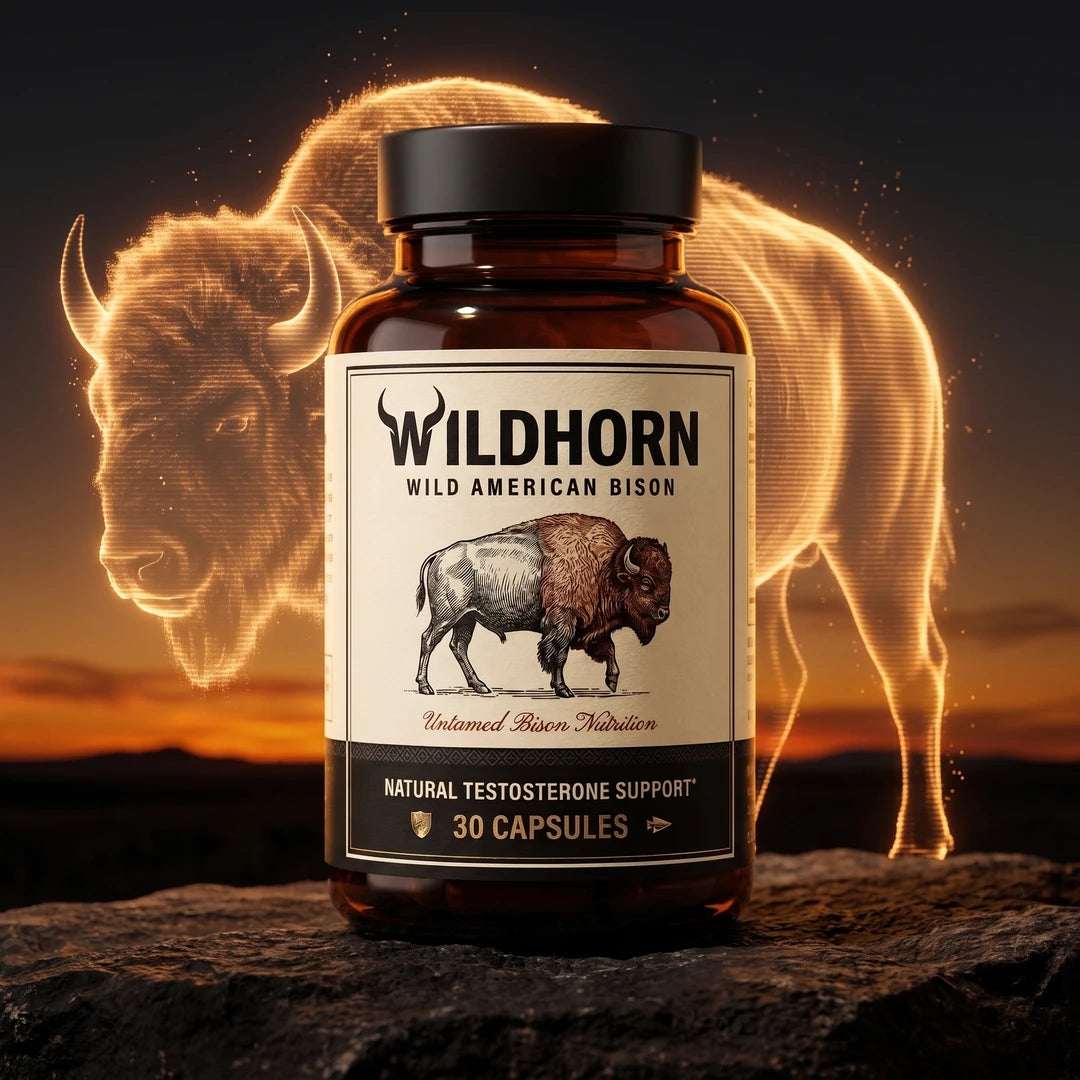
Customers often ask us why we built our formula around bison rather than a synthetic B-vitamin blend. The short answer: whole-food matrices deliver B12 alongside cofactors the body recognizes. Isolated cyanocobalamin capsules work for some men, but they are a different substrate than food-derived B12. For men who want a whole-food approach, a wild bison nutritional supplement pairs well with a food-first strategy rather than replacing it.
If you are supplementing with isolated B12, methylcobalamin and adenosylcobalamin are the active forms the body uses directly. These tend to absorb better than cyanocobalamin, particularly for men with compromised gut function. Track your levels with follow-up testing every three to six months to see where status actually lands over time.
Frequently asked questions
How much B12 do men over 45 need per day?
The standard recommended daily intake is 2.4 mcg for adults. Because absorption rates decline with age, some practitioners suggest higher intakes for men over 45 to help maintain B12 status already within a normal range. Methylcobalamin and food-based sources tend to support better utilization than standard cyanocobalamin for men with absorption concerns.
What is the most absorbable form of B12 to supplement with?
Methylcobalamin and adenosylcobalamin are the two active forms the body uses directly. Cyanocobalamin, the most common and cheapest supplement form, must be converted before it can be used. For men with gut absorption concerns, sublingual methylcobalamin or food-based sources like liver and red meat tend to provide better uptake.
Can you get enough B12 from food alone after 45?
For most men with healthy digestion, yes. Beef liver, clams, sardines, salmon, and red meat are all dense sources. The challenge after 45 is absorption efficiency, not dietary intake. If you eat animal protein regularly but still experience functional signs of suboptimal B12 status, the issue is more likely in the gut than on the plate.
Is bison a good dietary source of B12?
Yes. Bison is a nutrient-dense red meat with B12 content per serving comparable to conventional beef. Because it is typically raised on pasture rather than finished on grain, it also tends to carry a better fatty acid profile. It is a practical whole-food source of B12 for men focused on quality protein without excess saturated fat.
How long before better B12 intake shows any effect?
It depends on how suboptimal status was to begin with. Men with mildly low levels who increase B12 through food and supplementation may notice changes in energy and mental clarity within four to eight weeks. Larger deficits can take several months to correct. Follow-up testing every three to six months helps track where levels actually sit.
These statements have not been evaluated by the Food and Drug Administration. This product is not intended to diagnose, treat, cure, or prevent any disease.
Written by The Wildhorn Desk, Men's Health Editor.