How Strength Training Amplifies Testosterone Booster Results
8 min read
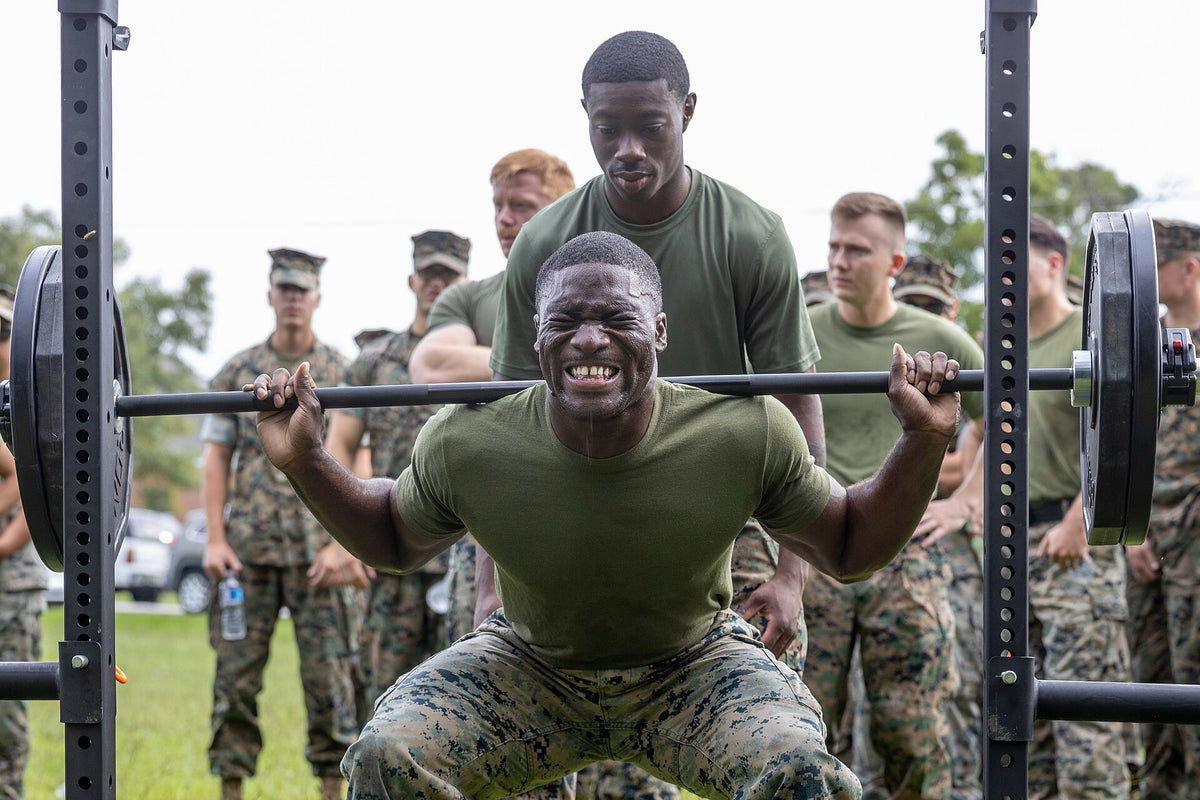
Heavy compound lifts trigger an acute testosterone spike that peaks 15 to 30 minutes after your sets. A support stack works in the recovery window that follows, filling nutritional gaps that help the body respond to that training signal. Together, resistance training and targeted support work on the same hormonal system from two different angles.
Lance Cpl. Christian Salazar / Public domain / via Wikimedia Commons
What Heavy Lifting Actually Does to Your Testosterone
The connection between resistance training and testosterone has been studied for decades. The signal is real and measurable. What matters is understanding how it works so you can use it deliberately.
When you load a barbell and squat, your body recruits hundreds of muscle fibers across your quads, hamstrings, glutes, and core at once. That volume of mechanical stress signals the hypothalamic-pituitary-gonadal axis. The result is a transient spike in circulating testosterone that peaks roughly 15 to 30 minutes post-set. Short-lived. But meaningful for what comes next.
Research consistently shows that multi-joint compound exercises with moderate-to-heavy loads produce a greater acute hormonal response than isolation movements. The size of the muscle mass recruited is the key variable. Intensity matters. Rest period length matters. Shorter rest intervals of 60 to 90 seconds appear to drive a stronger hormonal signal than longer rest with equivalent load, though both approaches support overall training adaptation.
One important distinction: a single session does not rewrite your hormonal baseline. Consistent training stimulus over weeks and months is what helps maintain testosterone levels already within a normal range as you age. That is the real mechanism at play. Use resistance training as a regular physiological input to support the system that is already there, and build on it steadily.
The Compound Lifts That Drive the Biggest Hormonal Response
Not all exercises produce the same signal. Isolation movements recruit small muscle groups. Compound lifts recruit large ones. The difference in acute testosterone response directly reflects that gap.
Four exercises most consistently associated with a meaningful acute response in trained men:
- Back squat: Loads the posterior chain and quads simultaneously. No single exercise recruits more total muscle mass in one coordinated pattern.
- Conventional deadlift: Engages nearly every major muscle group in coordinated tension. Glutes, hamstrings, spinal erectors, lats, traps, grip.
- Barbell bench press: Chest, anterior delts, and triceps under significant load with stabilizing demand across the shoulder girdle.
- Barbell row: Lats, rhomboids, rear delts, biceps. The horizontal pull that balances the press pattern and keeps the posterior chain from falling behind.
Volume and intensity together determine how strong the signal gets. Three to five sets per exercise, six to ten reps, with 60 to 90 seconds of rest between sets appears to produce a stronger acute hormonal response than very low volume or very high rep ranges with submaximal loads. You do not need to train to failure every session. Consistent progressive overload across weeks beats periodic maximal efforts every time.
Sequence your sessions to prioritize compound, multi-joint work first while you are fresh. Isolation accessory work belongs after the main lifts are done. That order maximizes the hormonal stimulus from every session.
The Recovery Window Is Where Testosterone Synthesis Actually Happens
The spike during training gets the attention. The 24 to 48 hours after training is where actual adaptation happens. Testosterone synthesis is not a real-time event during your sets. It unfolds during recovery, mostly during sleep.
Most testosterone production happens during slow-wave and REM sleep. Men sleeping five hours per night show measurably lower testosterone levels already within a normal range compared to those sleeping seven to eight hours, even without any change in diet or training volume. Miss two or three nights of quality sleep per week and you are actively working against the system you are trying to support in the gym.
Dietary fat is the other underappreciated variable. Cholesterol is a direct precursor to steroid hormones. Men eating very low-fat diets often find their results plateau even when training programming looks solid on paper. That is not a coincidence. The fix is not eating recklessly. It is making sure adequate dietary fat from whole food sources is part of every day: eggs, red meat, olive oil, nuts, avocado.
Zinc and magnesium both support the enzymatic pathways involved in testosterone synthesis. Chronic deficiency in either is common in men who train hard, because sweat losses and high training volume deplete both faster than a typical diet replaces them. That nutritional gap is exactly where a targeted support stack earns its place in the routine.
Where a Support Stack Fits the Training Signal
Customers often ask us whether a testosterone support supplement does anything on its own, without training. The honest answer: less. The smarter question is what happens when you combine consistent resistance training with targeted nutritional support over 8 to 12 weeks.
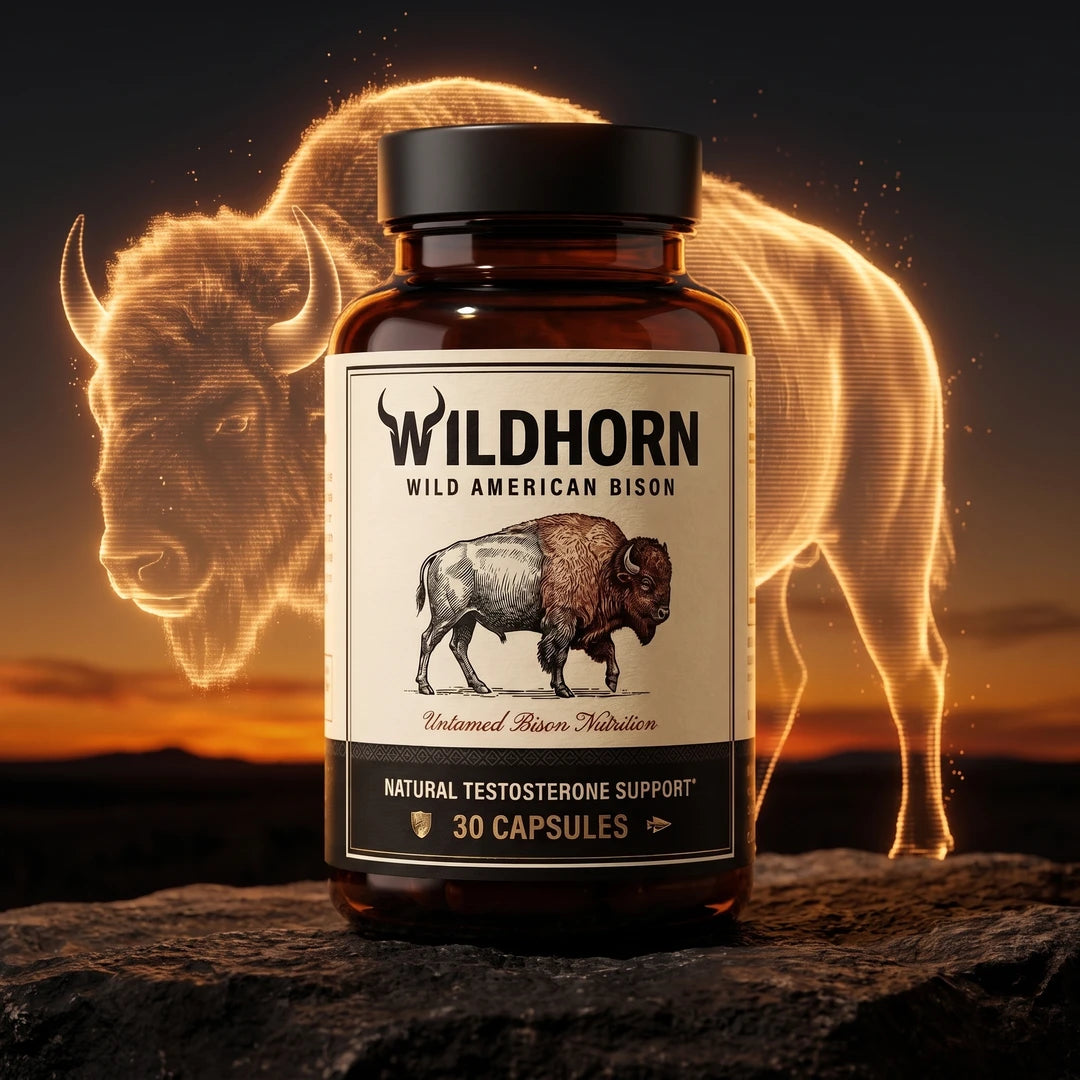
That is the design logic behind the Wild Bison Testosterone Booster. The ingredients are not random. Each one targets a specific mechanism that supports the body's hormonal function, particularly in the recovery and sleep windows where testosterone synthesis is most active.
Ashwagandha (KSM-66 extract at 600 mg) has been shown in placebo-controlled research with resistance-trained men to help maintain testosterone levels already within a normal range under physical stress. Zinc supports the enzymatic conversion steps in testosterone synthesis. Boron at 10 mg per day supports free testosterone levels already within a normal range, partly by influencing sex hormone binding globulin. Vitamin D3 at 5000 IU addresses a widespread deficiency that correlates with suboptimal hormonal function in men who spend most of the day indoors or live at northern latitudes.
None of these ingredients override your body's own system. They support it. Training creates the stimulus. A clean, targeted stack helps the body respond to that stimulus more completely, particularly when dietary gaps exist. In our formula, those mechanisms were chosen because each addresses a real, common gap in men who train consistently.
How to Structure Your Training Week for Hormonal Support
Three to four resistance training sessions per week is the practical sweet spot for supporting healthy testosterone levels already within a normal range over the long term. More than five weekly sessions can work against you. High frequency without adequate recovery pushes cortisol up. Elevated cortisol competes with testosterone at the receptor level, blunting the hormonal benefit of the training you are putting in.
A sample weekly structure that works well for men 45 to 65:
- Monday: Squat-focused lower body. Back squat, leg press, Romanian deadlift. Three to four sets each at eight to ten reps.
- Wednesday: Pull-focused upper body. Barbell rows, pull-ups or lat pulldowns, face pulls.
- Friday: Hinge and push. Conventional deadlift, barbell bench press, overhead press.
- Weekend: Optional light conditioning or a long walk. Not a fourth hard session.
Rest days are not lazy days. They are when adaptation happens. Eating enough total calories on rest days, including adequate protein at 0.7 to 1 gram per pound of bodyweight and sufficient fat, supports the anabolic environment your training sessions create.
Men over 55 should consider keeping total session volume slightly lower rather than piling more sets onto an already full program. Recovery capacity shifts with age. That is not a reason to train less. It is a reason to train smarter, sleep harder, and take the nutrition side as seriously as the lifting side.
What to Realistically Expect and How to Track Progress
Eight to twelve weeks is the honest minimum to assess what a combined training and support approach is doing. Week one feels different because you are training harder and sleeping more intentionally. Meaningful, sustained changes in body composition and strength take longer than that.
The goal is not a dramatic before-and-after. It is a slow, compounding shift in how you recover between sessions, how your strength tracks week to week, and whether your energy during training stays consistent. Men who approach this with that mindset consistently report better outcomes than those chasing a shortcut.
Strength increases tend to show first, often within four to six weeks, because the nervous system adapts faster than muscle tissue does. Body composition changes take longer. Sleep quality is often the first thing men notice, sometimes within the first two to three weeks, and that improvement compounds every other result because of how directly sleep affects testosterone synthesis and recovery capacity.
The number to watch is simple: are you lifting more weight on your compound lifts at week 12 than you were at week one? If yes, the system is working. Testosterone supports muscle protein synthesis and recovery. Better recovery supports better training. Better training drives better adaptation. The loop builds on itself over months, not days. Patience is not a passive strategy here. It is the strategy.
Frequently asked questions
Does a testosterone support supplement work without resistance training?
It supports normal hormonal function on its own, but the combination of resistance training and targeted nutritional support works on the same system from two angles at once. Training creates the physiological stimulus. The stack helps the body respond. Men who combine both consistently report stronger results than either approach alone.
Should I take Wild Bison on rest days or only on days I train?
Take it daily, including rest days. Most testosterone synthesis happens during sleep and recovery, not during the workout itself. Daily consistent use keeps nutritional support constant through the recovery windows where it matters most, particularly the overnight hours when production is highest.
Can men over 60 still get a meaningful hormonal response from heavy compound training?
Yes. The hormonal signaling pathway that responds to resistance training remains functional well past 60. Training volume and recovery capacity change with age, but the underlying mechanism is intact. Three sessions per week of compound-focused training continues to support testosterone levels already within a normal range in older men who train consistently.
What dietary changes support this approach most?
Adequate dietary fat is the most overlooked variable. Cholesterol is a direct precursor to testosterone synthesis, so very low-fat eating works against you. Zinc from red meat, shellfish, and eggs replaces what hard training depletes through sweat. Protein at 0.7 to 1 gram per pound of bodyweight supports the muscle tissue your training is rebuilding.
How do I know if the combined approach is actually working?
Track your compound lift numbers at four-week intervals. Strength on squat, deadlift, bench, and row at week 12 versus week one tells you more than how you feel on any given day. Recovery quality between sessions and sleep consistency are secondary markers worth noting. Both tend to show changes before visible body composition shifts do.
These statements have not been evaluated by the Food and Drug Administration. This product is not intended to diagnose, treat, cure, or prevent any disease.
Written by The Wildhorn Desk, Men's Health Editor.