What Zinc Actually Does for Male Hormone Levels
7 min read
Zinc is required for the enzymatic steps that produce testosterone in the Leydig cells of the testes. Without adequate zinc, those steps slow down. Research suggests men who are marginally low in zinc tend to have lower testosterone levels, and filling that gap through supplementation helps maintain levels already within a normal range.
Zinc's Role in Testosterone Biosynthesis
Testosterone production doesn't happen in a vacuum. It's a cascade: your brain sends luteinizing hormone (LH) to the Leydig cells in your testes, and those cells convert cholesterol into testosterone through a series of enzymatic steps.
Zinc shows up at multiple points in that chain. It functions as a cofactor for enzymes involved in steroidogenesis, the biochemical process that produces steroid hormones. It helps regulate 5-alpha-reductase, the enzyme that converts testosterone into dihydrotestosterone (DHT). And zinc appears to support the hypothalamic-pituitary axis, which controls how much LH gets released in the first place.
That's three separate leverage points in one pathway. No wonder the research keeps coming back to this mineral.
A 1996 study published in the journal Nutrition found that restricting zinc intake in healthy young men for 20 weeks led to a measurable drop in testosterone levels, while supplementing zinc in marginally deficient older men helped support their levels already within a normal range. Those findings have held up across follow-on research over the past three decades.
What Zinc Insufficiency Looks Like in Men Over 45
Full-blown zinc deficiency is rare in developed countries. Marginal insufficiency is not. Data from NHANES surveys suggest roughly 12 percent of Americans get less zinc than their body needs from diet alone, and older men are among the most consistently affected groups.
Why men over 45 specifically? Several factors stack up at once:
- Zinc absorption in the gut tends to decline with age.
- Many men in this age group eat less red meat than they did at 30, removing a primary dietary source.
- Medications common in this demographic, including certain diuretics and proton pump inhibitors, can reduce zinc status over time.
- Chronic low-grade alcohol consumption competes with zinc absorption.
The result isn't always dramatic. It shows up as fatigue that doesn't track with sleep quality, slower recovery after training, or a general flatness in motivation. Blood markers may drift toward the lower end of normal. Nothing that jumps off a lab report. But not where you want to be.
Customers often ask us whether they should get their zinc levels tested before starting a supplement. A serum zinc test is available, but it has real limitations: serum levels can look normal even when tissue stores are suboptimal. Dietary tracking over a week often tells you more than a single blood draw.
How Much Zinc Men Actually Need
The current RDA for adult men is 11 milligrams per day. That number reflects the minimum needed to avoid clinical deficiency in most men. Optimal intake for men doing regular resistance training, managing significant stress, or over the age of 55 may run somewhat higher, though the research on exact thresholds is less settled.
One ceiling worth knowing: zinc and copper compete for the same intestinal absorption transporters. Taking more than 40 mg of elemental zinc per day for extended periods can deplete copper. That's the tolerable upper intake level set by the National Institutes of Health Office of Dietary Supplements, and it's a real threshold, not a rounding suggestion. A well-formulated supplement stays well under that limit or includes a small copper offset to keep the mineral balance right.
The other variable is bioavailability. Total milligrams on a label means little without knowing how much actually gets absorbed. That depends on form.
The Gap Between Food Sources and Actual Absorption
Oysters are the richest dietary zinc source by a wide margin, delivering around 74 mg per 3-ounce serving. Beef chuck roast has about 7 mg per serving. Pumpkin seeds come in at roughly 2.2 mg per ounce.
The problem is phytates. These compounds found in grains, legumes, and seeds bind to zinc in the digestive tract and block absorption. A man eating a diet heavy in whole grains and plant proteins may be getting adequate zinc on paper but absorbing only a fraction of it. Animal proteins don't carry this problem, which is one reason men who eat more meat tend to have better zinc status than vegetarians even when total intake looks comparable on a spreadsheet.
Cooking and soaking legumes reduces phytate content somewhat. Fermentation helps more. But for men already eating limited red meat, food sources alone often fall short of 11 mg per day. That's where a targeted supplement becomes a straightforward answer rather than an optional upgrade.
Why the Form of Zinc in Your Supplement Matters
Zinc oxide is cheap and common. You'll find it in every bargain-shelf multivitamin. Absorption rates in clinical studies run from about 10 to 20 percent. That's not zero. But compared to better forms, it leaves a lot on the table.
Zinc gluconate and zinc citrate perform meaningfully better, with absorption studies placing them in the 35 to 61 percent range. Zinc bisglycinate, a chelated form where zinc is bound to two glycine molecules, scores similarly to citrate and tends to cause less GI irritation in men with sensitive stomachs.
The practical takeaway: a supplement listing 30 mg of zinc oxide may deliver less usable zinc to your cells than one listing 15 mg of zinc bisglycinate. The milligrams on the label tell you the elemental dose. The form tells you how much actually gets through.
Timing matters too. Zinc on a completely empty stomach can cause nausea in some men. Taking it with a small meal solves that for most people, with minimal impact on absorption.
How to Read a Testosterone Support Formula
Zinc rarely works alone in a well-built formula. The strongest evidence-based combinations pair it with magnesium, vitamin D3, and vitamin B6, nutrients that support similar or overlapping steps in hormonal and metabolic function. Some formulas include ashwagandha or fenugreek extract, botanicals with modest research support for helping maintain testosterone levels already within a normal range in active or high-stress men.
The first thing to look for is the specific zinc form alongside the elemental dose. If the label just says "zinc" with no form specified, assume oxide until you can confirm otherwise. If it lists oxide at a high dose, you're paying for low absorption.
Look also at whether copper is included. At higher zinc doses taken daily, copper balance matters. A formula that ignores this isn't thinking about long-term use.
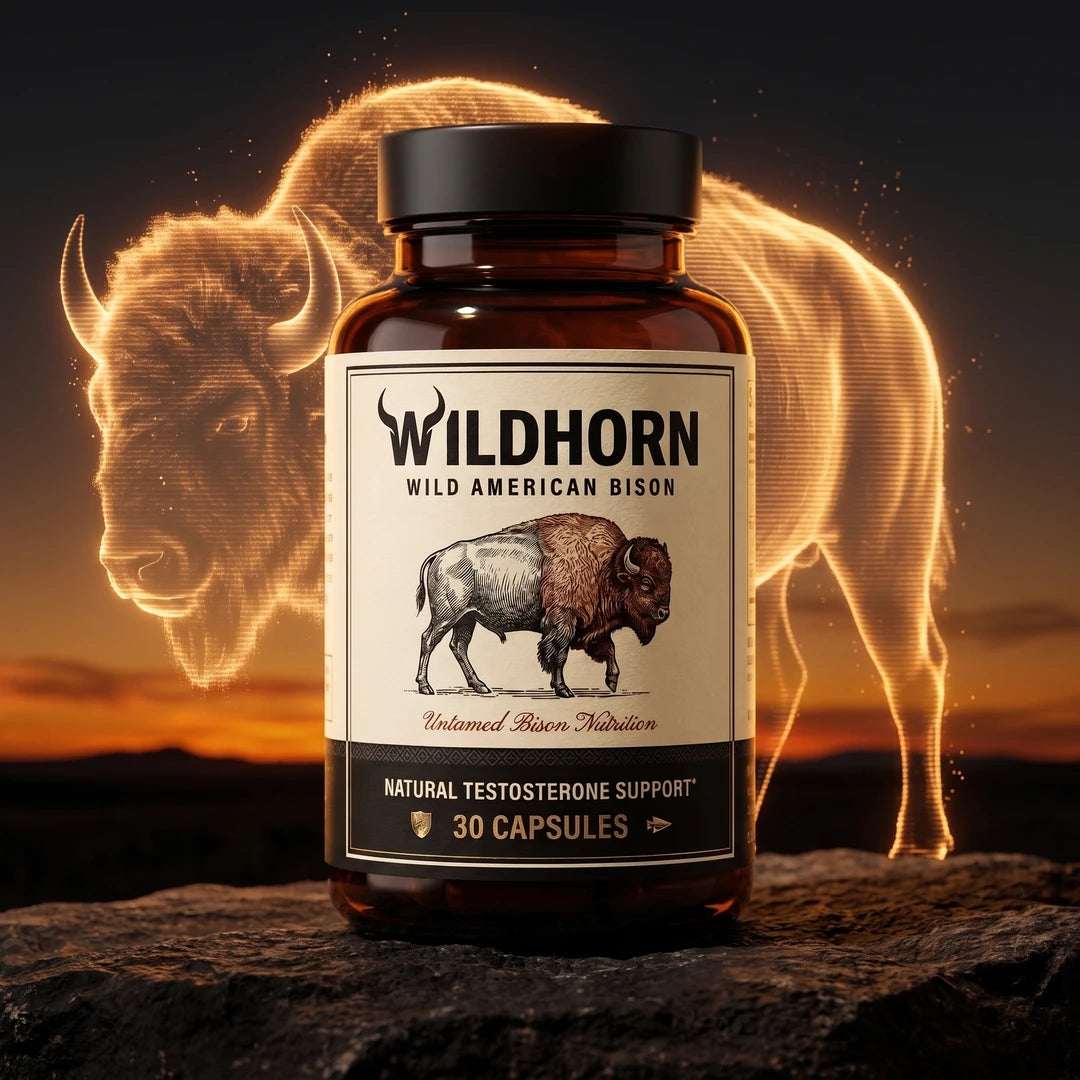
In our formula, we chose a chelated zinc form alongside a targeted stack of supporting minerals and botanicals. The goal is not megadoses but filling the specific gaps most common in men over 45. The Wild Bison testosterone support formula reflects that approach: precise forms, purposeful doses, nothing added just to inflate the label.
Frequently asked questions
Does zinc directly raise testosterone levels?
Zinc doesn't act like a drug that forces levels up. It supports the enzymatic pathway that produces testosterone. In men with already-adequate zinc status, adding more zinc doesn't appear to change much. In men who are marginally low, addressing that gap helps maintain testosterone levels already within a normal range.
How long before I notice anything from zinc supplementation?
Men who were marginally low in zinc often report changes in energy and workout recovery within 4 to 8 weeks of consistent supplementation. Hormonal shifts measurable on a blood panel tend to show up at the 6 to 12 week mark in clinical research. Trials shorter than 4 weeks frequently miss the effect entirely.
Can I take zinc alongside other supplements?
Generally yes. The main interaction to know: iron and zinc compete for absorption, so space them at least two hours apart if you take both. High-dose calcium can modestly reduce zinc uptake as well. Taking zinc with a small amount of food sidesteps most of these issues without meaningfully affecting bioavailability.
What is the best form of zinc for hormone support?
Chelated forms like zinc bisglycinate and zinc citrate have better absorption profiles than zinc oxide, which is the cheapest and most common form in lower-quality products. If a supplement label lists the ingredient as simply "zinc" without specifying the form, assume oxide until you can confirm otherwise.
Is it safe to take zinc every day long-term?
At doses at or below the tolerable upper intake level of 40 mg of elemental zinc per day, zinc is well-tolerated for most men. Extended use at higher doses can deplete copper, so formulas that stay in the 15 to 30 mg range and include a small copper balance are the better choice for daily ongoing use.
These statements have not been evaluated by the Food and Drug Administration. This product is not intended to diagnose, treat, cure, or prevent any disease.
Written by The Wildhorn Desk, Men's Health Editor.