Zinc and Testosterone: What Men Over 45 Should Know
8 min read

Zinc acts as a cofactor in the enzymatic reactions that support testosterone production in the testes. Men over 45 tend to absorb zinc less efficiently and lose more through sweat and urine. Getting enough, through food or supplementation, helps the body maintain testosterone levels already within a normal range.
Keith Weller, USDA ARS / Public domain / via Wikimedia Commons
What Zinc Actually Does in the Body
Zinc is not a hormone. It's not even a precursor to one. It's a mineral, essential by definition, meaning your body can't make it. You have to get it from food or supplements.
What makes it relevant here is its function as a cofactor. Zinc shows up in more than 300 enzymatic reactions throughout the body. Some of those reactions are structural: zinc stabilizes the shape of certain proteins. Others are catalytic: zinc helps enzymes carry out their function efficiently.
One critical pathway involves the Leydig cells in the testes. That's where testosterone is synthesized. Zinc acts as a necessary component in the enzymatic conversion process that takes cholesterol-derived precursors and turns them into testosterone. It also supports the pituitary signaling step that tells the testes to produce testosterone in the first place. The hypothalamus releases a hormone that signals the pituitary, which then releases luteinizing hormone (LH). LH is the direct trigger for testosterone production in the Leydig cells. Zinc supports proper function at multiple points along that chain.
Remove zinc from the equation and output drops. That's not a marketing claim. It's basic biochemistry.
How Testosterone Changes After 45
Testosterone production starts declining in a man's late 30s to early 40s. Most research puts the annual rate of decline between 1% and 2% per year after age 30. By 50, a man may have 20 to 25% less circulating testosterone than he did at 25.
Some of that decline is normal. Unavoidable. Some of it isn't.
Nutritional insufficiencies contribute to the drop. So does chronic stress, disrupted sleep, body fat accumulation, and sedentary habits. These factors don't cause testosterone to fall off a cliff overnight. They pull the floor down gradually, year after year.
Zinc insufficiency is one of those modifiable factors. You can't stop the biological aging process. But you can make sure you're not accelerating it by running low on a mineral your body needs to do the job properly.
What the Research Actually Shows
The most commonly cited study on this topic was published in Nutrition in 1996 by researchers at Wayne State University School of Medicine. They restricted zinc intake in healthy young men and tracked what happened to their testosterone levels over 20 weeks. Testosterone dropped significantly. Then they supplemented a group of older men who tested low in zinc. Testosterone levels increased.
That study is older. But the mechanism it identified has held up in more recent research. A 2009 study in the Journal of Human Reproductive Sciences found that zinc supplementation helped support testosterone levels already within a normal range in men with zinc insufficiency.
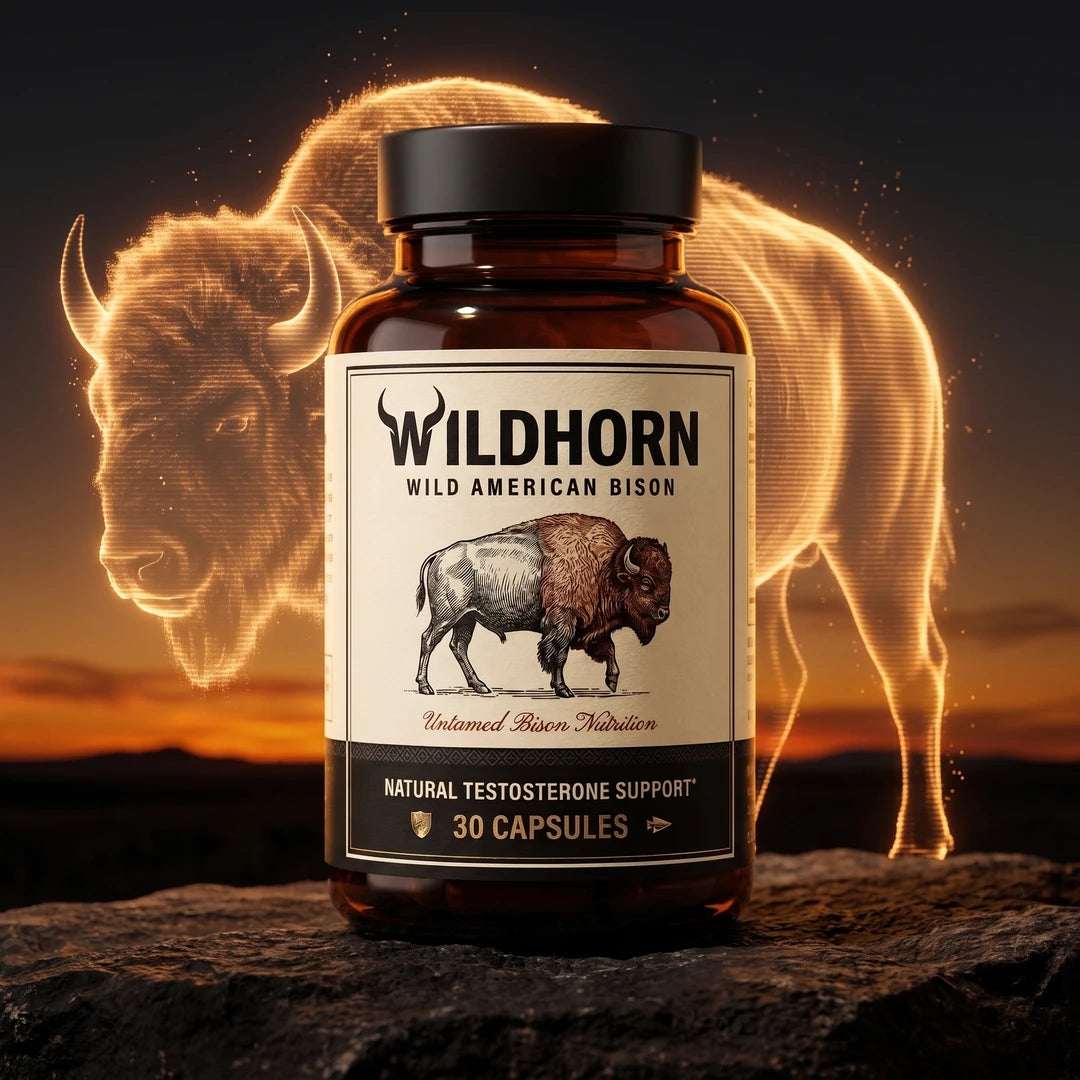
Customers often ask us why we included zinc in Wild Bison rather than filling the formula with newer, trendier botanicals. This is why. The mechanism is clear, the evidence is consistent, and zinc insufficiency is genuinely common in the men this product is built for.
Why Men Over 45 Often Run Low on Zinc
Zinc insufficiency doesn't announce itself dramatically. Most men have no idea their intake is low. But the numbers suggest it's more common than most people realize.
The NIH Office of Dietary Supplements notes that zinc intake falls below recommended levels for a meaningful portion of U.S. adults. Several factors push men over 45 toward the lower end of that range:
- Absorption efficiency drops with age. The intestinal mechanisms that extract zinc from food become less effective over time.
- Sweat losses add up. Men who exercise regularly lose zinc through sweat. Four to five workouts per week represents a real, cumulative drain.
- Certain medications interfere. Proton pump inhibitors, diuretics, and some blood pressure medications can reduce zinc absorption or increase urinary excretion.
- Dietary shifts reduce intake. Red meat and shellfish are the most zinc-dense foods available. Men who reduce red meat for cardiovascular reasons often cut their zinc intake at the same time, without realizing it.
- Alcohol increases losses. Even moderate, regular consumption increases urinary zinc excretion.
You don't need to be severely deficient for it to affect the body. Even modest insufficiency affects how efficiently the processes that depend on zinc can run.
How Much Zinc You Can Get From Food
If you eat a varied diet that includes animal protein, food should be your primary zinc source. Oysters lead by a significant margin: a 3-ounce serving provides around 74 mg, more than 600% of the daily value. That's an outlier. Most men aren't eating oysters regularly.
More realistic numbers:
- Beef (ground, 3 oz): about 5 mg
- Pork (3 oz): about 2.9 mg
- Chicken dark meat (3 oz): about 2.4 mg
- Pumpkin seeds (1 oz): about 2.2 mg
- Cashews (1 oz): about 1.6 mg
- Plain yogurt (1 cup): about 1.7 mg
The recommended dietary allowance for adult men is 11 mg per day. If red meat, poultry, and shellfish show up consistently in your diet, you may be close to adequate through food alone. If you've pulled back on meat and don't track zinc sources closely, supplementing at 15 to 25 mg per day from a bioavailable form is a reasonable step.
One number worth knowing: the tolerable upper limit is 40 mg per day. Exceeding that regularly can interfere with copper absorption, since zinc and copper compete for the same intestinal transport proteins.
Choosing the Right Zinc Form
Not all zinc supplements absorb the same way. The form on the label matters more than most people realize.
Zinc oxide is the cheapest and most common form in generic multivitamins. It has poor bioavailability. Studies comparing zinc forms consistently show that chelated forms absorb significantly better. Zinc bisglycinate, which binds zinc to two glycine molecules, absorbs well because the glycine bond protects it through the acidic environment of the stomach and improves uptake in the small intestine. Zinc gluconate and zinc picolinate are also well-absorbed options.
What you want to avoid is a product that lists zinc oxide deep in a long ingredient list and calls itself a testosterone support formula. Label presence is not the same as absorption.
In our formula, Wild Bison uses zinc bisglycinate specifically because bioavailability was the priority. A mineral that doesn't absorb doesn't help anything.
If you're looking for a Wild Bison testosterone support formula built around absorbable ingredient forms, that's exactly what we designed.
Making It Work in Practice
Zinc doesn't boost testosterone the way a pharmaceutical would. That's not how it works, and that's not the claim. It supports the biological machinery that helps your body produce testosterone at the level it's capable of. Nothing more than that.
For most men eating a varied diet that includes red meat and other zinc-rich foods, deficiency is unlikely. Insufficiency, running below optimal without meeting the clinical threshold for deficiency, is more common. Particularly in men over 45 who exercise regularly, take certain medications, or have reduced their meat intake.
The practical steps:
- Check what you're actually eating for zinc over a typical week.
- If zinc-rich foods show up consistently, food may be enough.
- If not, supplement at 15 to 25 mg per day from bisglycinate, gluconate, or picolinate.
- Don't stack multiple products without checking the total zinc load. Stay under 40 mg per day.
No single nutrient is the whole answer. This one earns its place in any serious conversation about men's hormonal health after 45.
Frequently asked questions
How long does it take for zinc supplementation to affect testosterone levels?
Research suggests it takes several weeks of consistent supplementation to see measurable changes in testosterone levels already within a normal range. The Wayne State University study tracked changes over a 20-week period. Consistent daily intake over time is what matters, not short-term loading.
Can you take too much zinc?
Yes. The tolerable upper limit for adult men is 40 mg per day. Exceeding that regularly can deplete copper, since the two minerals compete for the same intestinal transporters. Sustained high doses can also cause nausea. Stick to 15 to 25 mg daily unless a healthcare provider directs otherwise.
Should I test my zinc levels before supplementing?
Serum zinc testing is available but not perfectly reliable as a measure of tissue zinc status. If you have specific concerns, a healthcare provider can order testing. For most men over 45 who don't eat zinc-rich foods regularly, supplementing at a moderate dose carries low risk and is a reasonable practical step.
Does zinc work better paired with other nutrients?
Some research suggests zinc and magnesium together help support testosterone levels already within a normal range, which is why you often see them paired in men's health formulas. Vitamin D also plays a role in hormonal signaling pathways and is frequently included alongside zinc for that reason.
What's the difference between zinc insufficiency and zinc deficiency?
Clinical deficiency is severe and relatively uncommon in developed countries. Insufficiency means intake or absorption falls below the level needed for optimal function, without meeting the clinical threshold for deficiency. It produces no dramatic symptoms, which is why it often goes unnoticed. But it can still affect the processes that depend on adequate zinc, including those that support testosterone synthesis.
These statements have not been evaluated by the Food and Drug Administration. This product is not intended to diagnose, treat, cure, or prevent any disease.
Written by The Wildhorn Desk, Men's Health Editor.